Posts filed under Notebook

Nikitana Looseleaf Paper and Notebook Review

(Kimberly (she/her) took the express train down the fountain pen/stationery rabbit hole and doesn't want to be rescued. She can be found on Instagram @allthehobbies because there really are many, many hobbies!.)

While at the Philadelphia Pen Show back in January, I picked up some Nikitana paper that Piper Trading Co. had just released. For those who aren’t aware, Piper Trading Co. (“PTC”) is a wholly-owned subsidiary of Franklin-Christoph. In full disclosure, while I have worked at the F-C tables at many shows, and for Piper Trading Co. at last year’s St. Louis Pen Show, I don’t actually work for either company, so I will approach this review as honestly and objectively as I do all my other reviews.

PTC’s Nikitana paper is a cream, 57 gsm paper which comes in two formats - loose leaf or “notebooks”, which I would consider more of an insert than a traditional notebook. I’ll start with the loose leaf papers.
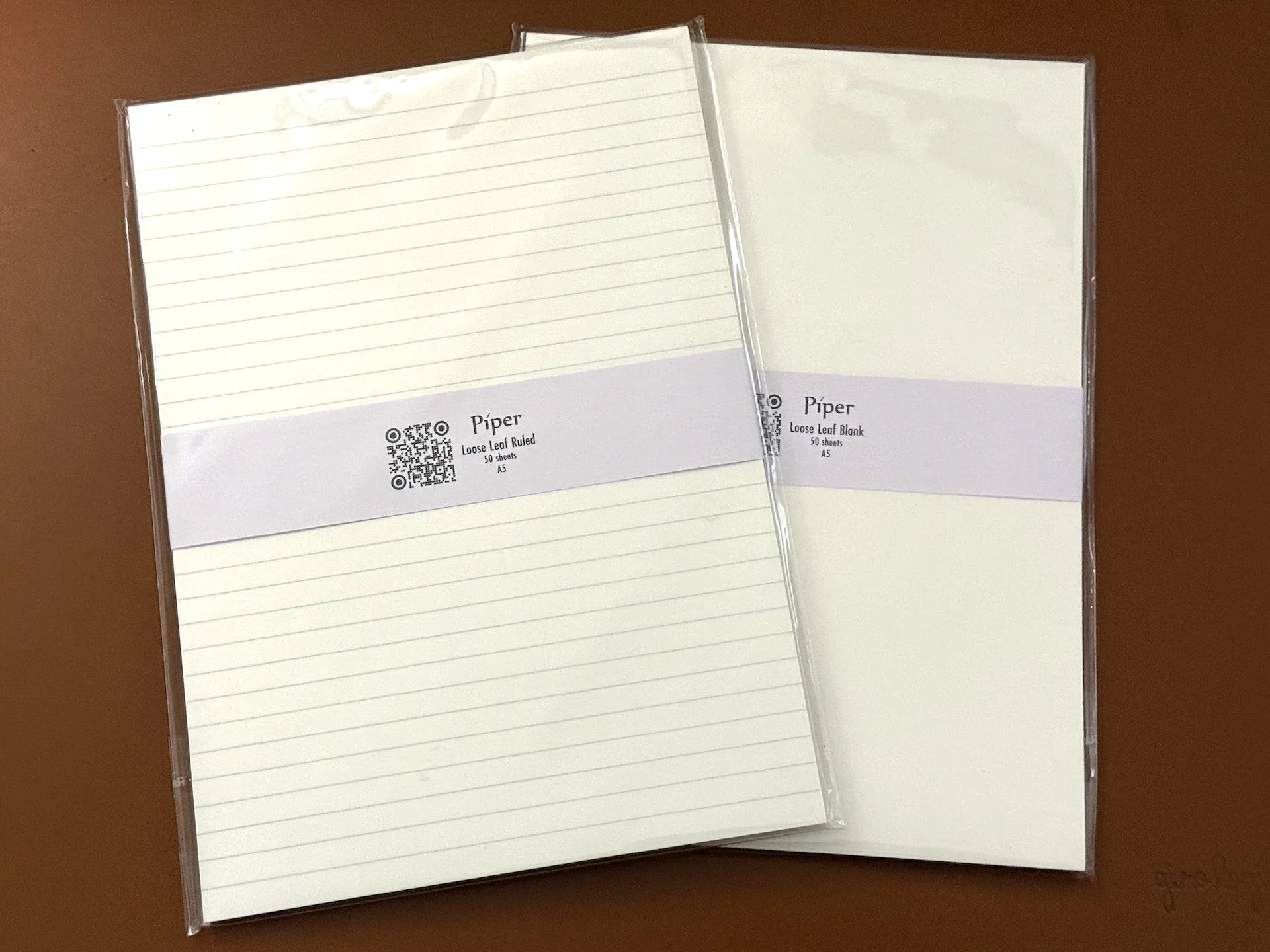
The Nikitana Loose Leaf paper comes in Ruled or Blank, in A4 and A5 sizes.

I picked a variety of fountain pens for testing, chosen based on (1) what was already inked, (2) variety of nib sizes, and (3) nib characteristics like flex, grind, or wet/dry, etc. Some of these were used in my Yamamoto Canopus Paper review.
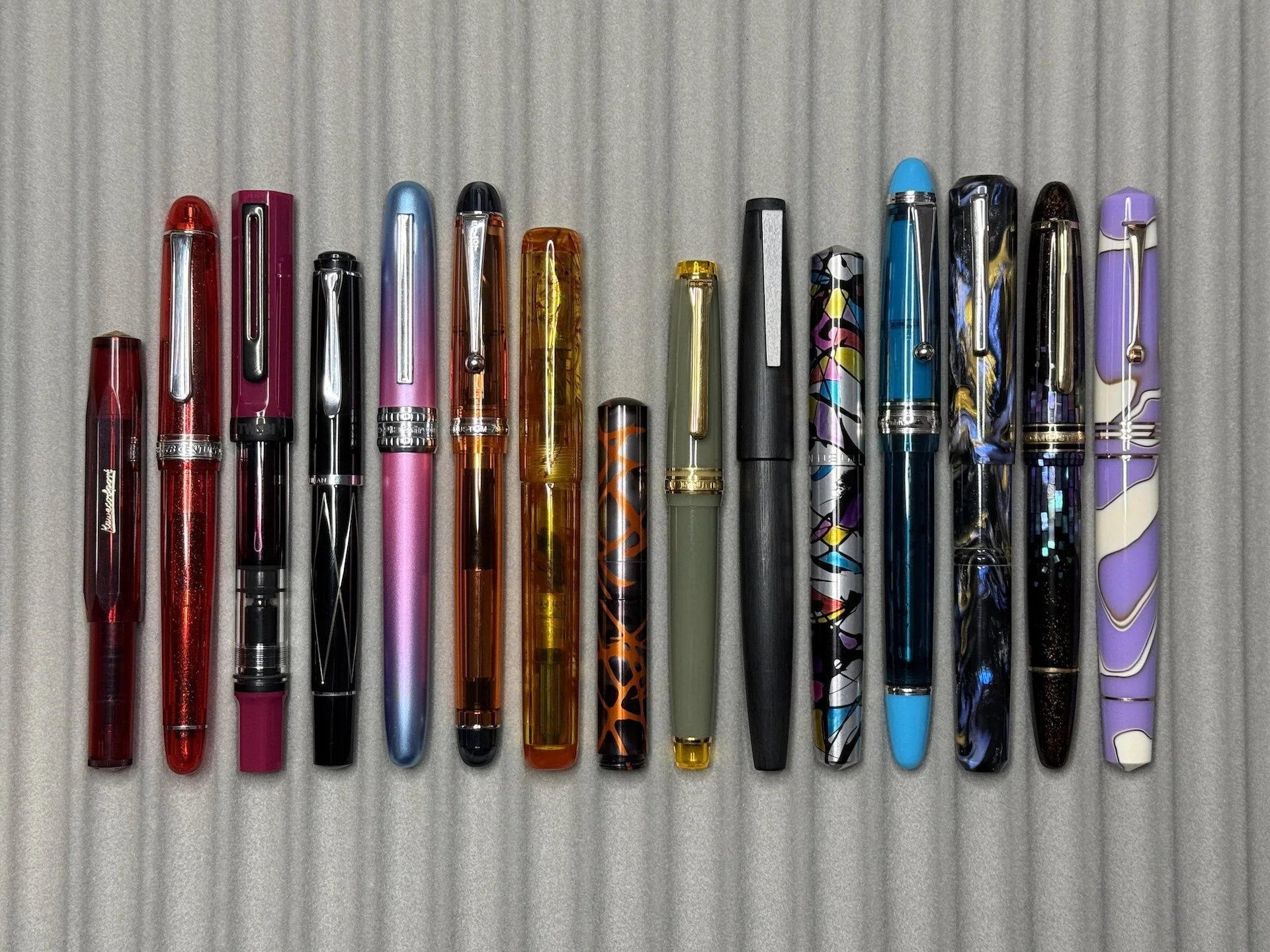
Left to right: Kaweco Sport (FCI), Platinum 3776 (stacked Coarse), TWSBI Eco (1.1), Pelikan M215 (Extra Fine), Platinum Plaisir (Fine), Pilot Custom 74 (Medium), Woodshed (BB SIG), Schon Pocket 6 (Needlepoint), Sailor Pro Gear Slim (Medium Fine), Lamy 2000 (BB Architect), Schon Full Size (Cursive Monoc), Pilot Custom 823 (Fine Medium), Franklin-Christoph 31 (Fine Flex SIG), Montblanc (Medium, Leonardo Momento Zero (Stylosuite EF X-Wing Harpoon flex).

I would describe the Nikitana paper as a fairly smooth and thin paper – similar to Tomoe River in weight, with maybe a wee bit more tooth than TR. The ruled spacing is 6mm and is one of my preferred ruling widths. I like that the lines are visible but not super dark or distracting.
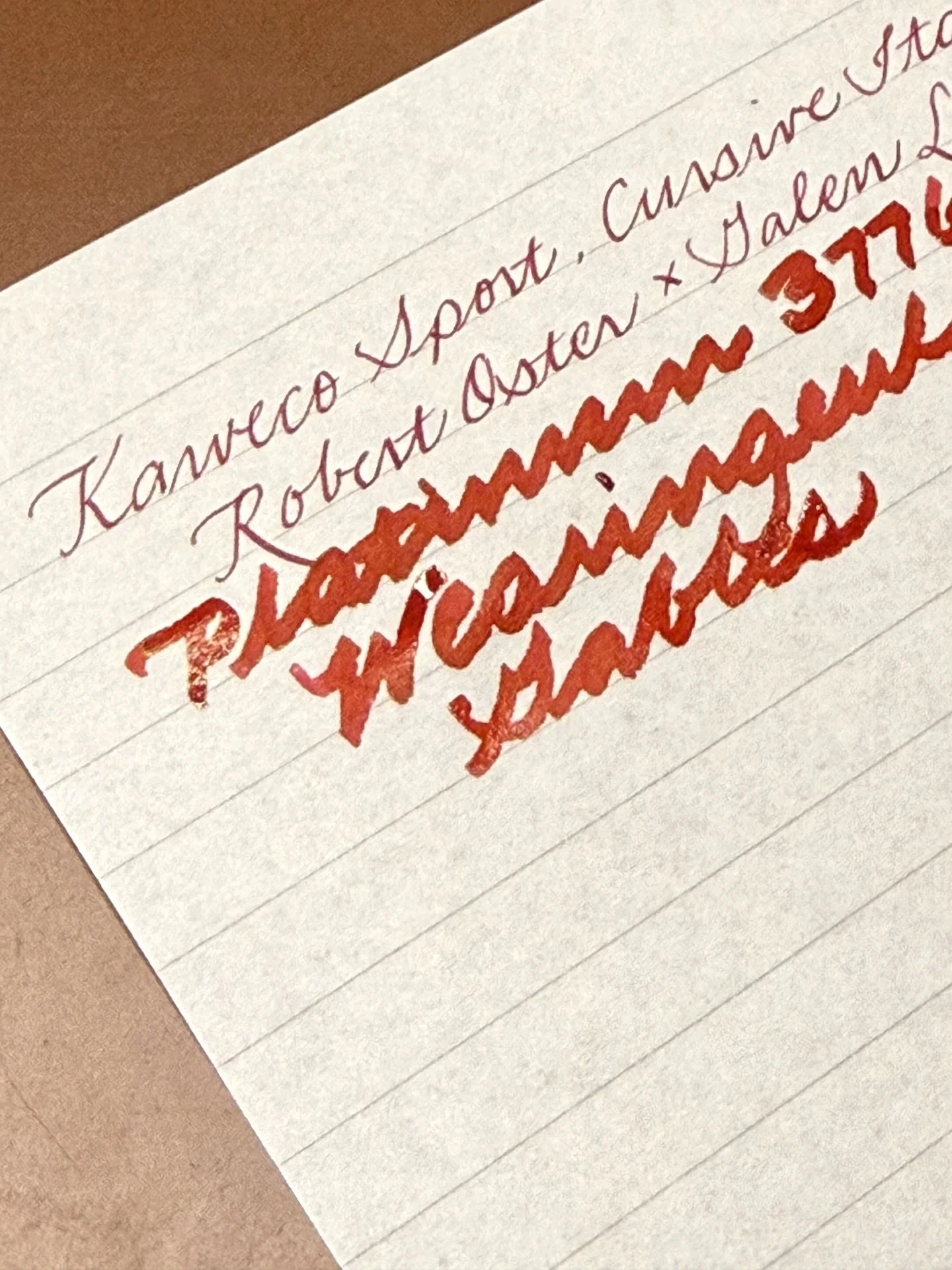
Look at the pooling from the super juicy Platinum 3776 with the stacked Coarse nib! The paper handled it without any problems.
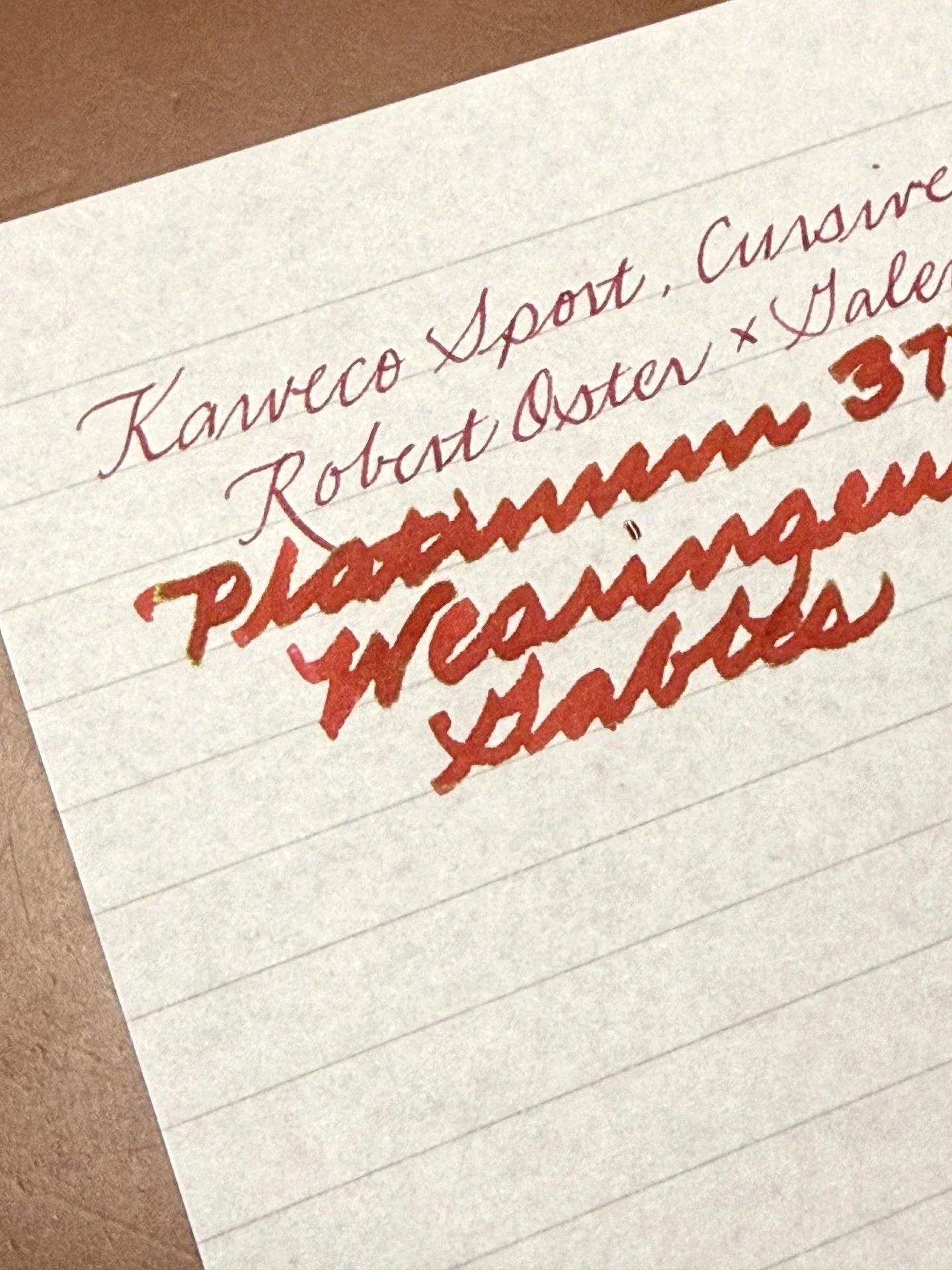
You can see the subtle gold sheen of Wearingeul Anne of Green Gables.
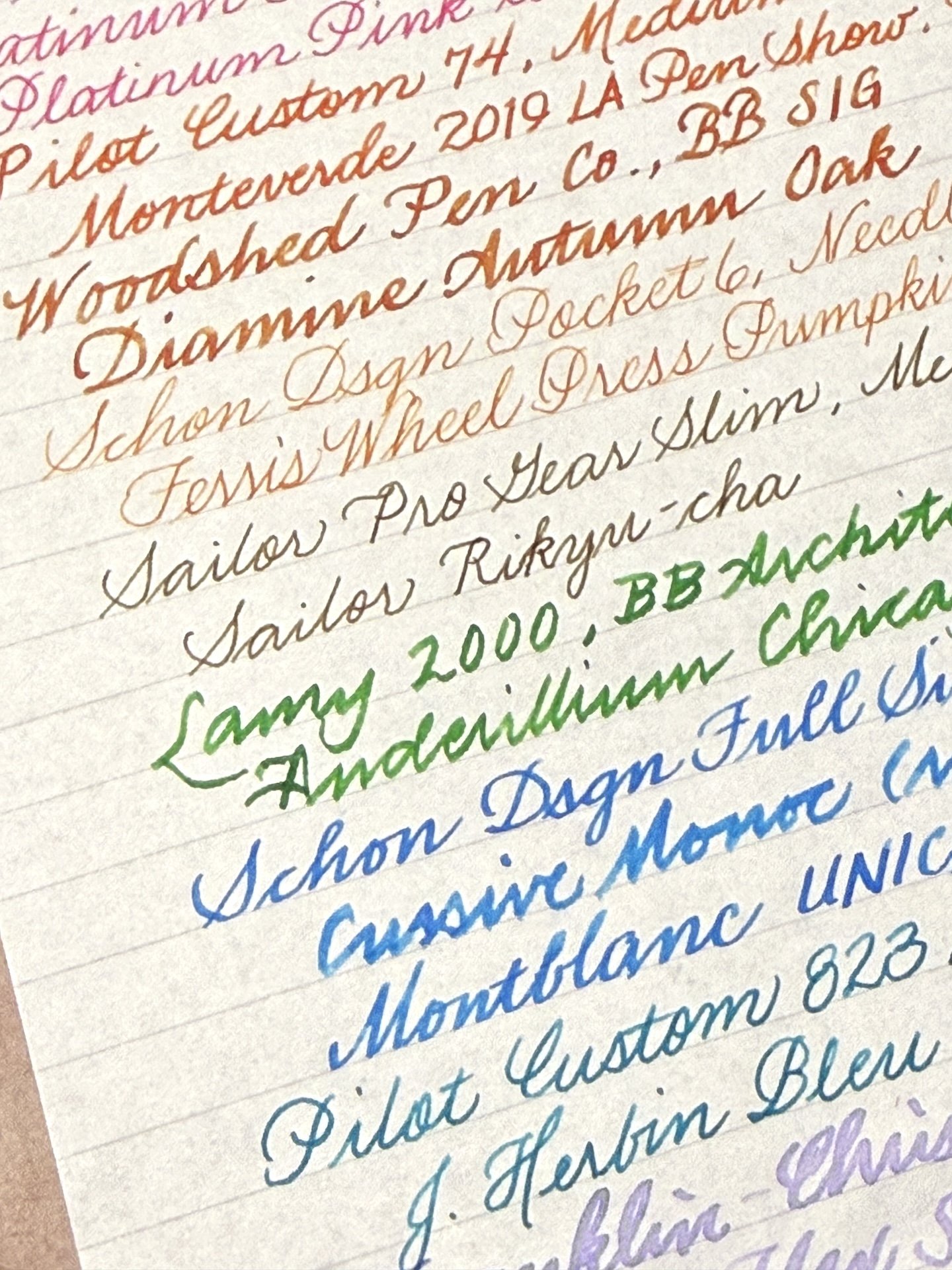
Not gonna lie, I kinda liked using a BB SIG followed by a Masuyama Needlepoint. The paper handled all the nibs and inks without any issue.
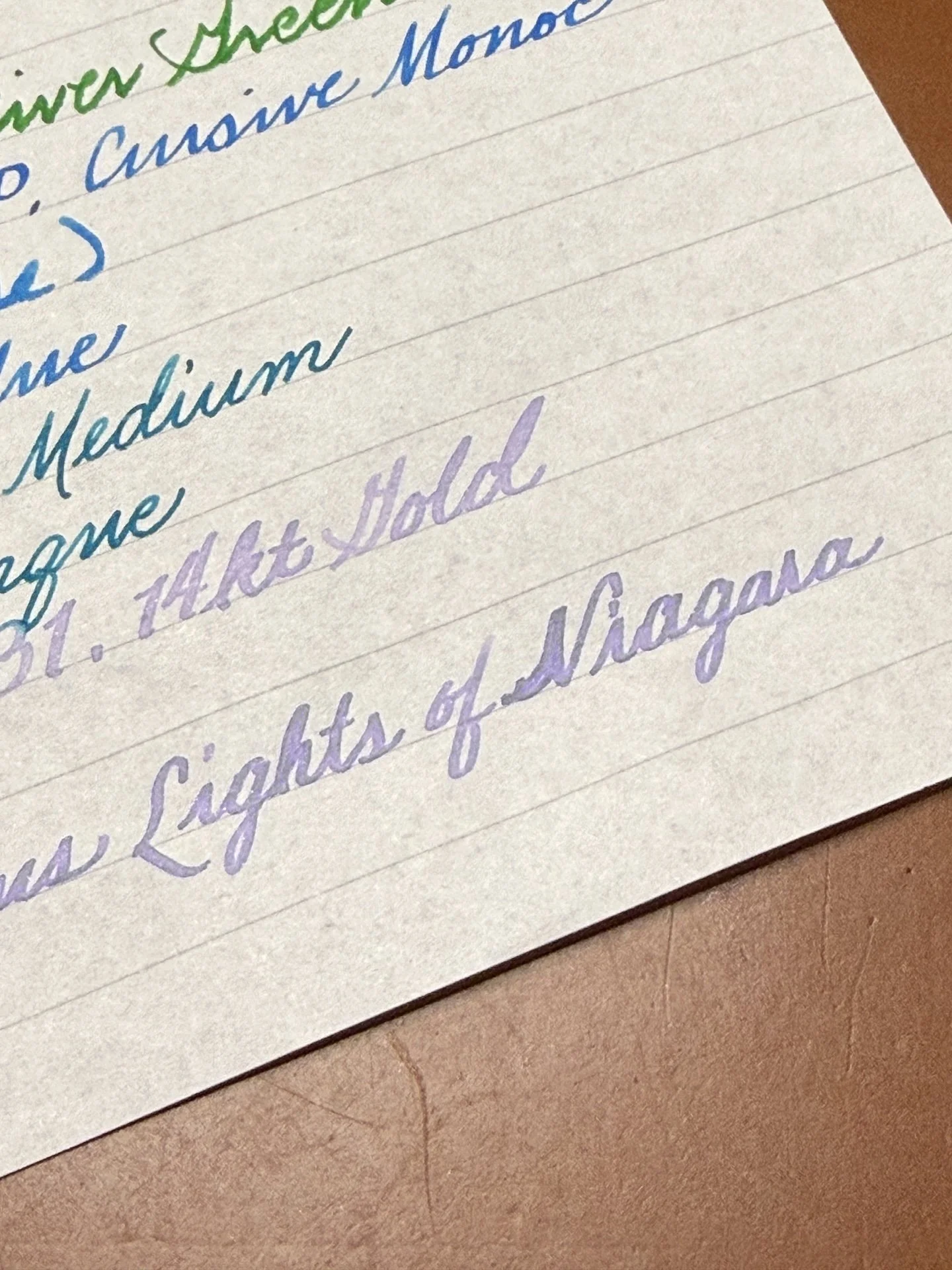
Hard to see here, but it handled the shimmer from Pennonia x Scriptus Lights of Niagara (boy did I mess up that N, cuz it kinda looks like Viagra, lol).
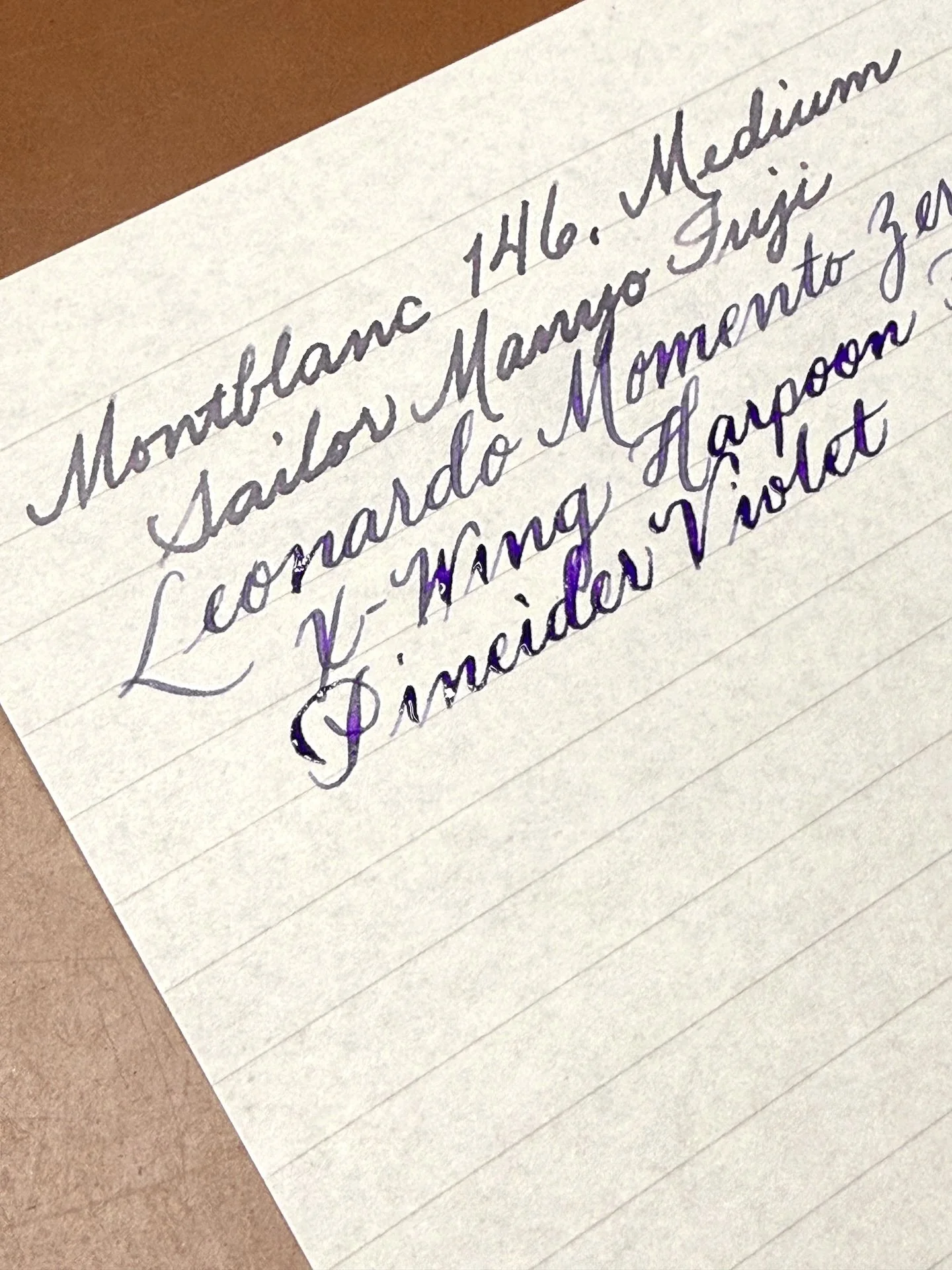
Laying down the wet lines from Stylosuite’s Extra Fine X-Wing Harpoon flex nib and Pineider Violet.
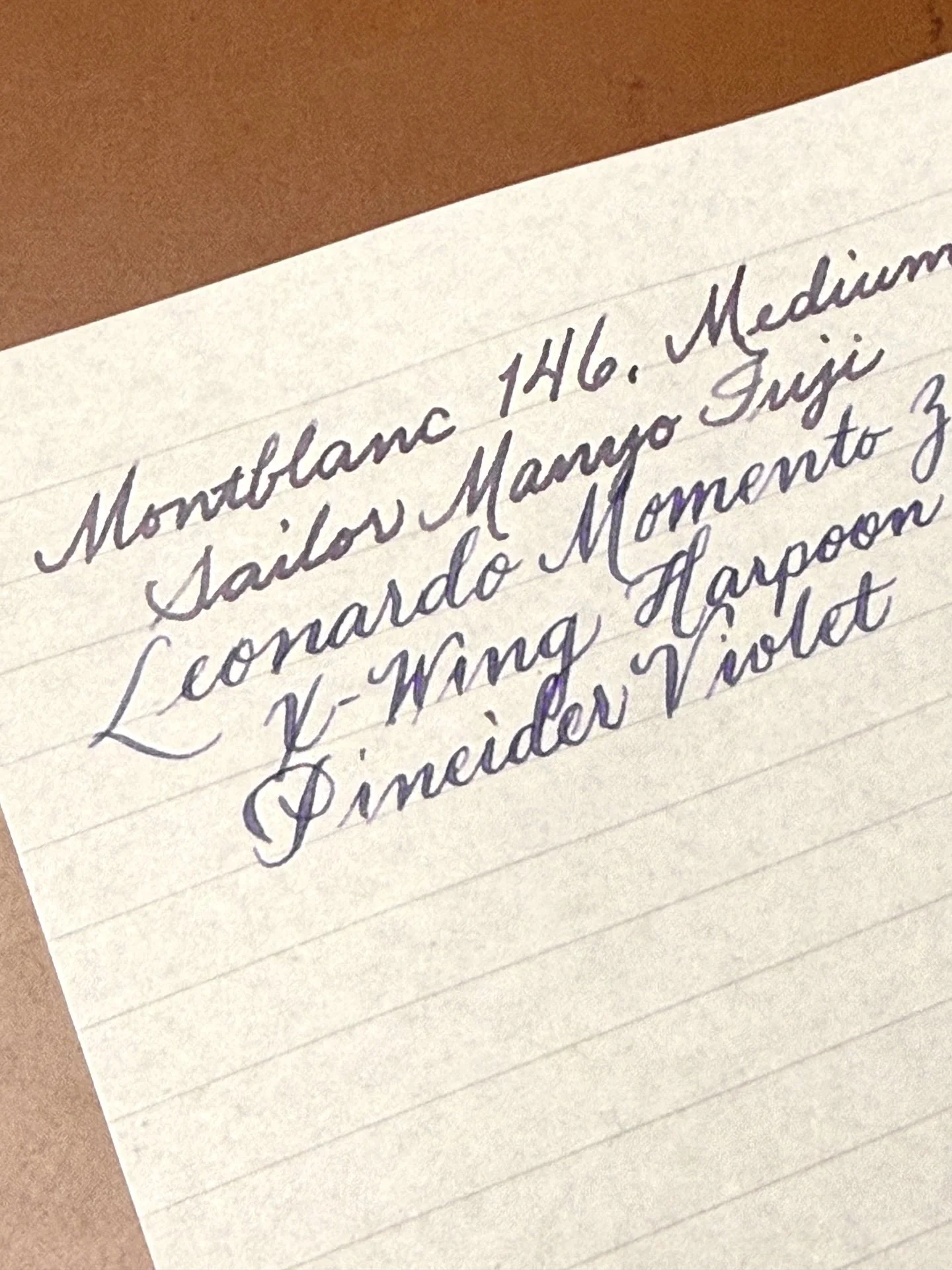
The paper had no problems letting all that ink dry, without soaking through to the other side.
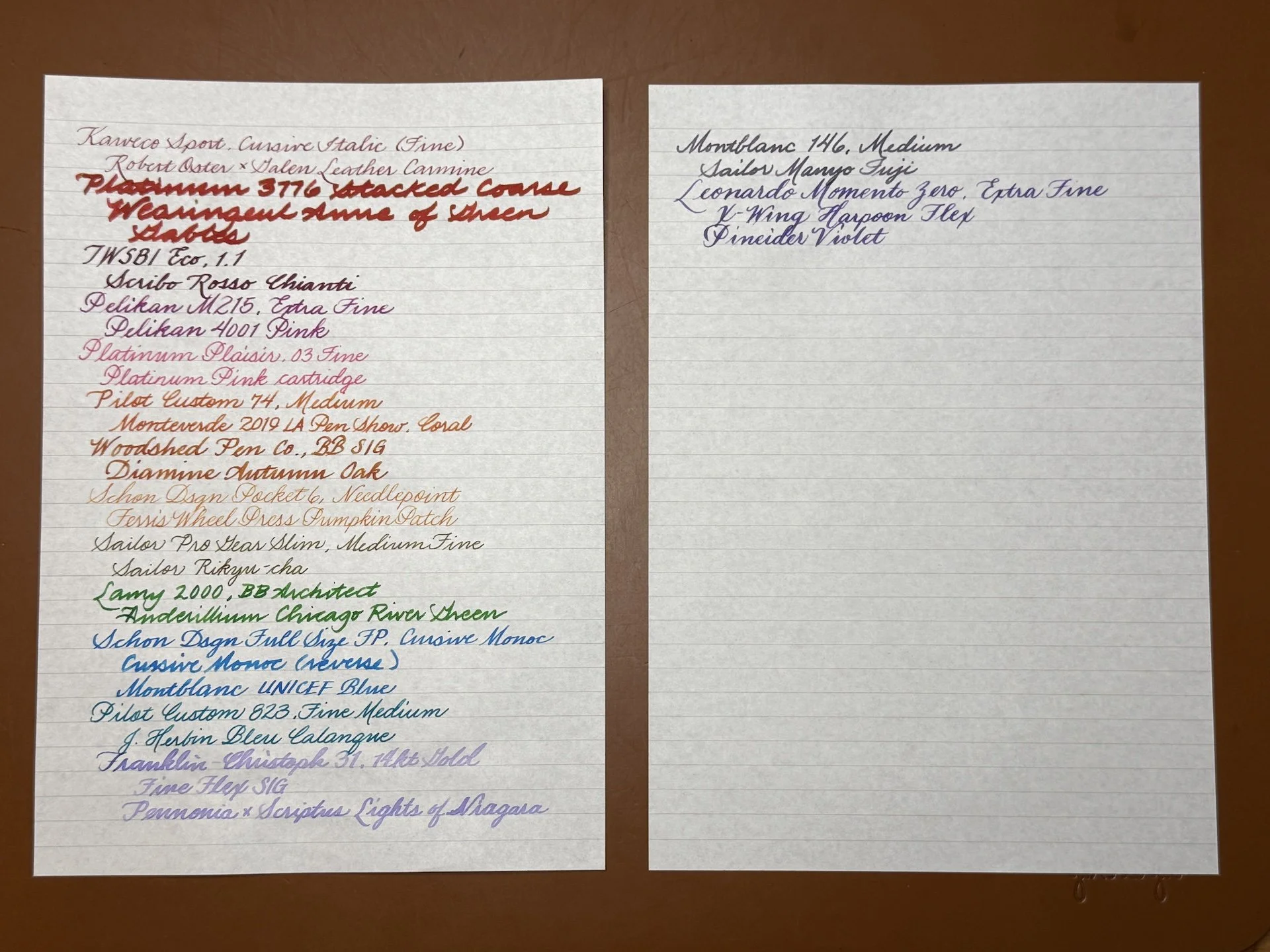
Gotta love me an inky rainbow!
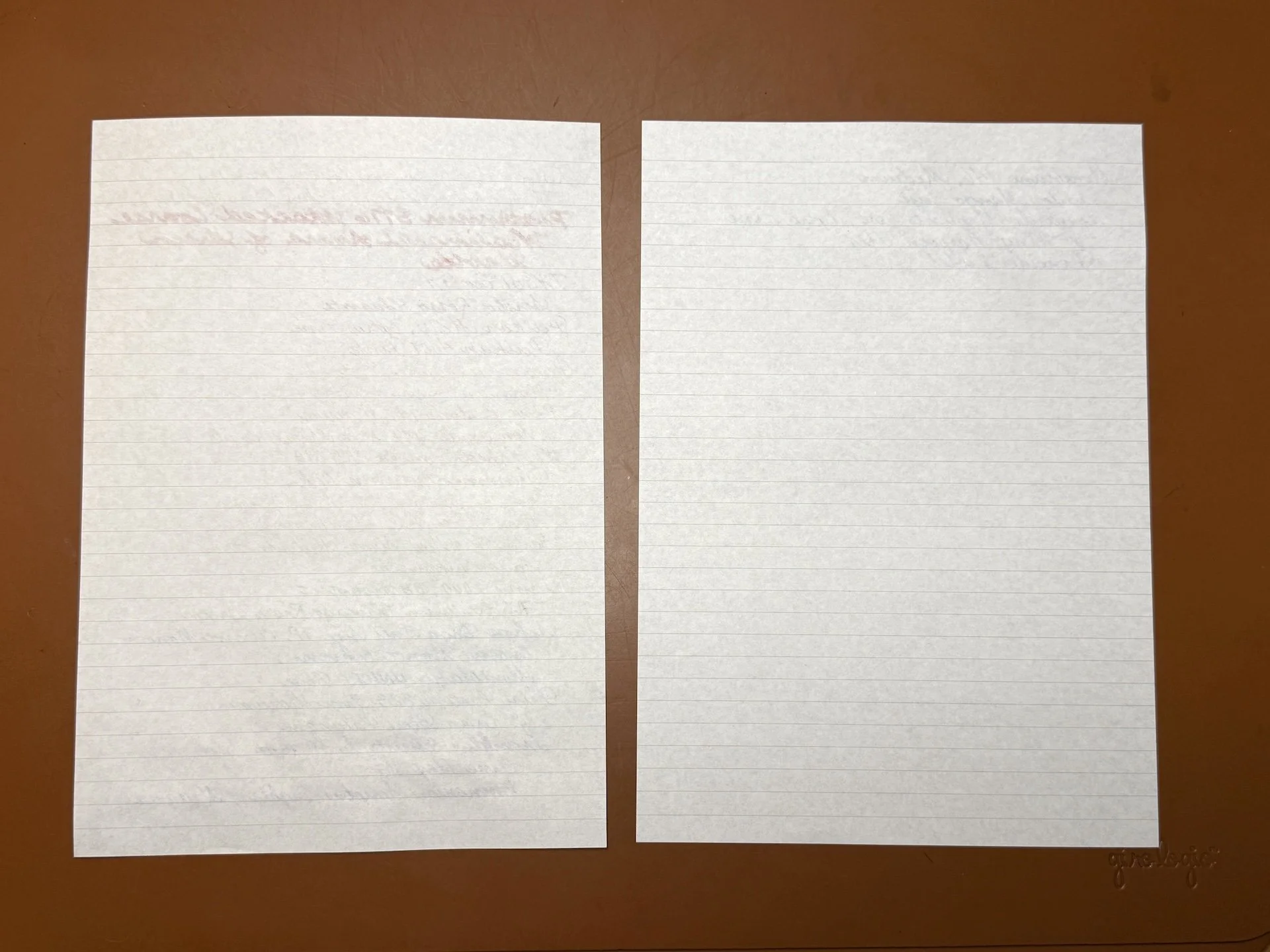
You can just make out some ghosting from the very wet 3776 stacked nib, but otherwise no problems here.
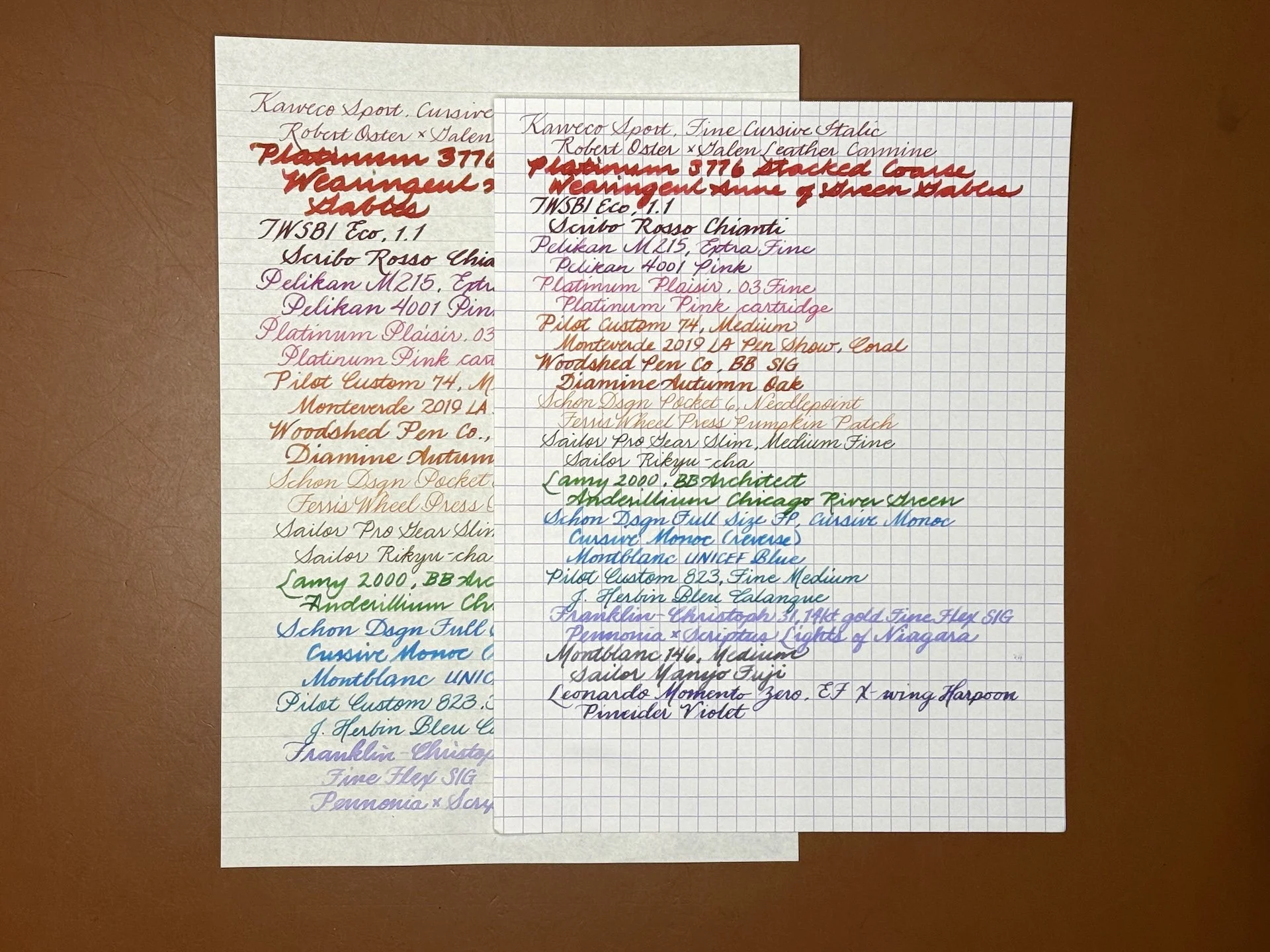
As mentioned above, the Nikitana paper is cream-colored, which can be easier on the eyes than white. Here it is, on the left, compared to 80gsm Rhodia, where you can see the color difference.
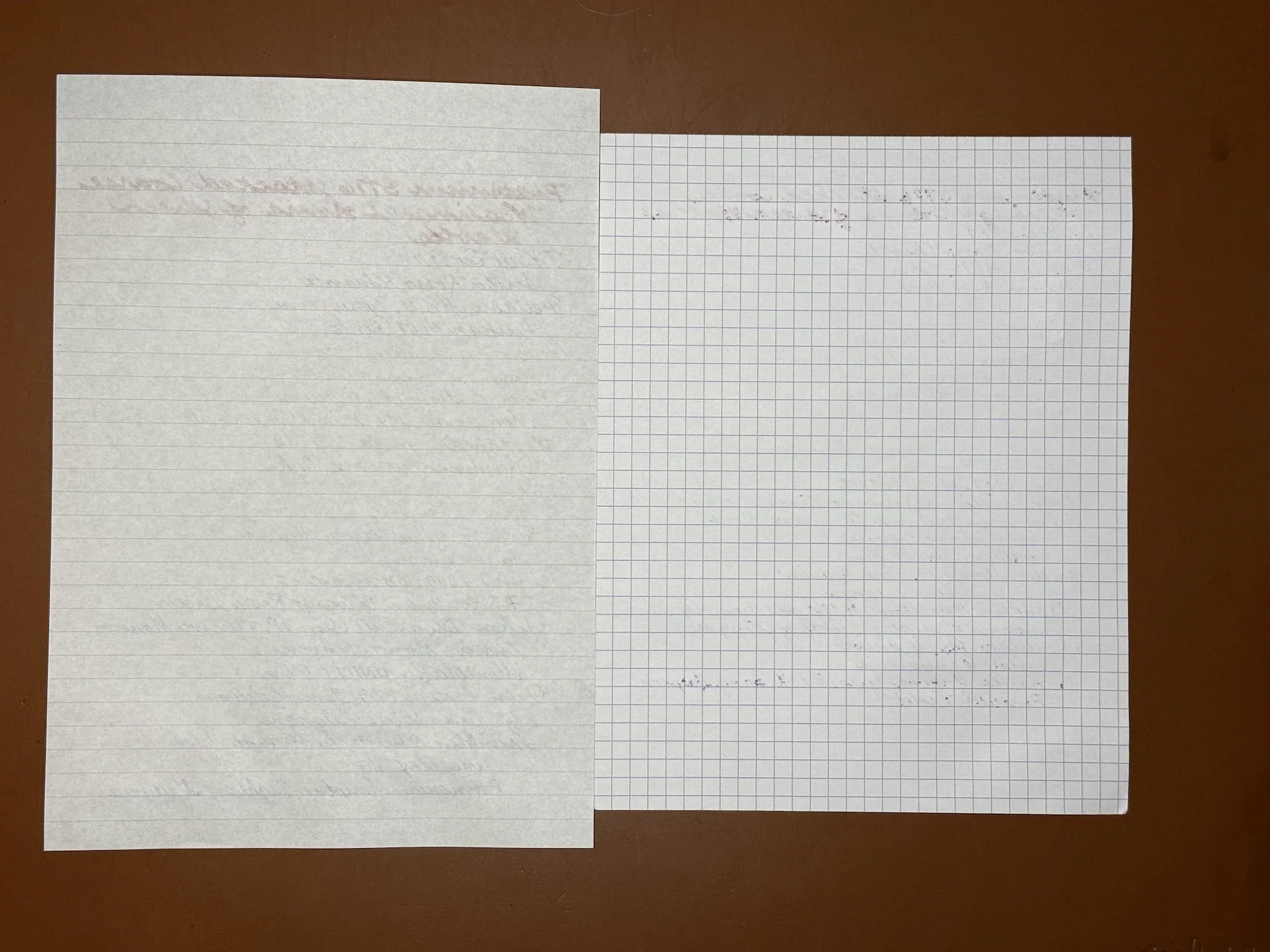
Despite the slightly higher gsm, the 80gsm Rhodia actually had bleedthrough for the 3776 as well as the flex nibs on the Franklin-Christoph 31 and the Leonardo.
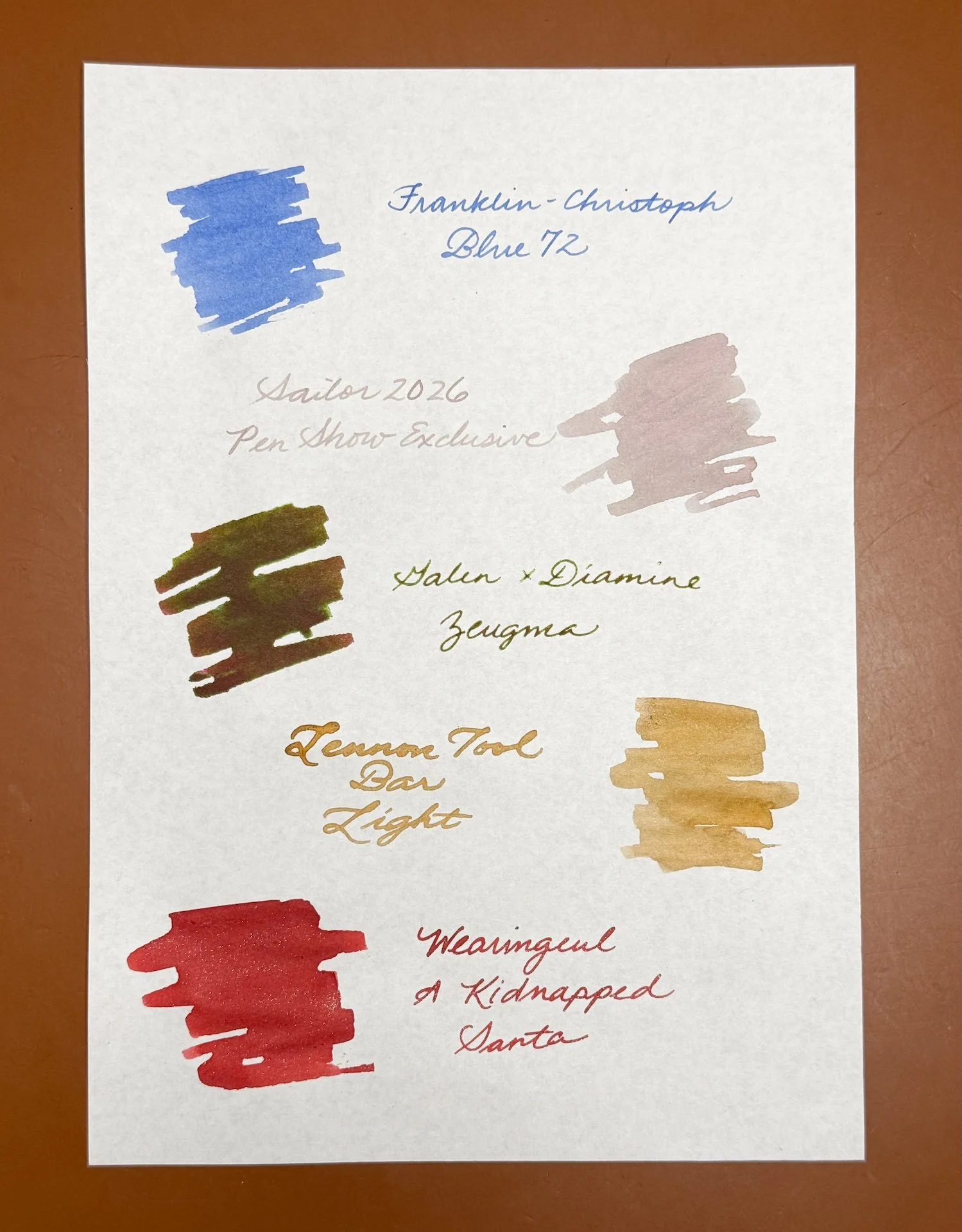
I swatched a few inks that were sitting in my to-be-swatched pile just to see how the paper would handle them. Franklin-Christoph Blue 72 (yes, this bottle was already on my desk), Sailor 2026 Pen Show Exclusive, Diamine x Galen Zeugma, Lennon Tool Bar Light, Wearingeul A Kidnapped Santa.
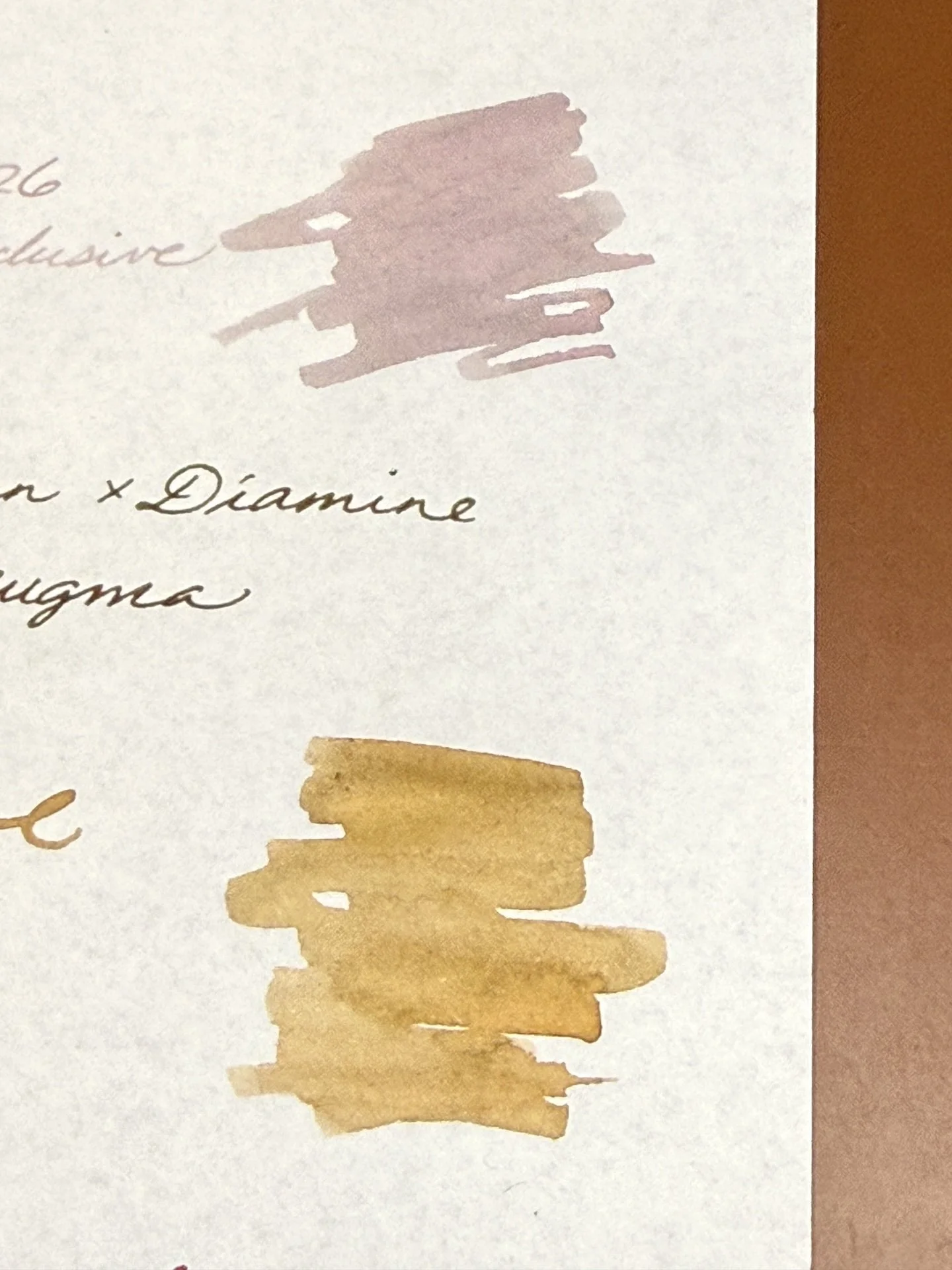
Chromashaders are hard to see in the picture but trust me, that Sailor ink is both pink and grey, while the Lennon Tool Bar is golden brown with hints of peach.
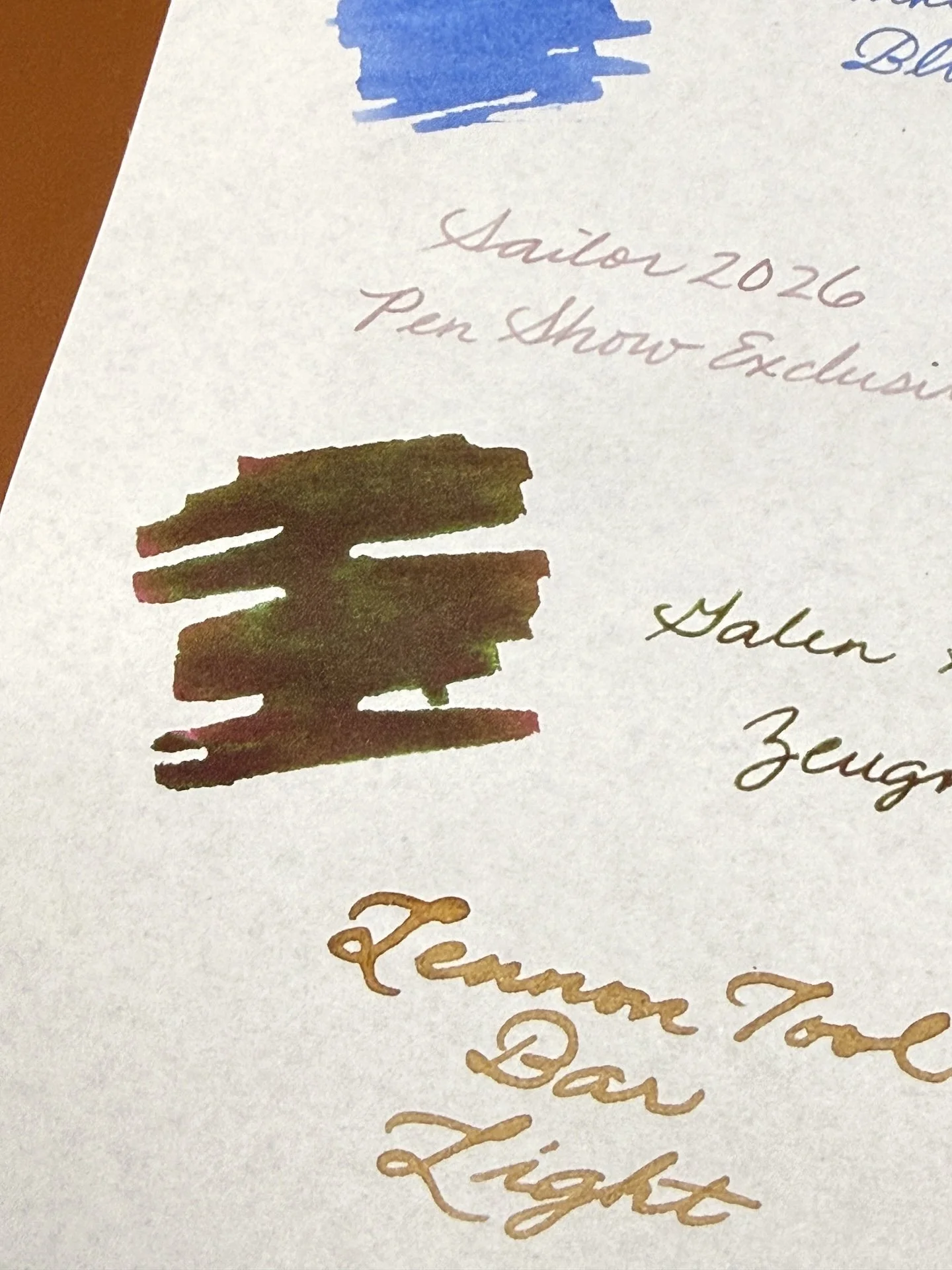
Look at the green sheen of the Diamine x Galen Zeugma that I picked up at the recent CA Pen Show.
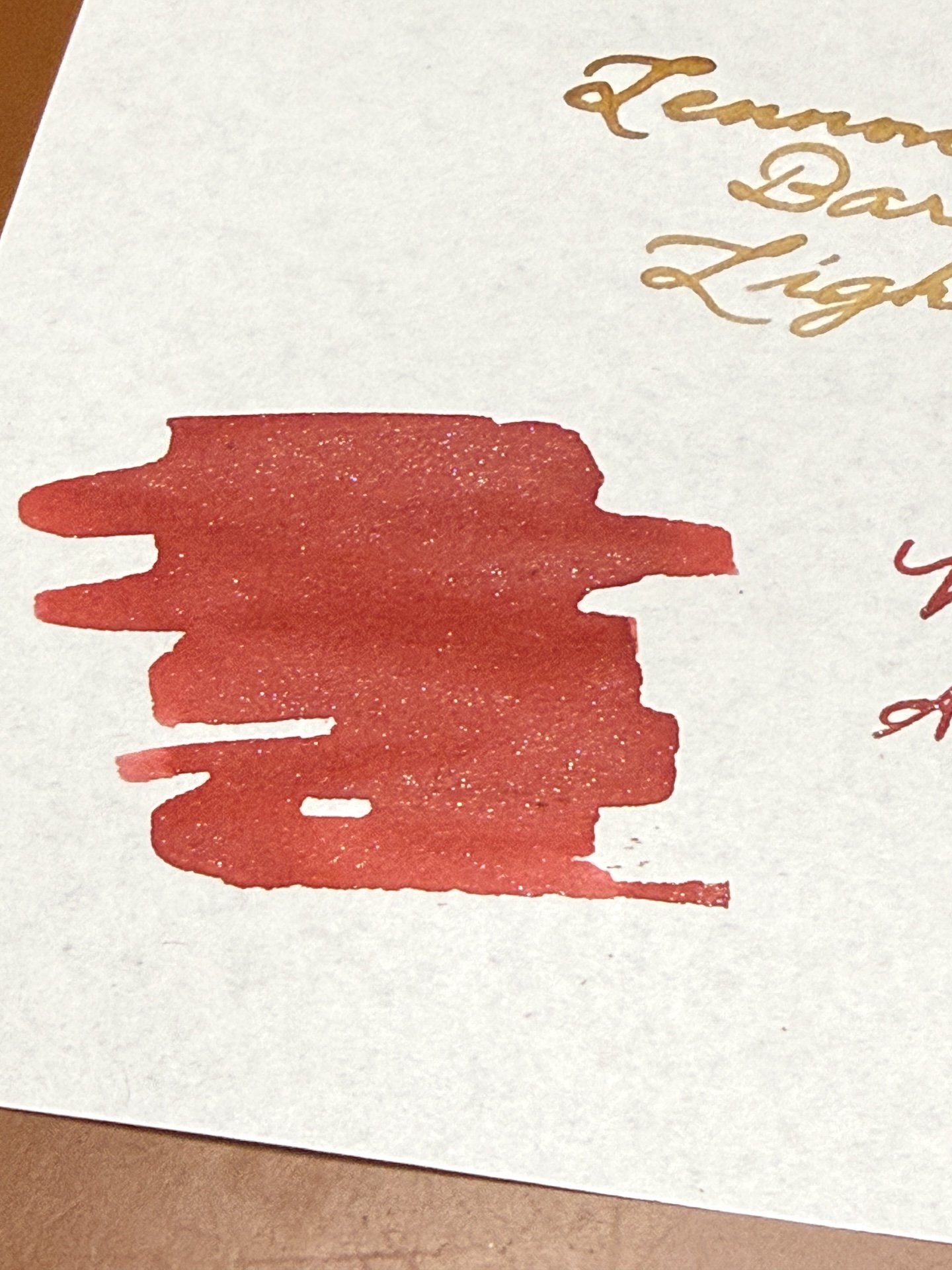
Love the shimmer from Wearingeul A Kidnapped Santa - not gonna lie, I love the name even more!
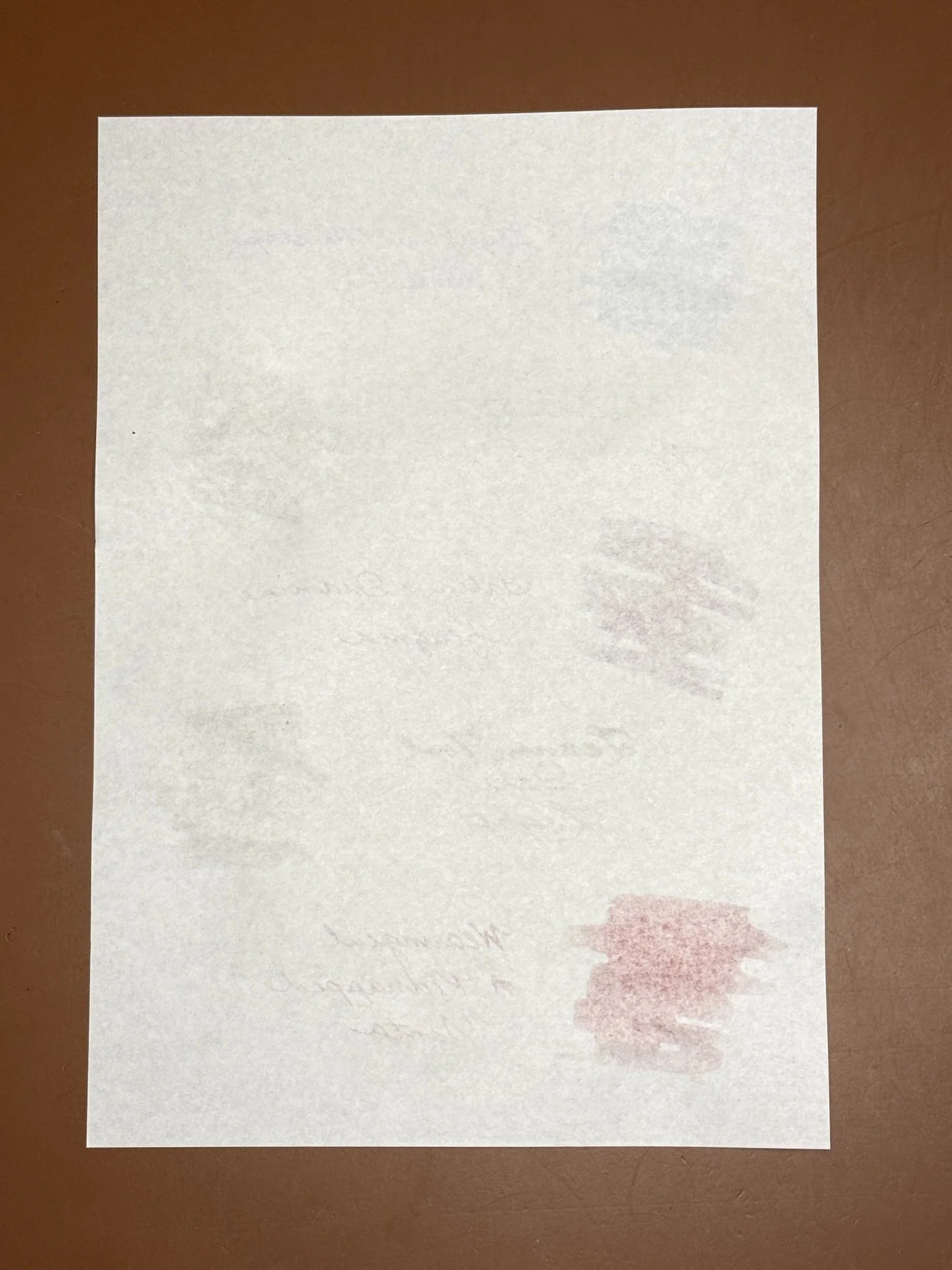
With such a heavy application of ink, it’s not surprising that you’d see some ghosting on the back, but no actual bleedthrough which is really good.

I’ve decided to make this set of standard pens, markers, and pencils as my default, and put them in its own cup so I don’t have to dig around every time I do a paper review. Don’t ask me why it’s taken me this long to figure this out, haha.
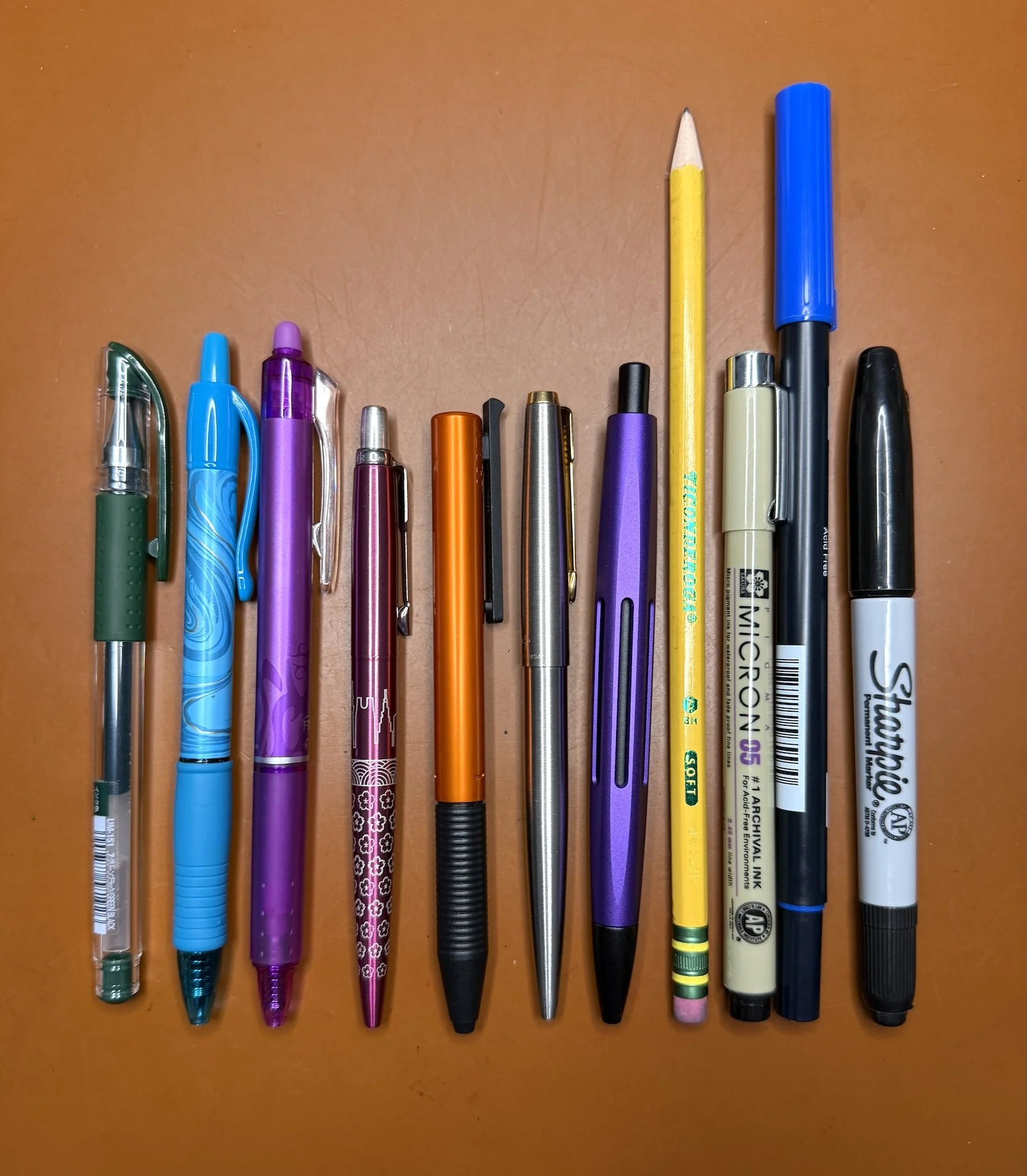
Standard pens (l to r): Uni-ball Signo DX, 0.38, Pilot G-2 07, Frixion Clicker 07, Lamy Tipo Medium, Parker Jotter, Ballpoint, Parker Flighter, Gel, Spoke Clickstream, Schmidt EasyFlow 9000 M, Zebra Sarasa Clip 05, Ticonderoga 2HB Soft, Sakura Pigma Micron 05, Tombow ABT, color 476, Sharpie. And yes, this is the same photo (and set of pens) that I’ve used for the last several paper reviews.
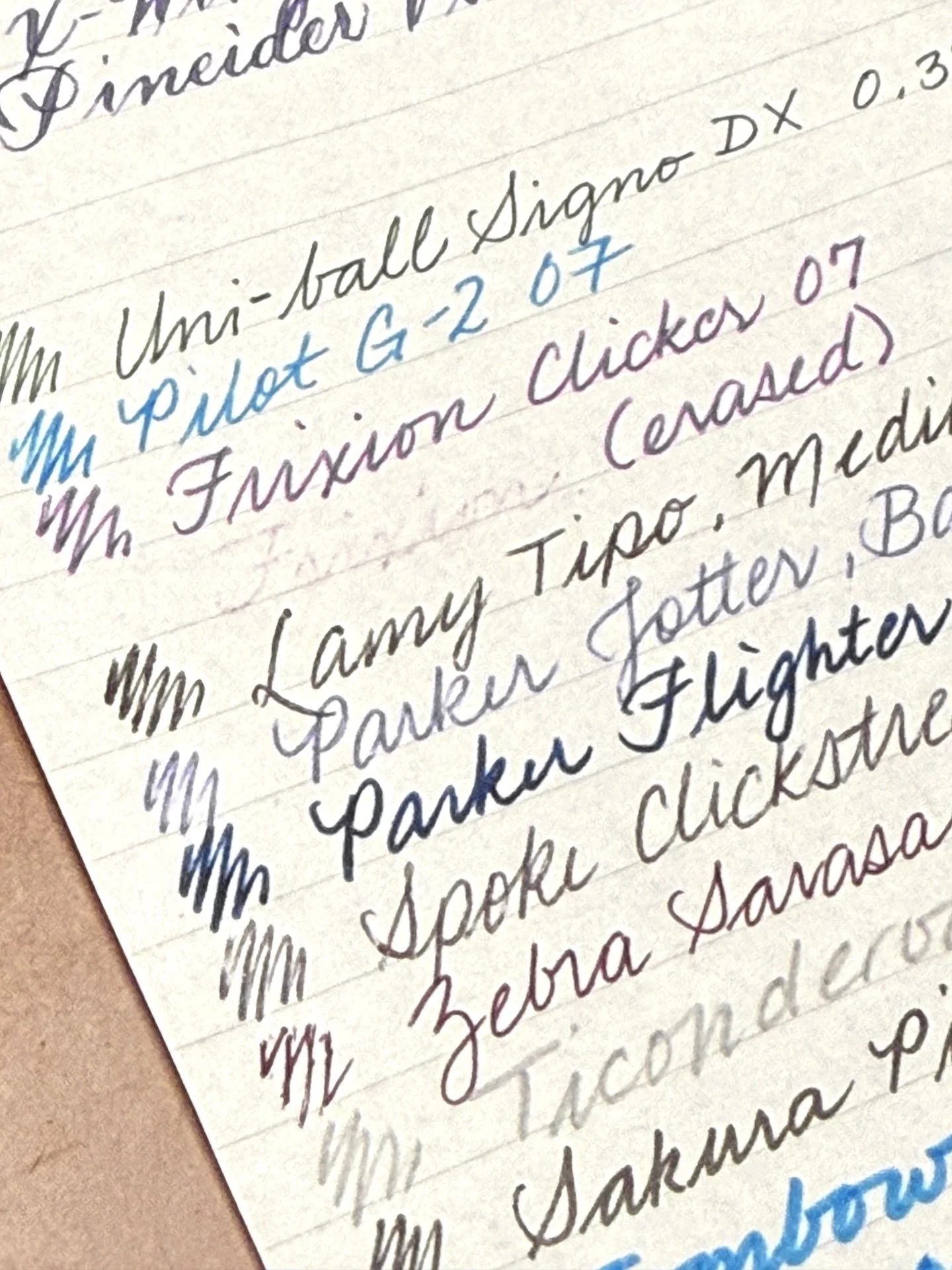
It took some effort to erase the writing of the Frixion, partly due to the fact that I didn’t want to rip the paper, but it does require a fair amount of friction (sorry, not sorry) in order to erase the ink. It really feels like trying to erase on something like Tomoe River. Even after all that effort, you can still see the remnants, moreso than on other papers.
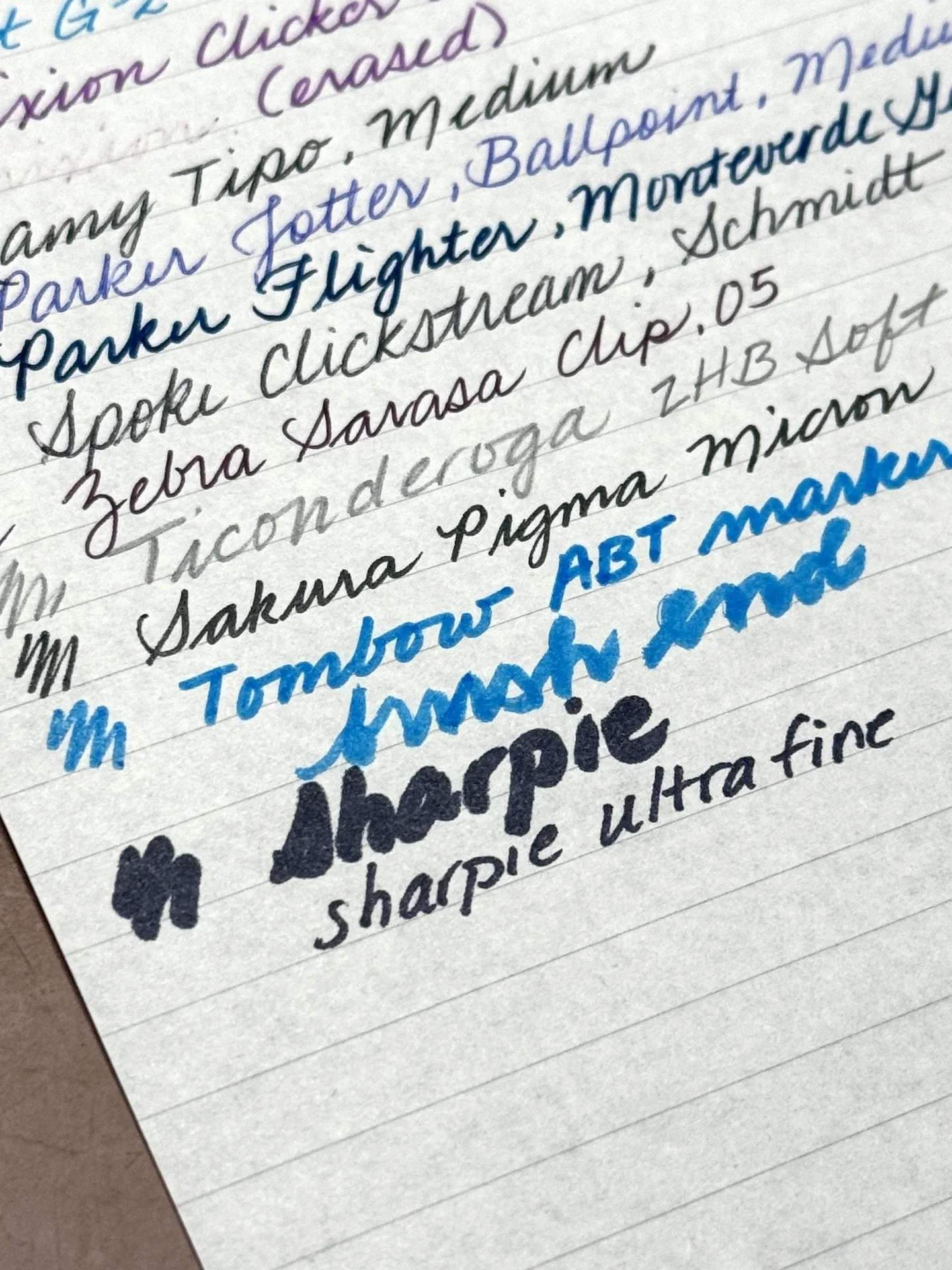
A few thoughts - wow that Monteverde gel refill color looks amazing and was super smooth - I’m going to need to try more colors. I continue to dislike pencils, sorry. Also, I cannot write with brushes. Lastly, why do I keep testing with Sharpies? Do I really expect it to ever do well?
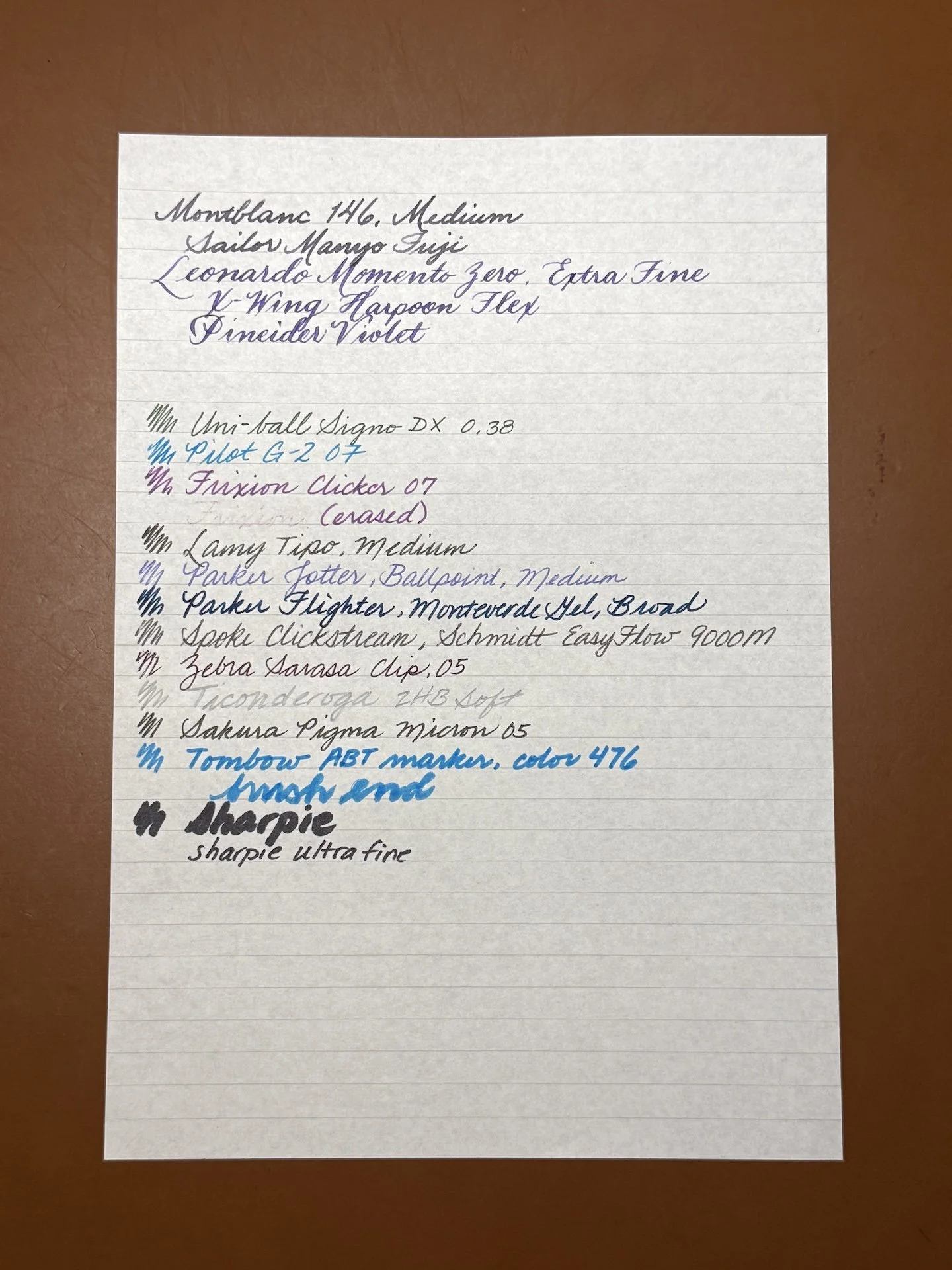
Not one to waste paper, I wrote with the above pens/pencil/markers and it handled most of them just fine. Wanna guess the troublemakers?
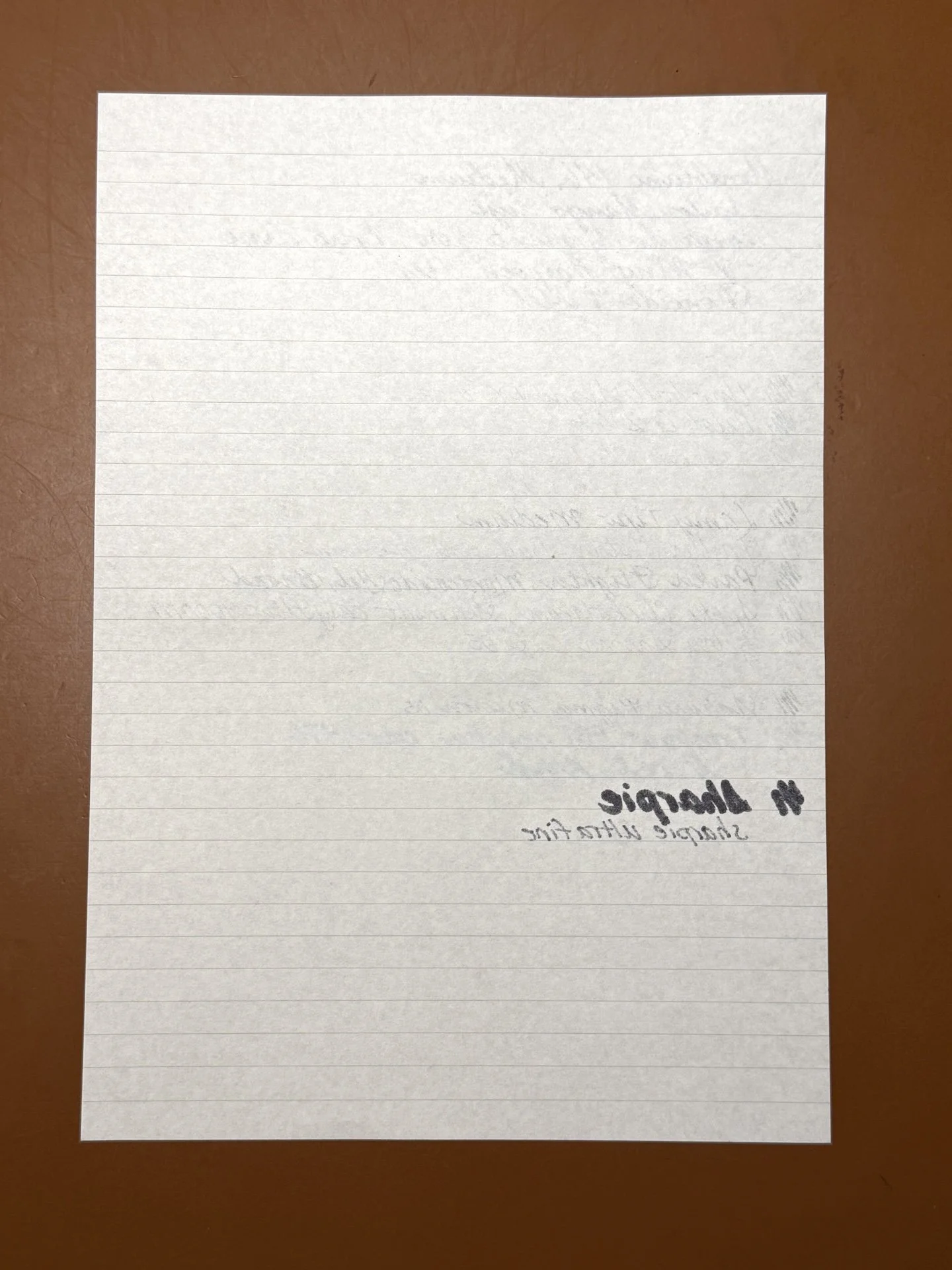
Yep, the Sharpie marker and ultra fine tip pens were the ones that bled through, but I don’t think that is a surprise.
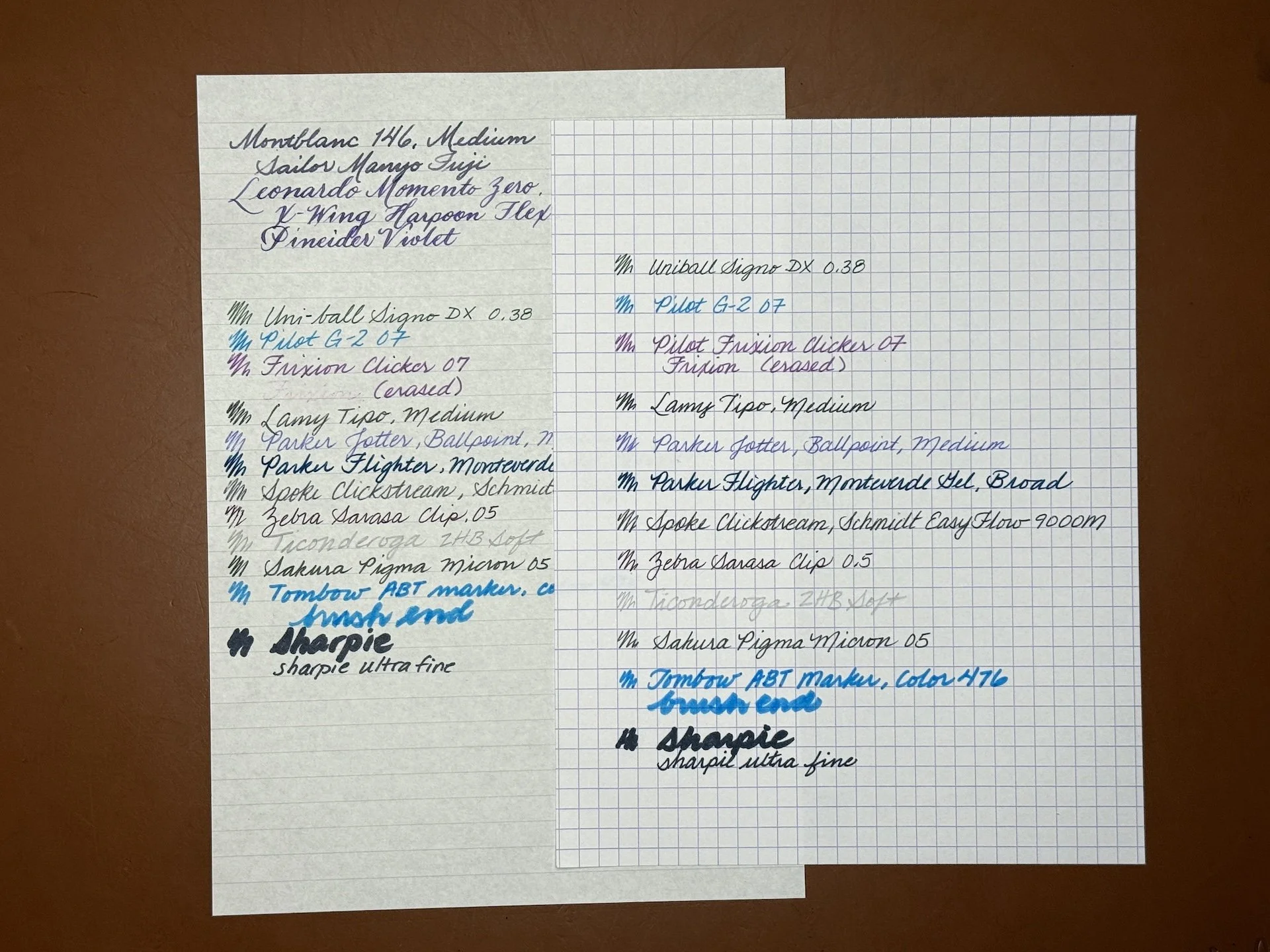
Nikitana (left) and 80 gsm Rhodia.
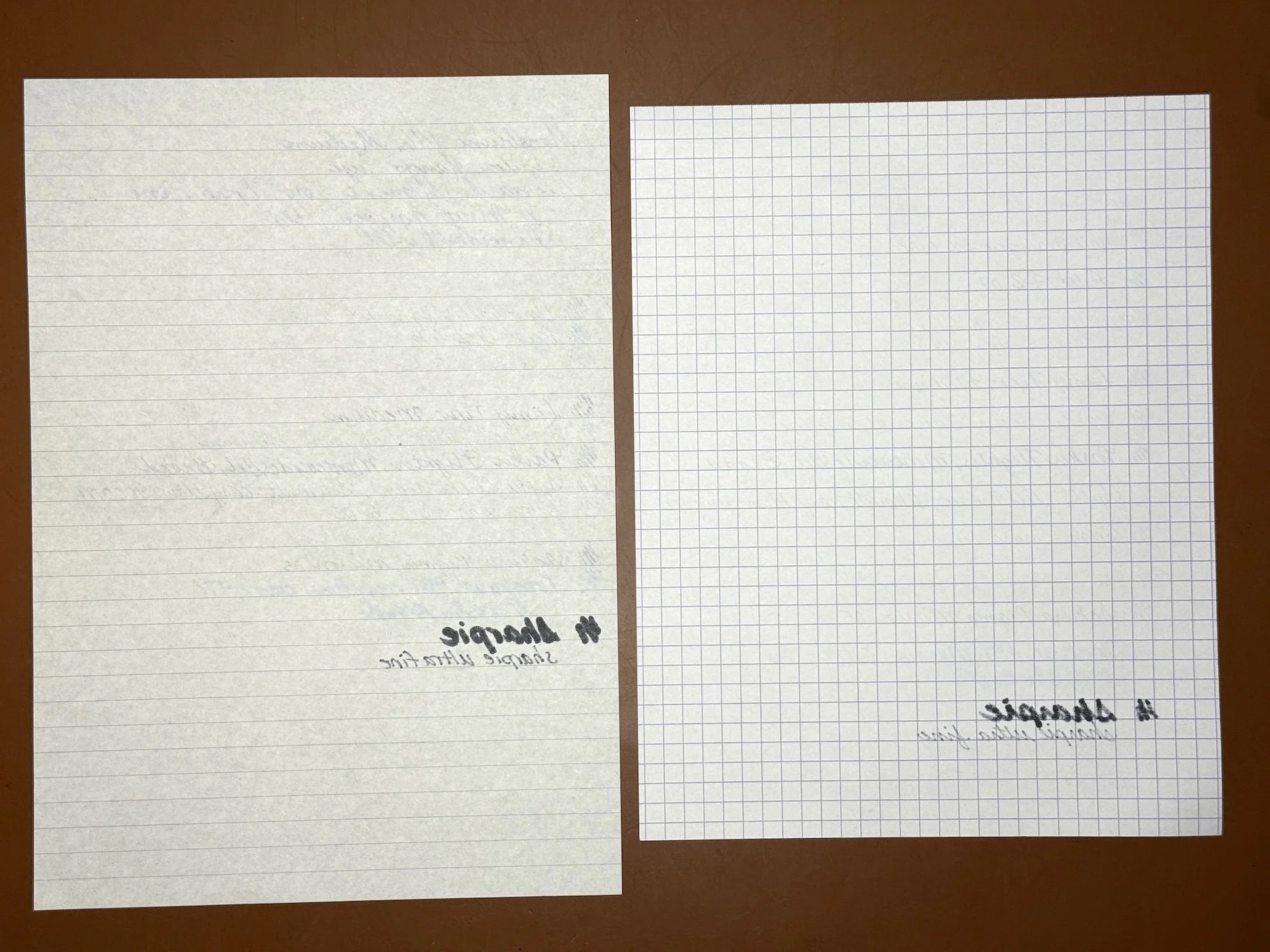
Both papers didn’t like the Sharpies, but the Rhodia did a slightly better job of handling it - probably because it’s 80gsm vs Nikitana’s 57.

The Nikitana Notebooks are more like inserts than what I would consider a notebook, primarily because of their covers, or lack thereof in the case of the “naked” option (that’s what’s on their website, but I’m going to refer to it as “coverless”). They are made with the same 57 gsm paper that I tested above, so I didn’t do another pen/ink test. The notebooks are thread-bound/stitched, which is a nice touch over staple-bound.
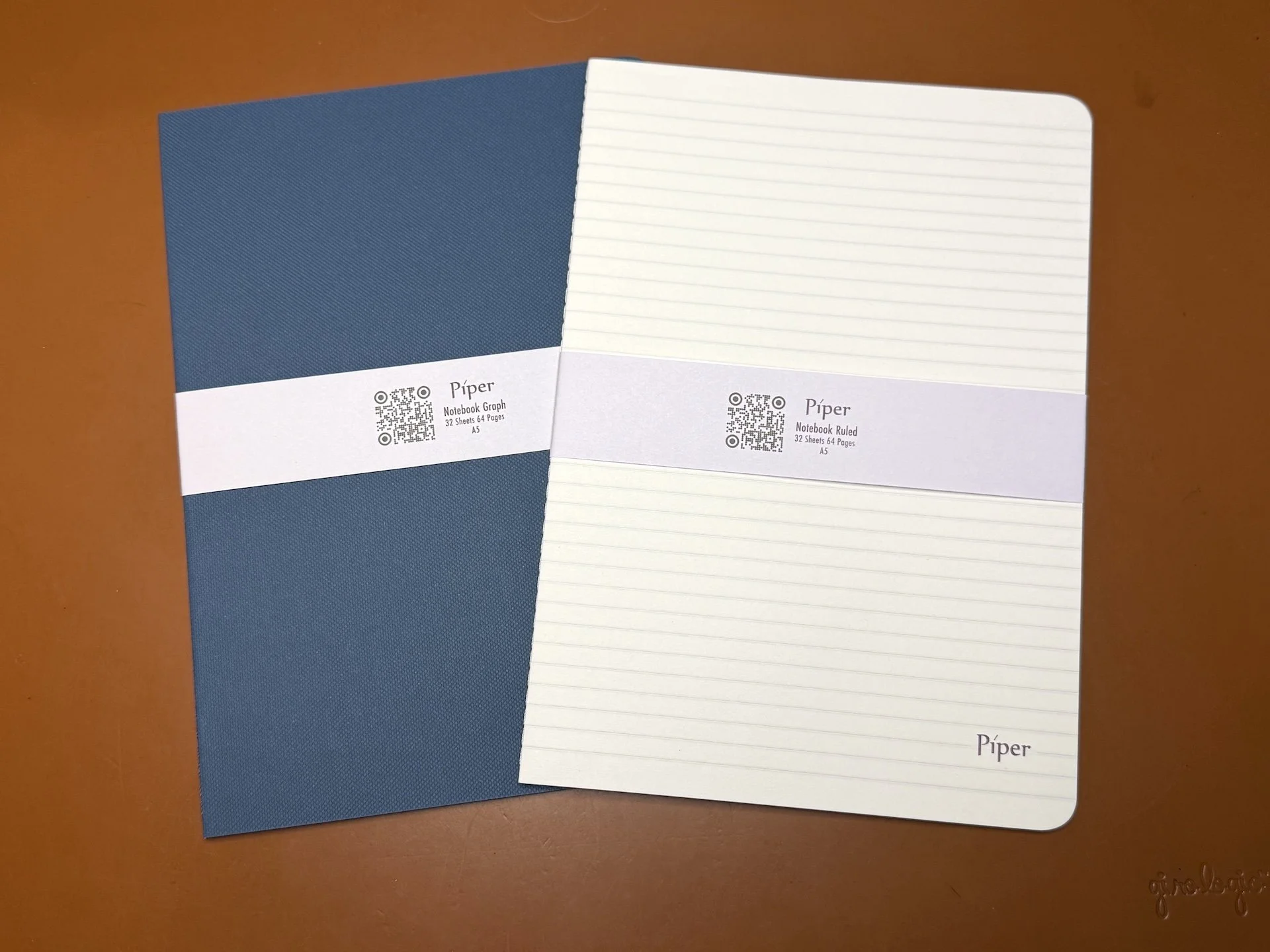
The Nikitana Notebooks come in Graph or Ruled, with a blue cover or coverless (the cover is the same paper as the rest of the notebook), in Pocket and A5 sizes.
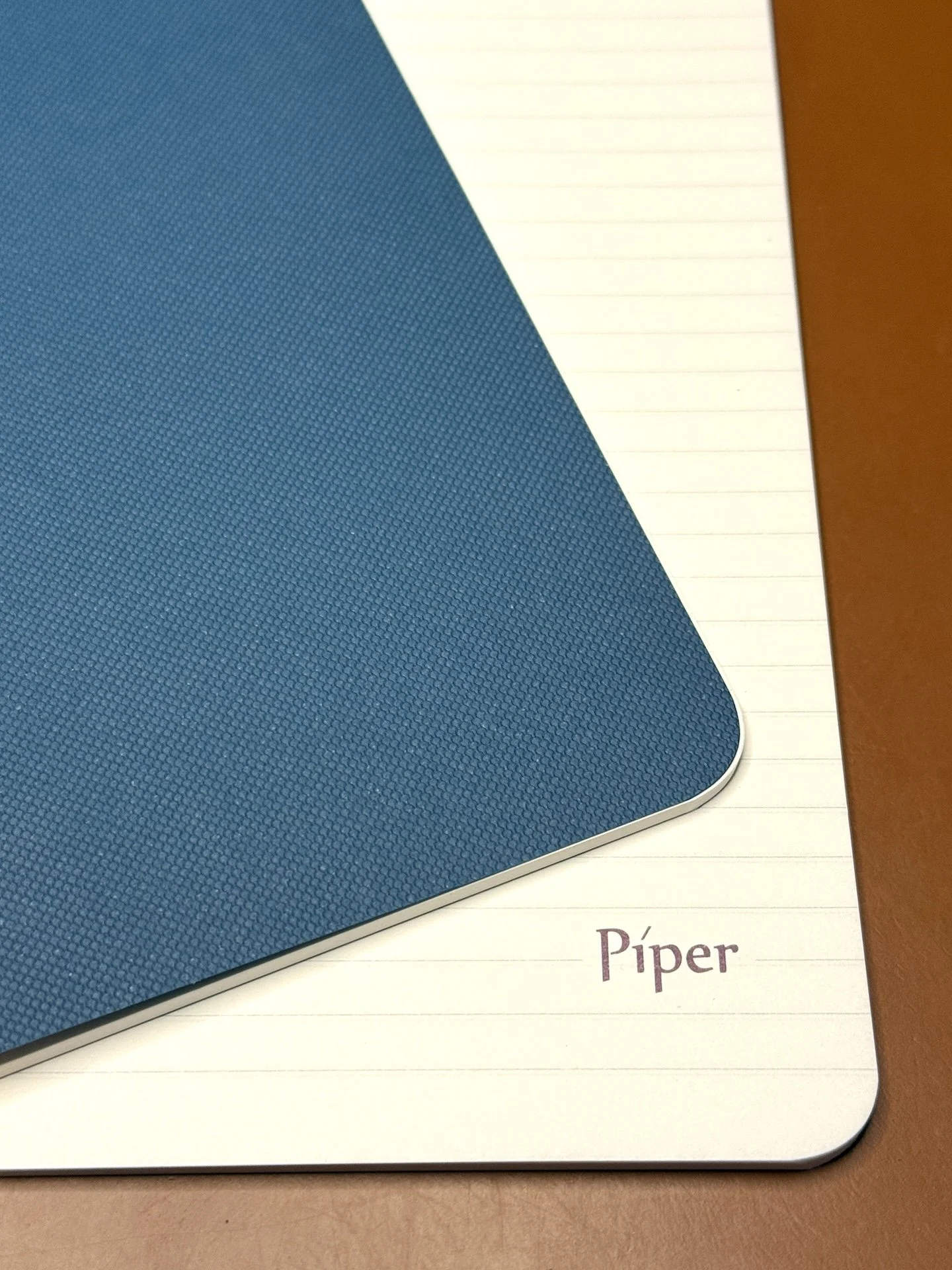
The teal/blue cover on the left is textured on the outside but smooth on the inside, while the coverless’ “cover” is the first sheet of Nikitana paper with “Piper” on the bottom corner.
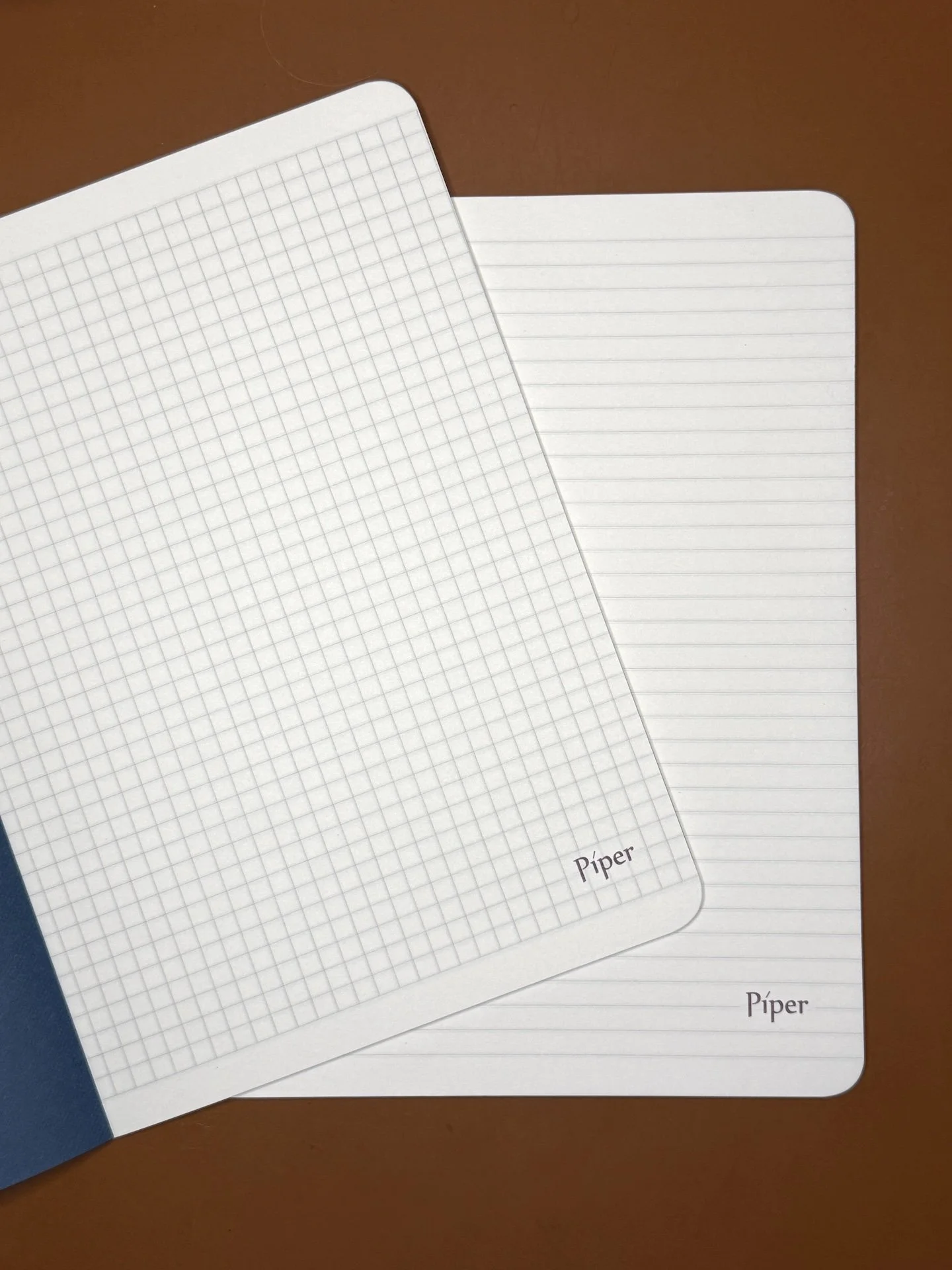
The first page of the covered notebook (left) and the cover page of the coverless notebook (right) both have “Piper” on the bottom right corner. All other pages don’t have this branding.

Thoughts about the notebooks:

  • I like the covered notebook, though I wish the covers were maybe slightly thicker. I think they’d be pretty easy to fold or bend if they weren’t in a notebook cover.
  • I don’t like the coverless notebook because it feels really flimsy and would easily get damaged, especially when you’re trying to slide it into a notebook cover.
  • I don’t mind the Piper branding on the first page of the covered notebook, but I don’t like it on the coverless.
  • I would like the covered notebook to be available in a Traveler’s Notebook size.
  • I like that the notebooks are thread-bound and lay fairly flat.
  • Maybe a blank option for the notebooks for those who like to draw or use it as a swatch book.
  • I would personally like these with more pages and with stiffer but pliable covers like the ones Rhodia and Leuchtturm have.

Both types of Nikitana Paper are available on the Piper Trading Co website. The Loose Leaf comes in packs of 50 sheets, in A4 and A5, for $12.50 and $7.50, respectively. The Notebooks have 32 sheets/64 pages, come in packs of 3, and prices range from $9.25 to $16.50 depending on size and cover option.

Overall, I enjoyed writing on the paper and look forward to using the loose leaf for letter writing, and the notebooks for language learning notes.

(Disclaimer: Thank you to Piper Trading Co for providing the paper and notebooks for review at no charge. All other products shown are my own. And as always, my thoughts and opinions are also my own.)
Posted on March 6, 2026 and filed under Nikitana, Paper Reviews, Notebook.

2024 Journal, Planner, and Notebook Setup

New year, new notebooks? Yes to the new year (hello 2024!) but new notebooks? It’s a continuation of the same for me, which is a good place to be, plus a reimagining of an old standby that has me ready to tackle all that lies ahead this year.

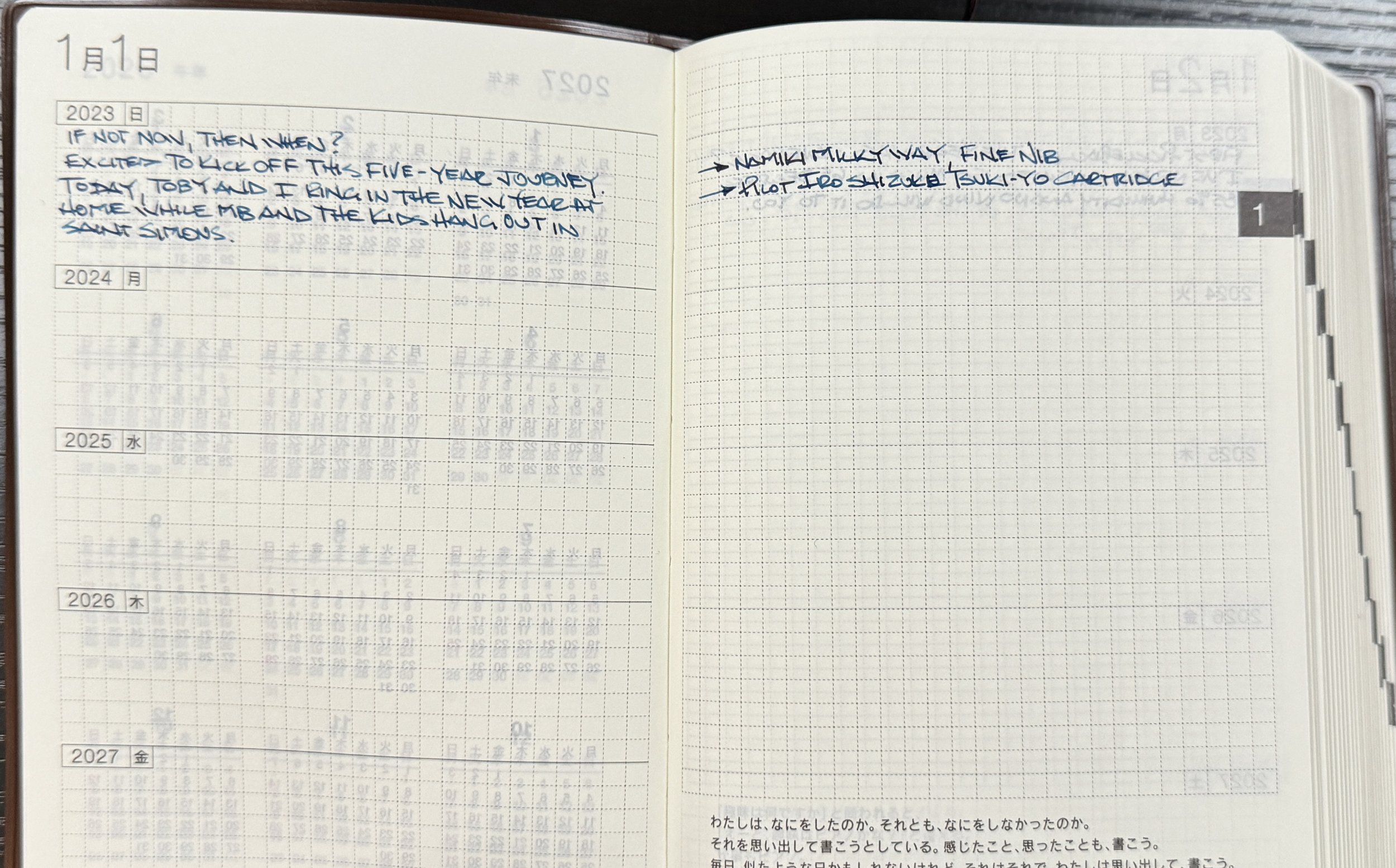
Two products worked perfectly for me in 2023, and therefore I am happy to keep them going. I was successful in filling out the first full year in my 2023-2027 Hobonichi 5 Year Journal, only skipping a handful of days throughout the year. It was a habit that formed quickly, as I looked forward to updating the previous day’s activities the following morning. And on the occasions that I was away from home for an extended period of time, it was easy to catch back up on the few days I missed.

One change I made early on with this journal is to not log the pen and ink I was using on the opposite page. That seemed like a good idea at first, but looking at how little I used the right side of the page, it seemed wasteful. A friend mentioned they plan on using the right-hand pages to add years to the journal - up to four more years in the case of this layout - and while I have many years before I get to that point, I will keep that option open.

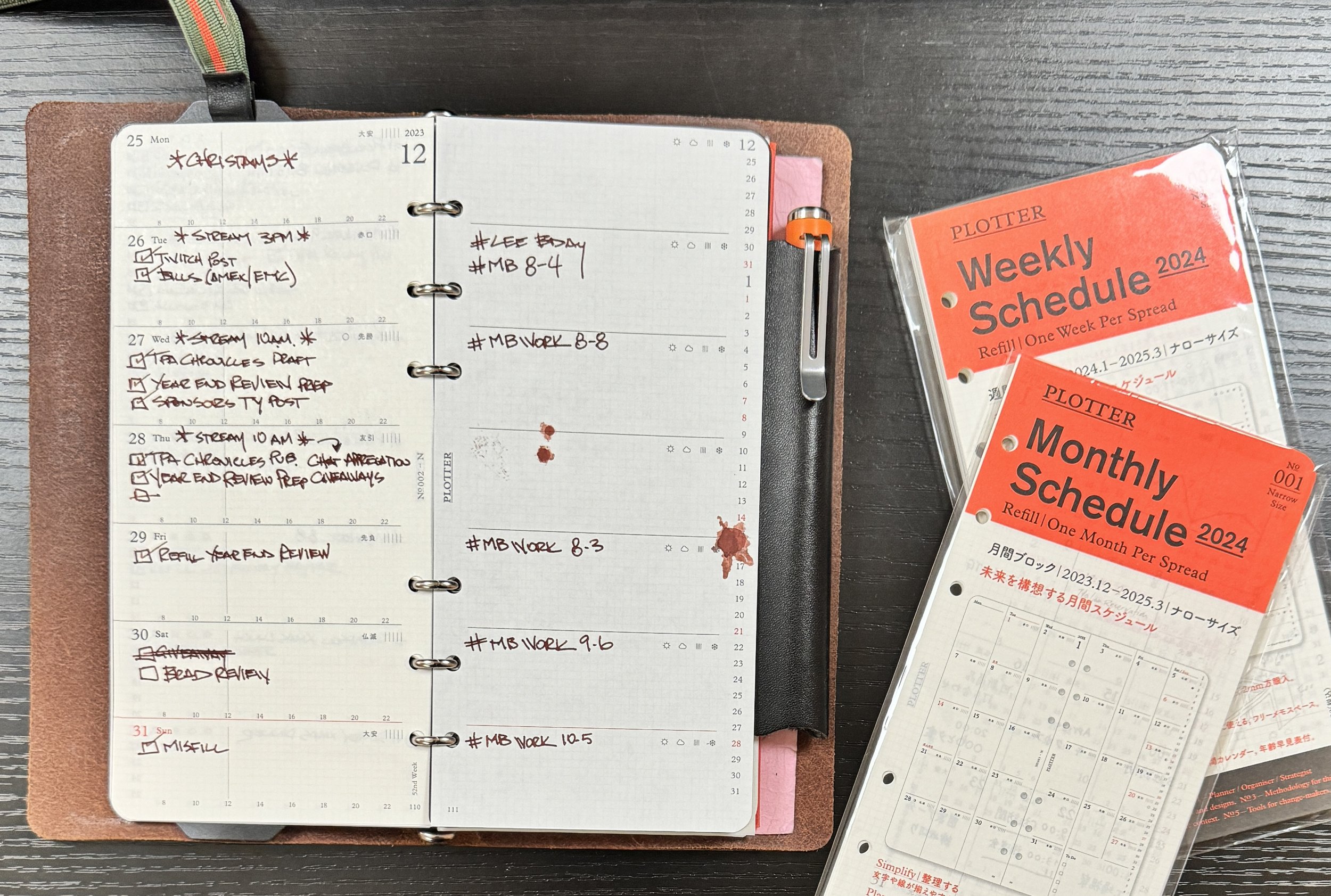
My first full year in the PLOTTER Narrow was a rousing success as well. This planner was used far more than the Hobonichi Journal, which is by design. I used the Weekly layout for a broad overview of what my week looked like, the standard grid pages for notes and lists, and I added in a batch of my favorite Bank Paper to the rear section for random pen tests and handout pages.

The only section I rarely used in my PLOTTER were the Monthly pages, but I plan on giving them another go this year and seeing what I can do to make them useful for me.

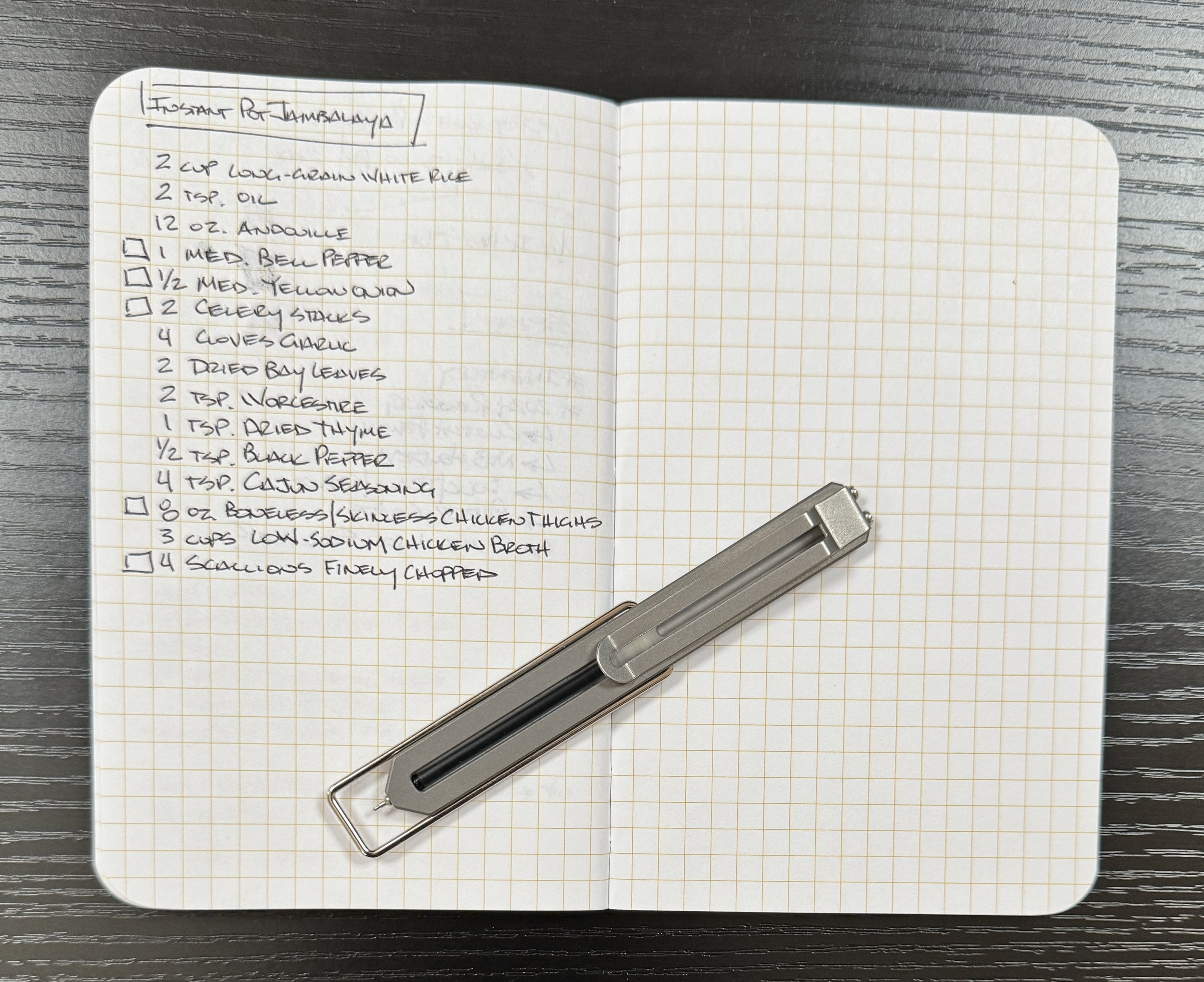
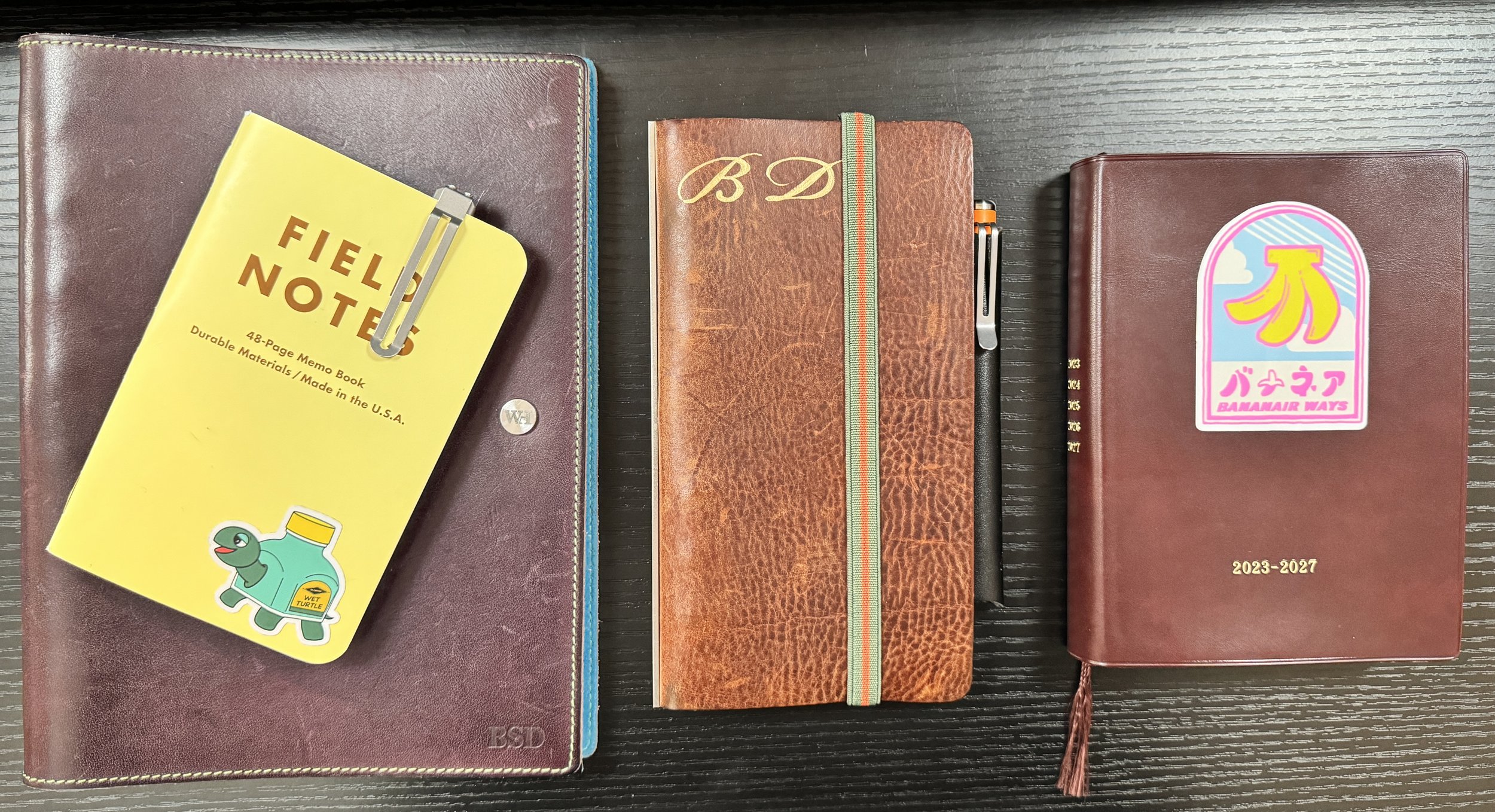
Towards the end of the year, I added in a Field Notes for a more easily pocketable, and portable, notebook for random thoughts, ideas, and scratch paper. The PLOTTER could be used for this (it does travel with me,) but I found the simplicity of a pocket notebook to be unsurpassed, once again.

The one frustration point in my current setup is with my Life Noble A5 Hardbound Notebook. It is an almost perfect notebook for me as far as style, layout, and performance goes, but I found myself rarely using it. My frustrations with it come from not knowing why I’m frustrated with it. I couldn’t design a better notebook for my own use, but I rarely choose to use it.

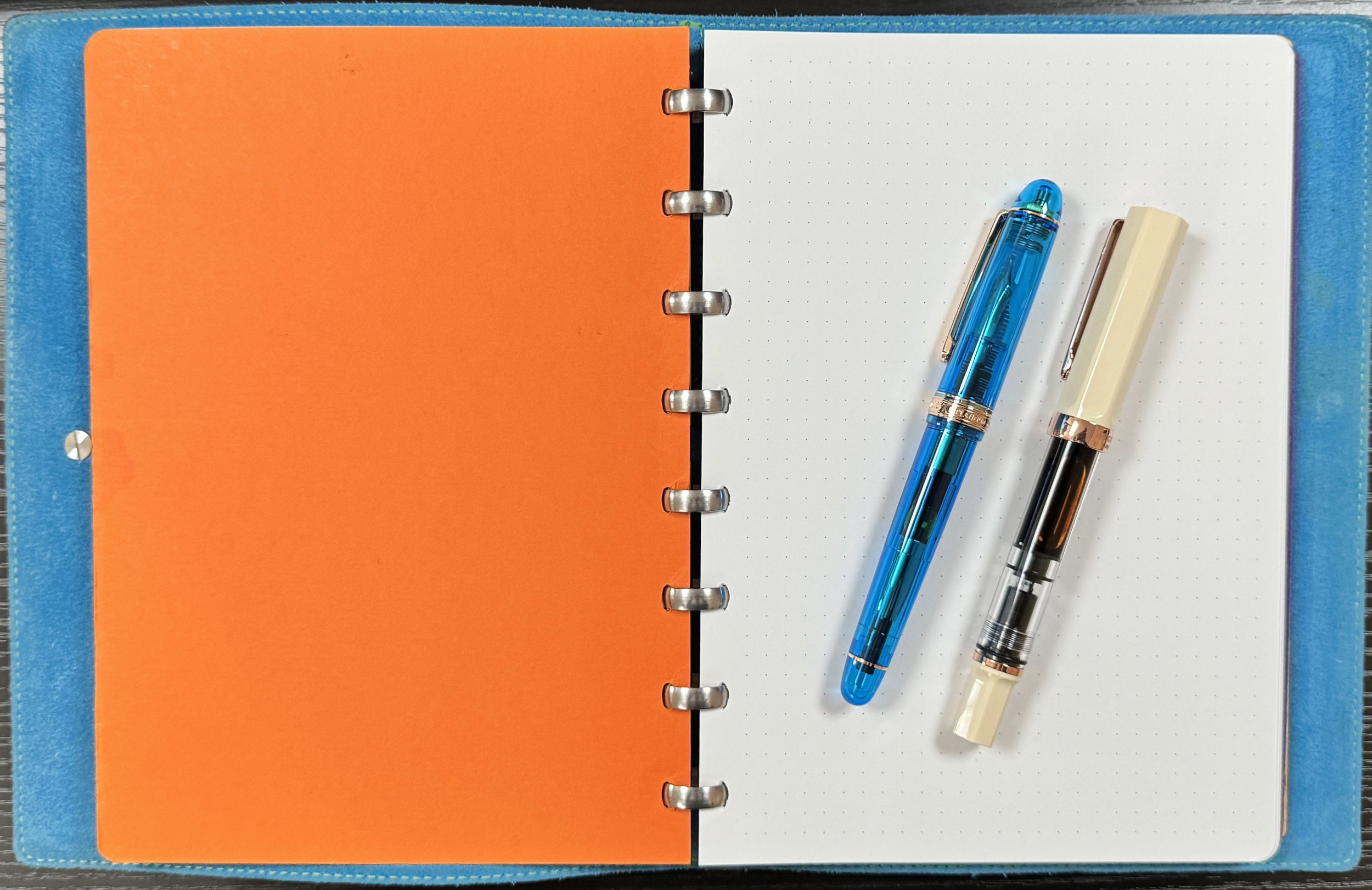
That brings me to my one new addition for the start of 2024: my William Hannah is back in the game! In its former life, it filled the role that my PLOTTER currently does. I like the PLOTTER format and size better for my planning needs, so I turned my William Hannah into my paper sampling notebook. Using a different hole punch than for my PLOTTER, I added in as many different paper types as I could to it. This made them easily accessible at my desk for testing, and portable to pen shows for others to try.

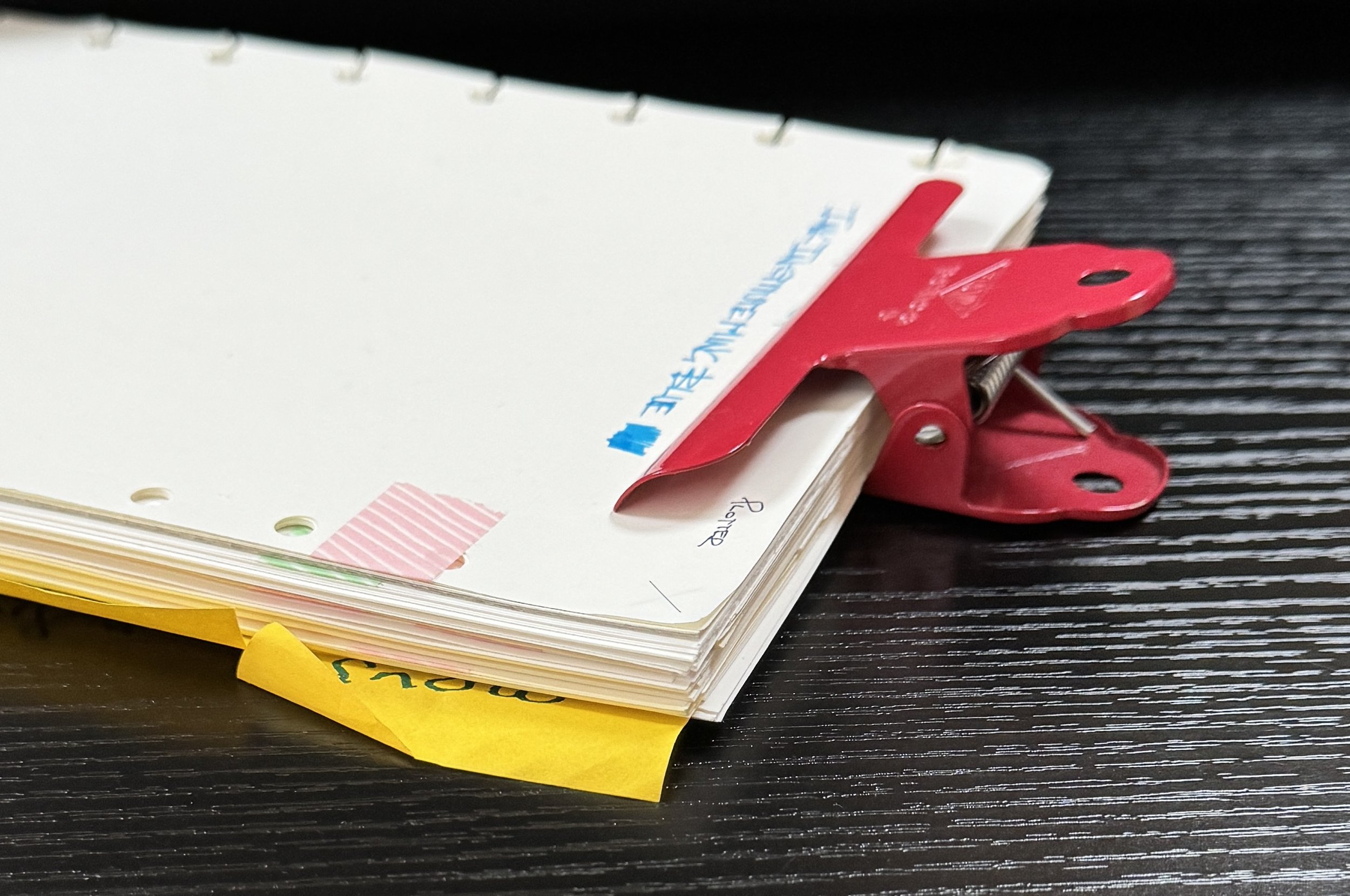
While I will miss this setup, I had an epiphany last week: this would make for a perfect project notebook. I removed all of the testing pages, and clamped them with this Medium Penco Clampy Clip, and added in the basic dot grid pages from William Hannah that I had ordered previously.

What this will allow is the proper organization for project plans and ideas. I can’t believe I am saying this, but I think this was my primary hangup with the bound A5 notebook. I want to project plan in it, but how do I allocate space for that? Is this a two-page project, or ten? When does one project start, and the next one end? I’m frozen by the inefficiency that this would introduce to the A5 notebook, and therefore it sat, mostly unused.

With the William Hannah, the pages are portable. Add a page here, remove a page there. The section dividers are movable, too, or I could simply mark the edges with washi tape or flags if I so desired. Flexibility, in this case, is peace of mind.

Will it work for me? Ask me in a year, but I’m anxious to get it going. If nothing else, thinking about overarching concepts such as allowing myself to set aside a product that doesn’t work, or repurposing something I already own into something new, has been a fun experiment. Let’s see how it plays out.


Enjoy reading The Pen Addict? Then consider becoming a member to receive additional weekly content, giveaways, and discounts in The Pen Addict shop. Plus, you support me and the site directly, for which I am very grateful.

Membership starts at just $5/month, with a discounted annual option available. To find out more about membership click here and join us!

Posted on January 1, 2024 and filed under Journal, Notebook, Planning.

Ink + Volt 2020-2021 Academic Planner: A Review

Ink + Volt 2020-2021 Academic Planner: A Review

(Susan M. Pigott is a fountain pen collector, pen and paperholic, photographer, and professor. You can find more from Susan on her blog Scribalishess.)

I left my office for Spring Break on March 6th and didn't return until last week because: COVID. I didn't realize that I wouldn't return after Spring Break, and I left my Hobonichi planner on my desk. Honestly, I left all plans behind in March. Those 2020 goals I set in January? Poof. Gone. Like many of you, I've spent my summer in a haze of uncertainty, not knowing how to set any goals much less have any.

But the fall is around the corner, and I needed a hard reset in order to start working on my courses. After Brad reviewed his Ink + Volt Executive Notebook, I headed to the Ink+Volt website and discovered their 2020-2021 academic planners. "Perfect!" I said. "This may be the thing that will help me reset my life." Plus, it's my last year as a professor, and an academic planner seemed like a little going away (cough . . . you've been fired . . . cough) present to myself.

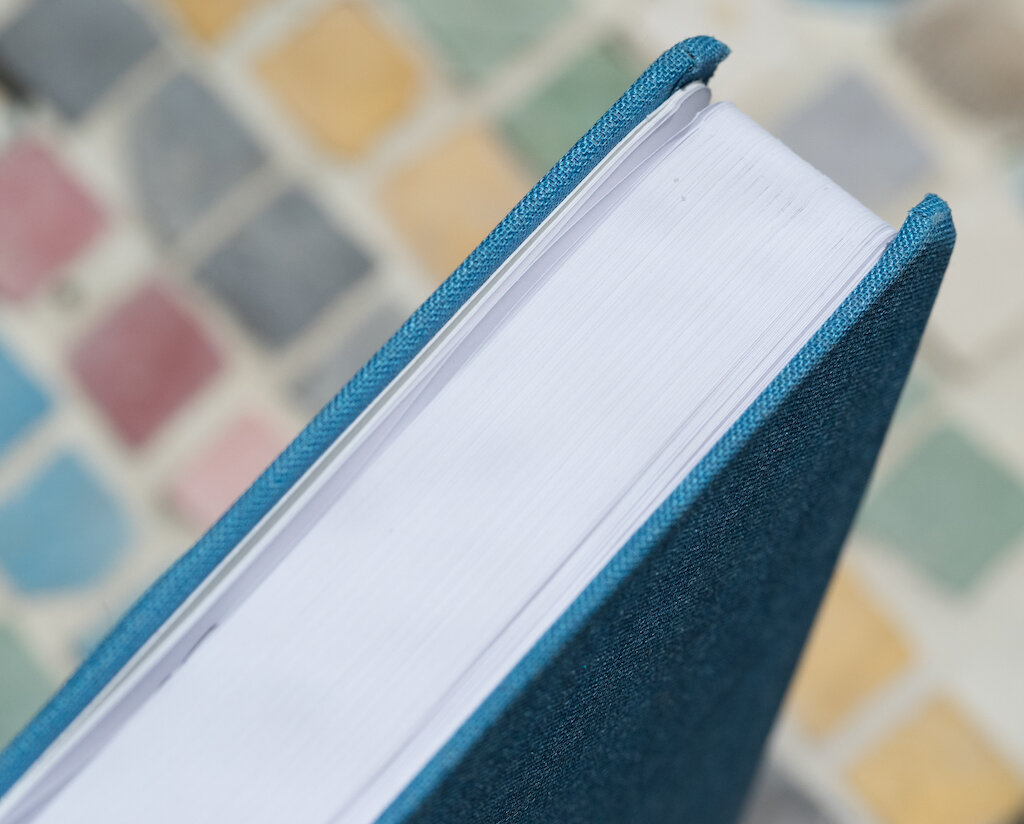
Ink + Volt 2020-2021 Academic Planner Corners

The Ink+Volt Academic Planner is a hardcover, lay-flat notebook with 280 pages of 70 pound paper. It measures 6 x 8 1/2 inches and is a little over 1 inch thick. The corners are rounded and the cover material is textured but soft. The only branding is on the back cover, and it is subtle.

Ink + Volt 2020-2021 Academic Planner Texture
Ink + Volt 2020-2021 Academic Planner Branding

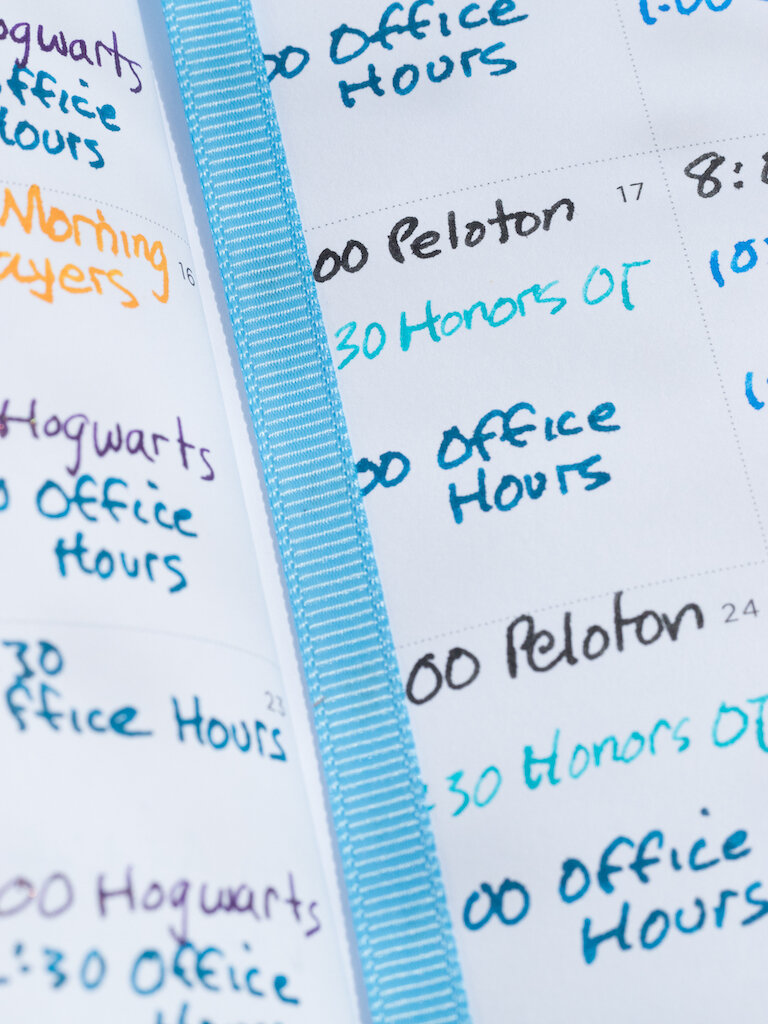
Two thick ribbons allow you to mark your place (I use them to mark the current month and week), and a back corner pocket can hold any extras.

Ink + Volt 2020-2021 Academic Planner Ribbon
Ink + Volt 2020-2021 Academic Planner Pocket

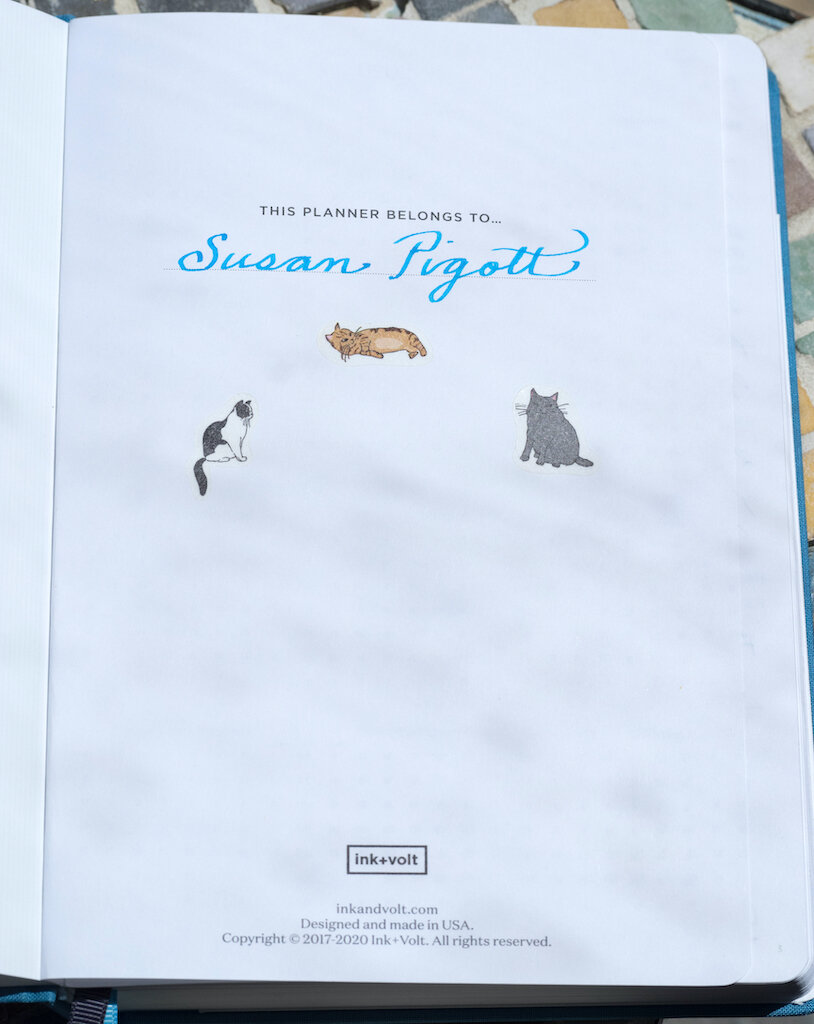
There's a cover page where you can write your name (and add kitty stickers).

Ink + Volt 2020-2021 Academic Planner Cover Page

The next two pages provide complete 2020 and 2021 monthly calendars, which is helpful for reference.

Ink + Volt 2020-2021 Academic Planner Calendars

Planning for the Year

One of the reasons I wanted to try the Ink+Volt Academic Planner is because of the guided planning it provides. As I said earlier, I needed a reset for 2020, and the first few pages of the planner offered that. Before I started filling them in, I printed the free Mid-Year Review provided in the "Guides" section on the Ink+Volt website. This review helped me to assess where I was as of July 2020.

Then I filled out the pages in the Academic Planner, starting with "Bringing Your Year Into Focus."

Ink + Volt Academic Planner Year Focus

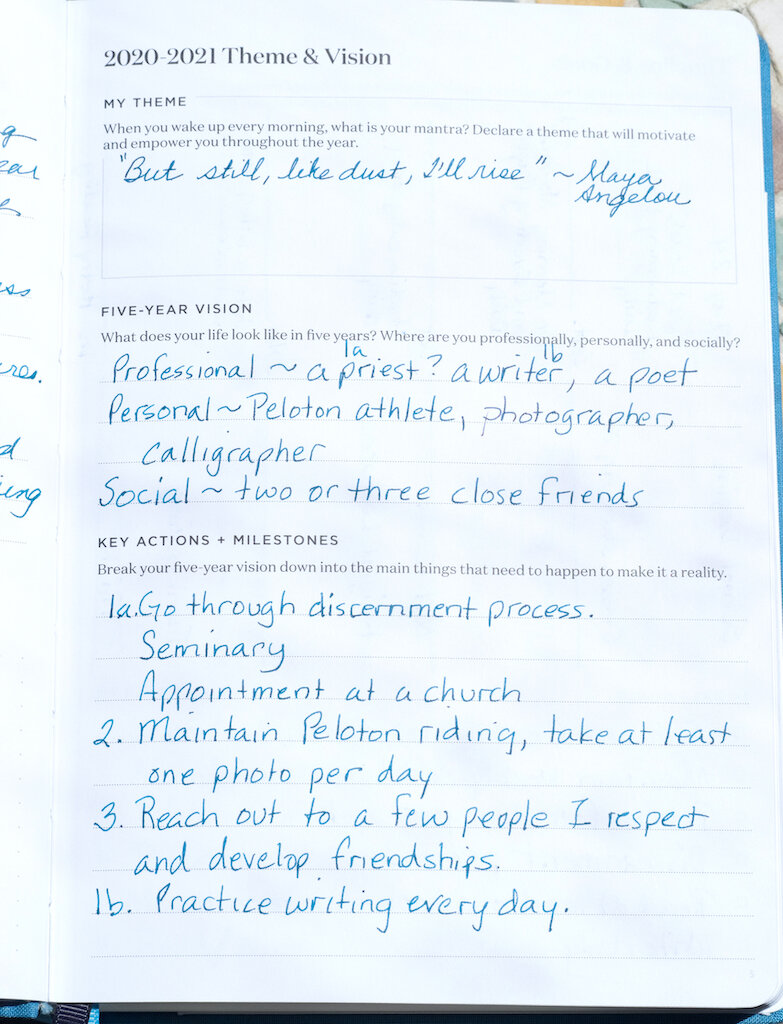
The next page asked me to declare a theme for the year that would both inspire and empower me. I chose a line from Maya Angelou's famous poem, "Still I Rise" as my theme: "But still, like dust, I'll rise." As part of my reflection, I had to come up with a Five-Year Vision and key actions and milestones to help me achieve that vision.

Ink + Volt Academic Planner Theme

A two-page spread offers space for a timeline with goals for the first and second halves of the year. My goals are pretty much the same for both halves, though in the spring one unhappy goal is moving out of my office where I've spent the past 28 years.

Ink + Volt Academic Planner Timeline

Planner Features

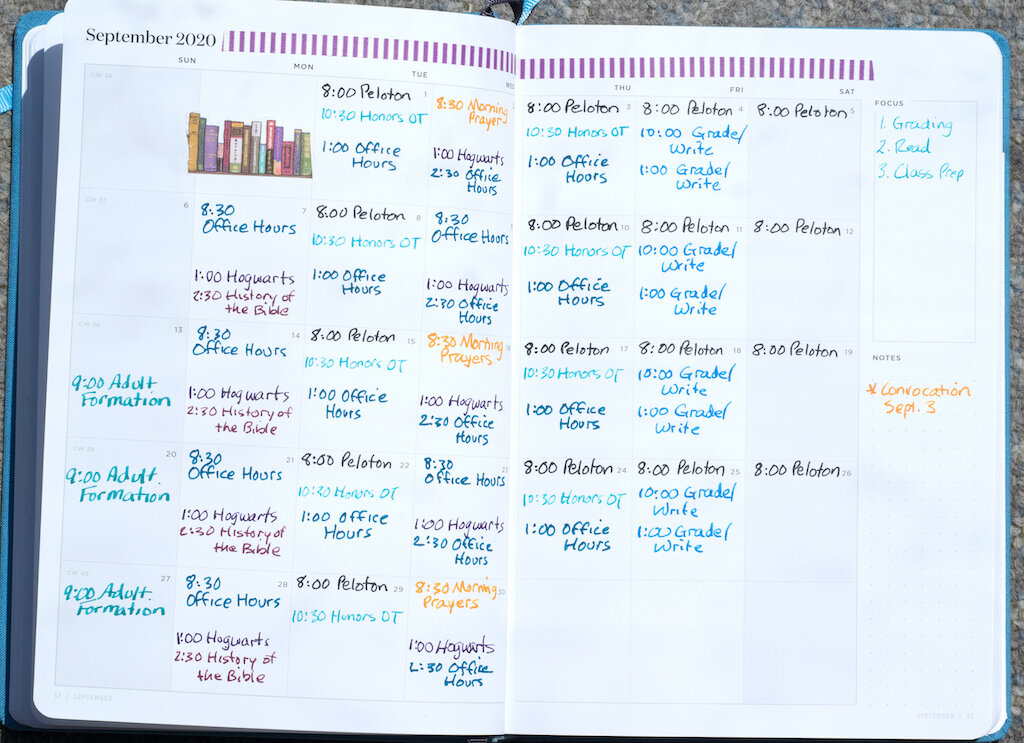
The planner is divided into months and weeks. There are no daily pages. Each month appears as a two-page spread with plenty of space for writing down events. The right margin provides a focus box and space for notes.

Ink + Volt Academic Planner Monthly Spread

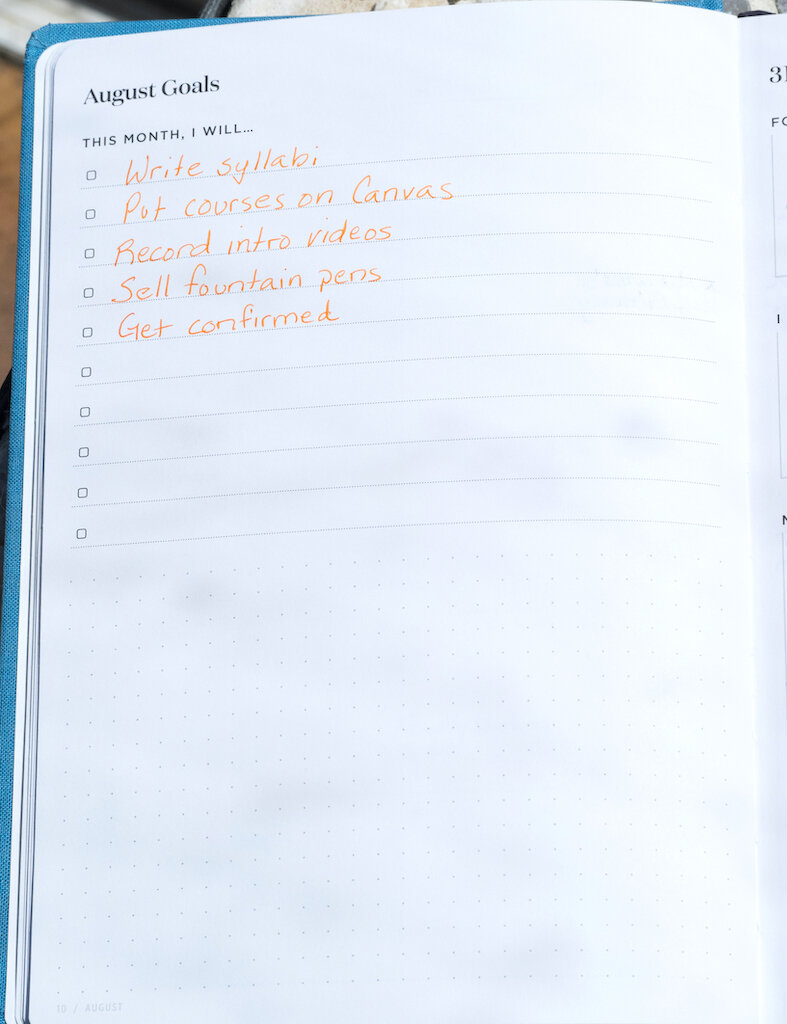
Next is a page for the month's goals with checkboxes and space below for notes or additional goals.

Ink + Volt Academic Planner Monthly Goals

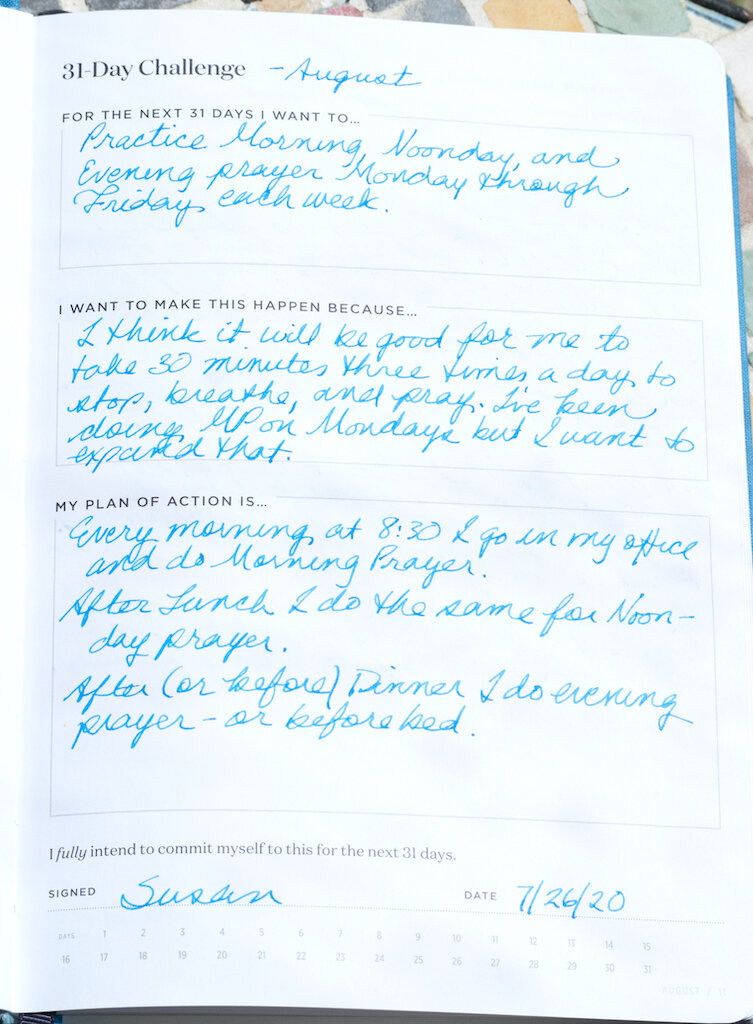
Each month you choose a 31- (or 30-) day challenge. This offers you an opportunity to create a new habit or try something fresh for the month. In addition to stating what the challenge is, you explain why you want to do this particular challenge and offer a precise plan of action to make it happen. There's a place to sign your commitment (which felt a little silly to me, but okay) and a "Challenge Tracker" to circle or highlight all the days when you completed the challenge.

Ink + Volt Academic Planner 31 Day Challenge

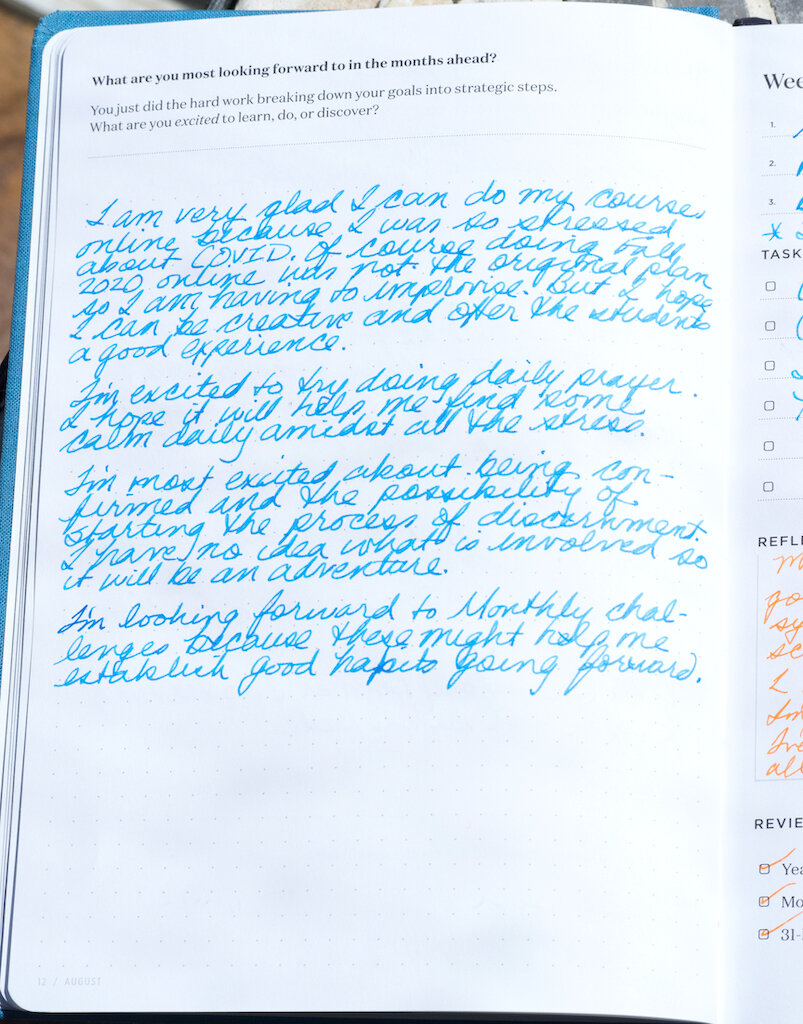
Prior to each week, you are given a unique question to consider. For this week, the question was, "What are you most looking forward to in the months ahead?" Questions from other weeks include "Are you holding on to things that no longer serve you? . . . What can you let go of this week?" "Hard work and focus can sometimes feel lonely. Is there time for human connection in your life?" "The smartest people are always learning. What is a lesson you can take away from a recent experience?"

I love these weekly questions. They offer an opportunity to consider things beyond goal planning. Contemplating a question you might not think of yourself prior to beginning each week is inspiring.

Ink + Volt Academic Planner Weekly Question

The next page asks you to write at least three goals for the week and the tasks you'll need to do in order to complete those goals. There's a box where you can reflect and celebrate what you accomplished the previous week. A checklist at the bottom of the page reminds you to do a weekly review of your goals.

Ink + Volt Academic Planner Weekly Goals

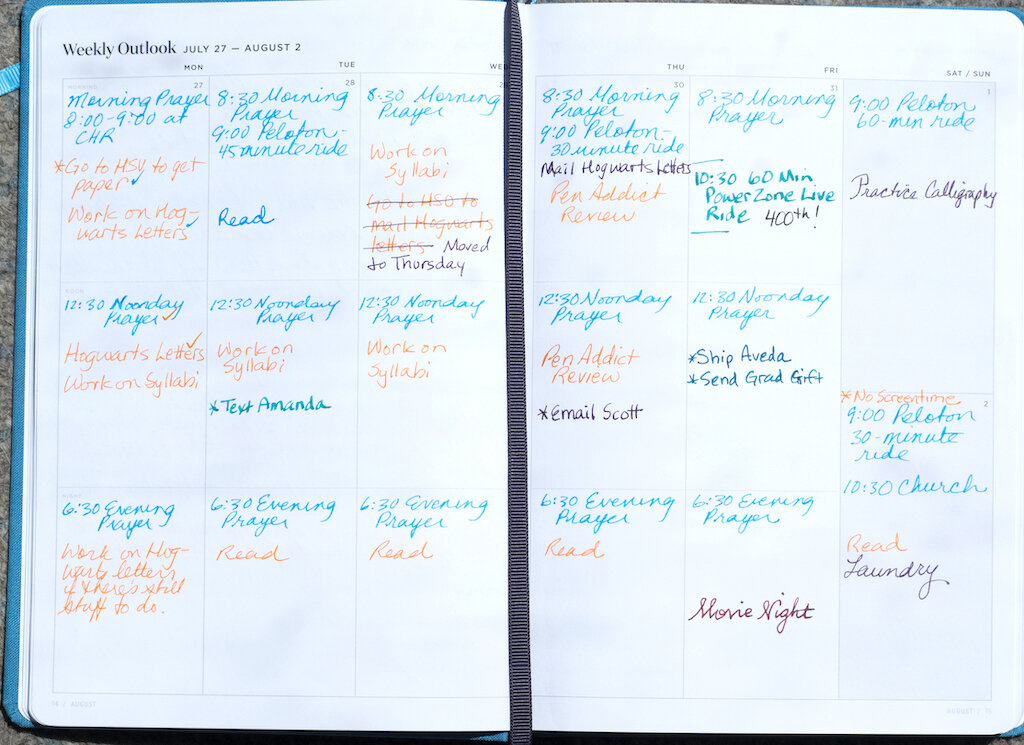
Another two page spread provides plenty of space to plan your week. Each weekday is divided into three boxes: Morning, Noon, and Night. If you want to subdivide the boxes into hours you can, or you can simply write goals or tasks for each time period. I thought I would miss not having a "Daily" page, but the weekly spread provides enough room for me to write the things I would ordinarily put on a daily page. The greatest benefit to this approach is I can see the entire week at a glance. This is so helpful for my ADHD brain that forgets anything out of sight.

Ink + Volt Academic Planner Weekly Outlook

There's a section at the end of the planner for documenting your achievements for the year and reflecting on the events.

Ink + Volt Academic Planner Year End

The 70 pound paper in the Ink+Volt Academic Planner is smooth and thick with dot-grid format for notes. From the feel of the paper between my fingers, I expected it to perform well with fountain pens and ink. It does and it doesn't. In my fountain pen test, the paper handled finer nibs and drier inks without much difficulty and with little show or bleed-through. However, wider nibs and wetter inks created some bleed-through.

Ink + Volt Academic Planner Fountain Pen Test
Ink + Volt Academic Planner Fountain Pen Bleed

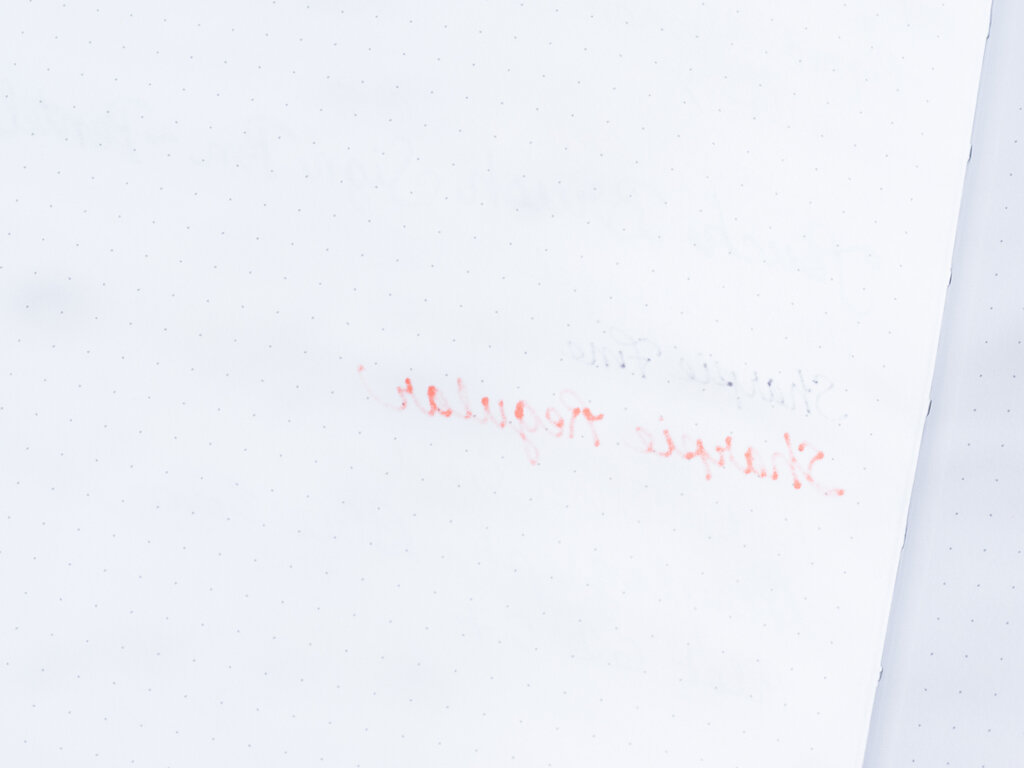
I also tested various pens (gel, rollerball, felt tip). The paper handled these easily, but both the Sharpie pens bled through.

Ink + Volt Academic Planner Pens
Ink + Volt Academic Planner Sharpie

I decided to do a swab test even though this planner wasn't designed for wet swabs of ink. I know some folks like to use monthly spreads to do ink challenges. The swabs look great on this paper with rich color, sheen, and shading, but there's significant bleed-through.

Ink + Volt 2020-2021 Academic Planner Swab Test
Ink + Volt 2020-2021 Academic Planner Swab Bleed

One of the most disappointing aspects of the paper is that many of the fountain pen inks feathered, even with fine and extra fine nibs. The feathering isn't all that noticeable to the naked eye, but I'm surprised the paper isn't as fountain-pen friendly as I expected it to be.

Ink + Volt Academic Planner Feathering
Ink + Volt Academic Planner Feathering 2

I'm looking forward to using the Ink+Volt Academic Planner for my last year as a professor. I've already benefitted from doing the Mid-Year Review and yearly planning. The weekly reflection questions will give me something different to consider as I prepare for each week. I think the Weekly Outlook format be excellent for planning. Having the entire week before my eyes will help me keep on top of things.

In addition to the planner, the Ink+Volt website offers numerous free resources, including printable worksheets and blog posts covering all sorts of helpful topics. I've read several of the posts and plan to use the printables.

If you need a reset as August arrives, I highly recommend the Ink+Volt Academic Planner with the caveat that the paper isn't completely fountain-pen friendly. You can purchase one from Ink+Volt for $42.75, but they are running low on stock and color choice is limited. Act quickly if you want one. If an academic calendar format isn't for you, Ink+Volt has their 2021 planners ready to go. Prices vary depending on the series you choose. You don't have to purchase a planner to start using the Ink+Volt website with all the wonderful resources provided. It's a great way to sample the Ink+Volt methodology before you commit to a planner.

(Ink+Volt provided this Academic Planner free of charge to Pen Addict for review.)


Enjoy reading The Pen Addict? Then consider becoming a member to receive additional weekly content, giveaways, and discounts in The Pen Addict shop. Plus, you support me and the site directly, for which I am very grateful.

Membership starts at just $5/month, with a discounted annual option available. To find out more about membership click here and join us!

Ink + Volt Planner
Posted on July 31, 2020 and filed under Ink+Volt, Notebook, Planner Reviews, Notebook Reviews.