Posts filed under Nibs

Pilot Custom 74 - Ranking the Nibs

(Kimberly (she/her) took the express train down the fountain pen/stationery rabbit hole and doesn't want to be rescued. She can be found on Instagram @allthehobbies because there really are many, many hobbies!.)

After testing 14 of Pilot’s #15-sized 14K gold fountain pen nibs on the Pilot Custom 743 two years ago, and then 15 of the #10 sized nibs last year, I asked, no, I begged Jaclynn Burleigh (now Carpenter, congrats!) of Pilot USA if I could test their #5-sized 14k gold nibs in their Pilot Custom 74 pens and she said yes!
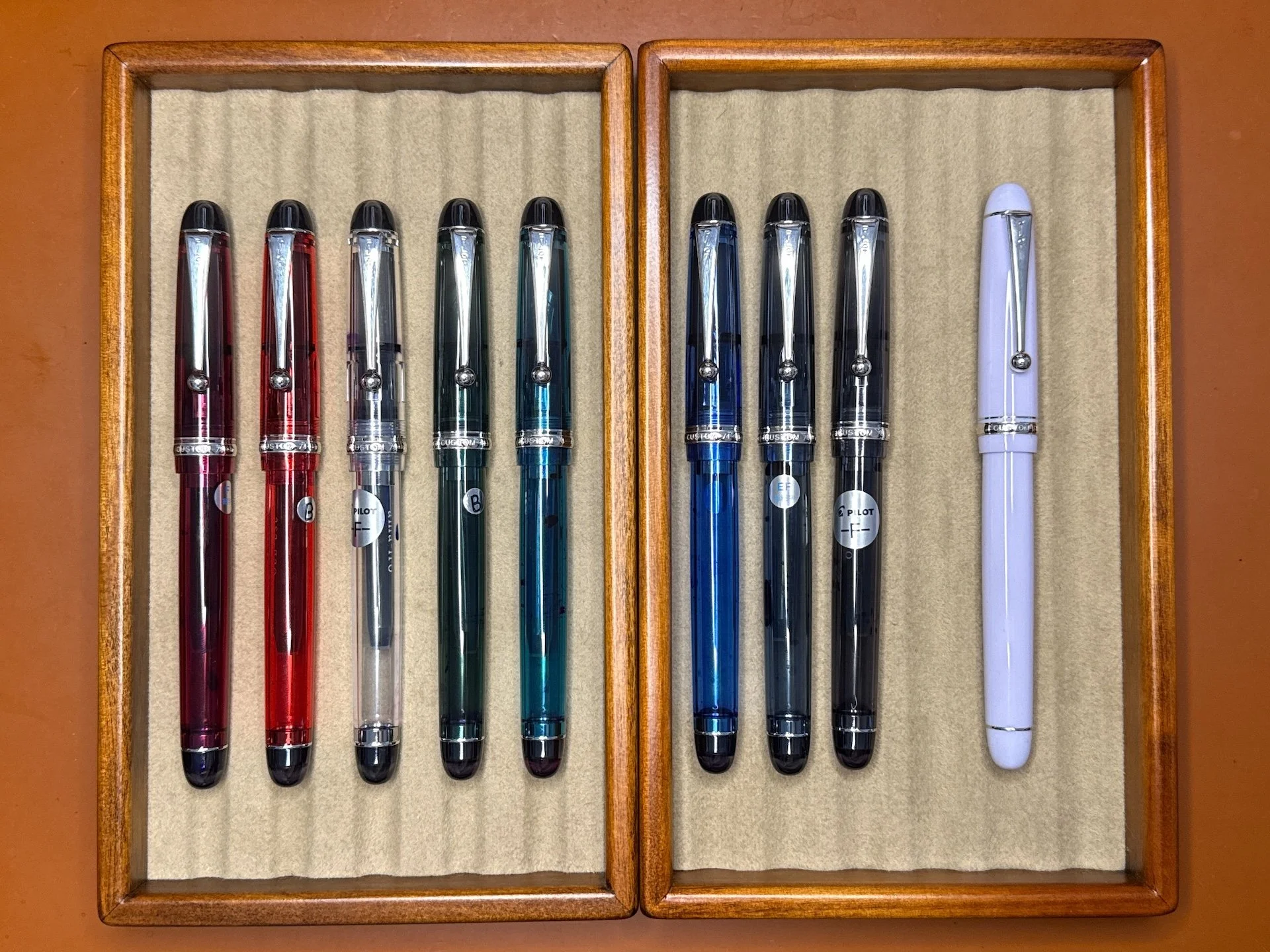
All of the currently available Custom 74 colors and nib options are represented here. Left to right: Merlot, Grenadine, Clear, Forest Green, Teal, Blue, Blue Stone, Smoke, and the US exclusive Lavender Fog.

Jaclynn was kind enough to include all of the colors as well as the various nib sizes. Unlike the 912/742 and 743/823, which have 14-16 nib options (the Signature nib isn’t available on the 743), the Custom 74 has 8 nib options, which makes it a little easier for me to pick my favorites. The Soft Fine, Soft Fine Medium, Soft Medium, and Double Broad (BB) are currently only available in the Lavender Fog colorway in the Custom 74 line, so keep that in mind when making your wishlist.

I have several pens with size 5 nibs, but I don’t have them all (nor do I need to) so I wanted to see if my favorites from the 743 and 912 nib rankings would translate to the 74 nibs. I didn’t re-read my past ranking articles, so I wouldn’t be too biased. I do happen to have a 74 M, 912 SFM, 823 FM, and 743 SM in my currently inked rotation so those nibs are top of mind. I am using a similar “methodology” as the past two rankings, which were based off of the one the Bossman did in his Custom Heritage 912 writeup.

A few things to keep in mind:

  • I am right-handed but have a “stupid steep” writing angle - 75 degrees isn’t uncommon for me, while most people have a 45-50 degree angle.
  • I tend to write primarily in cursive, and occasionally in print (but not like the Bossman’s block print), typewriter font and calligraphy-esque styles like Copperplate and Italic. My go-to nib size from any maker/country/region is Medium. I also prefer broader nibs as well as stubs/italics. I rarely reach for Extra Fine, especially since I own very few of them.
  • Pilot asked that I dip these pens instead of inking them up, which I don’t think is the best way to test the flow in the nibs, but it’s enough for short writing samples. I dipped, then dragged the tip across the ink vial so there wouldn’t be blobs of ink on the page.
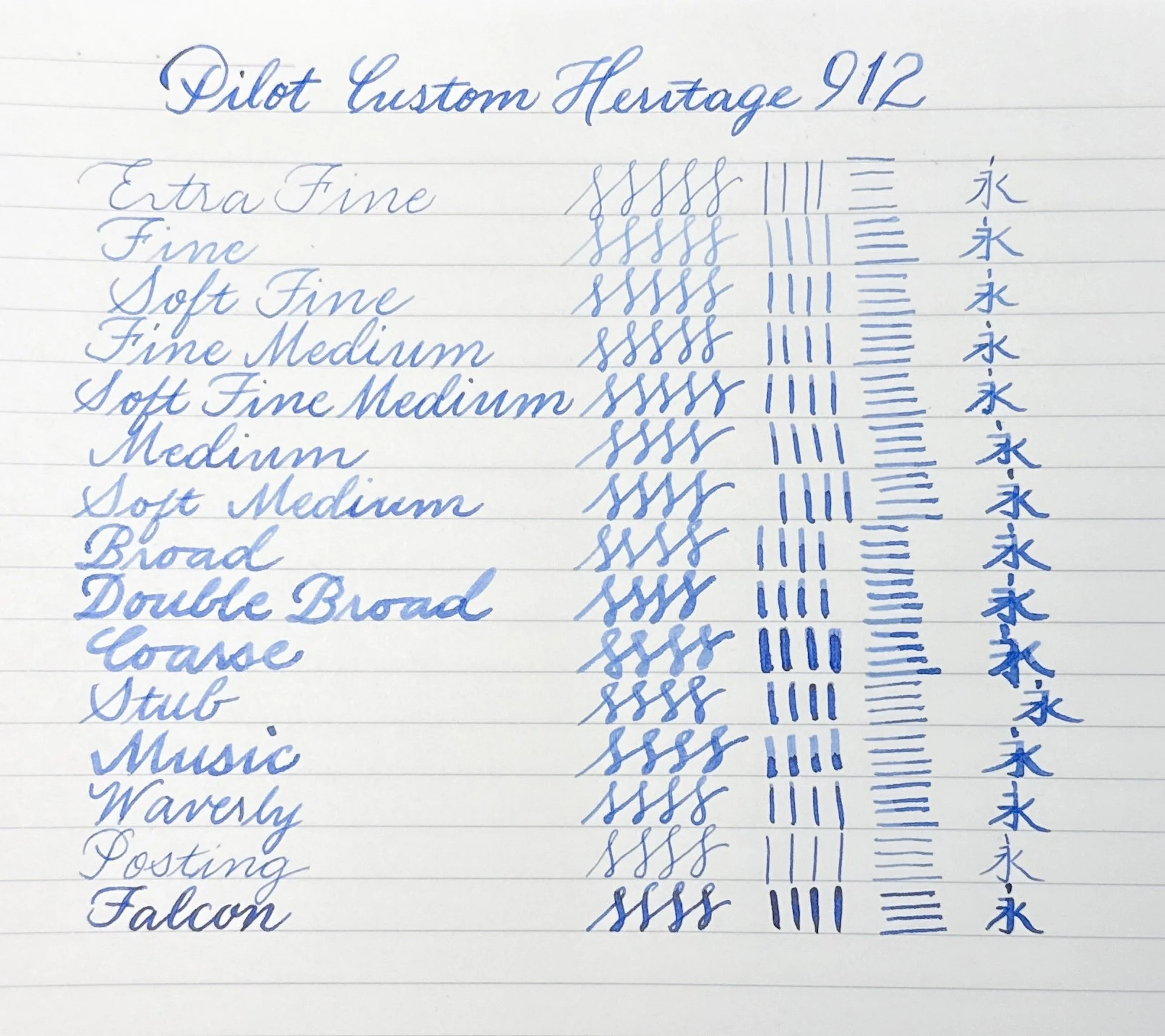
  • The writing sample with all the nibs was done in an Odyssey A5 Notebook with 68 gsm Tomoe River paper. I used Iroshizuku Asa-gao ink.
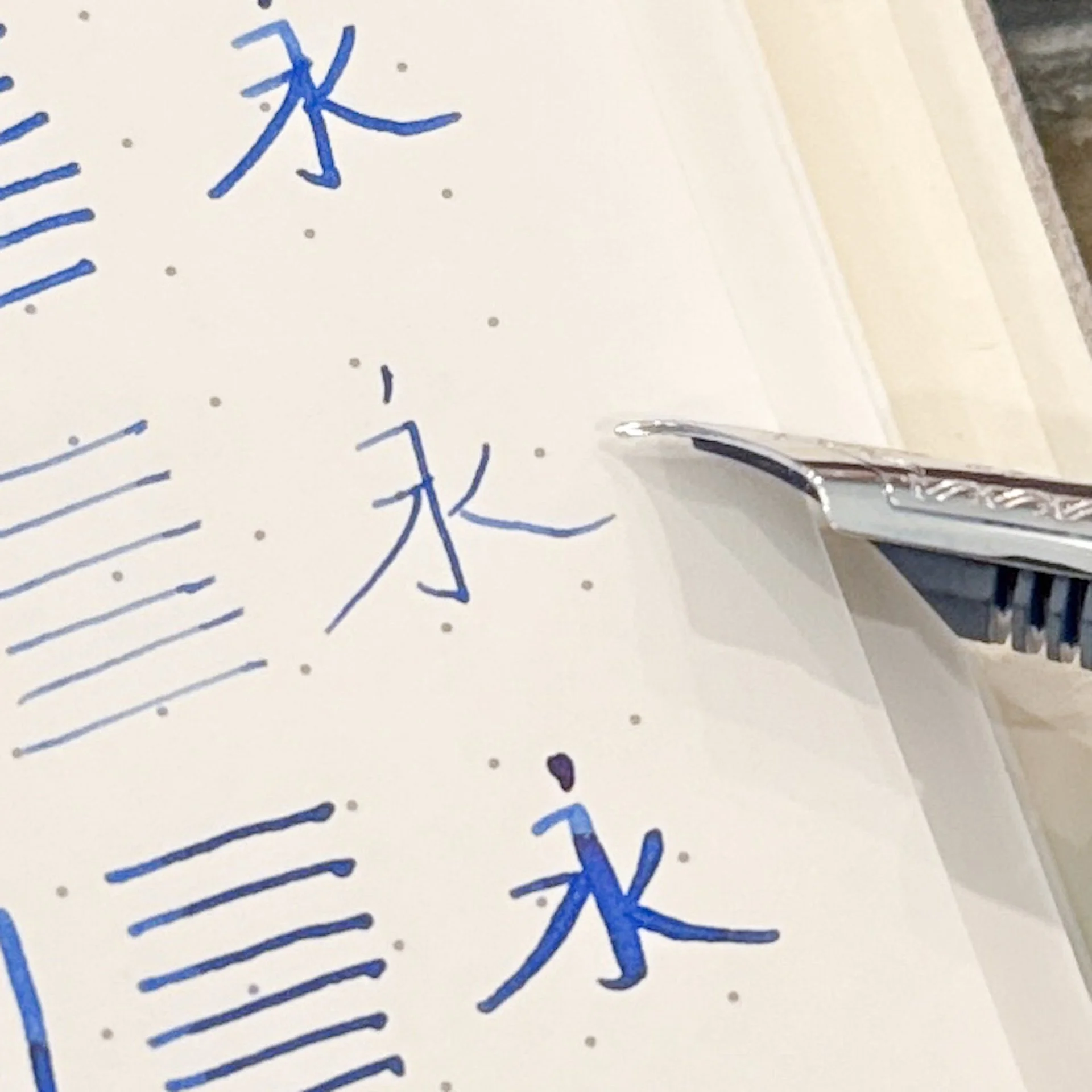
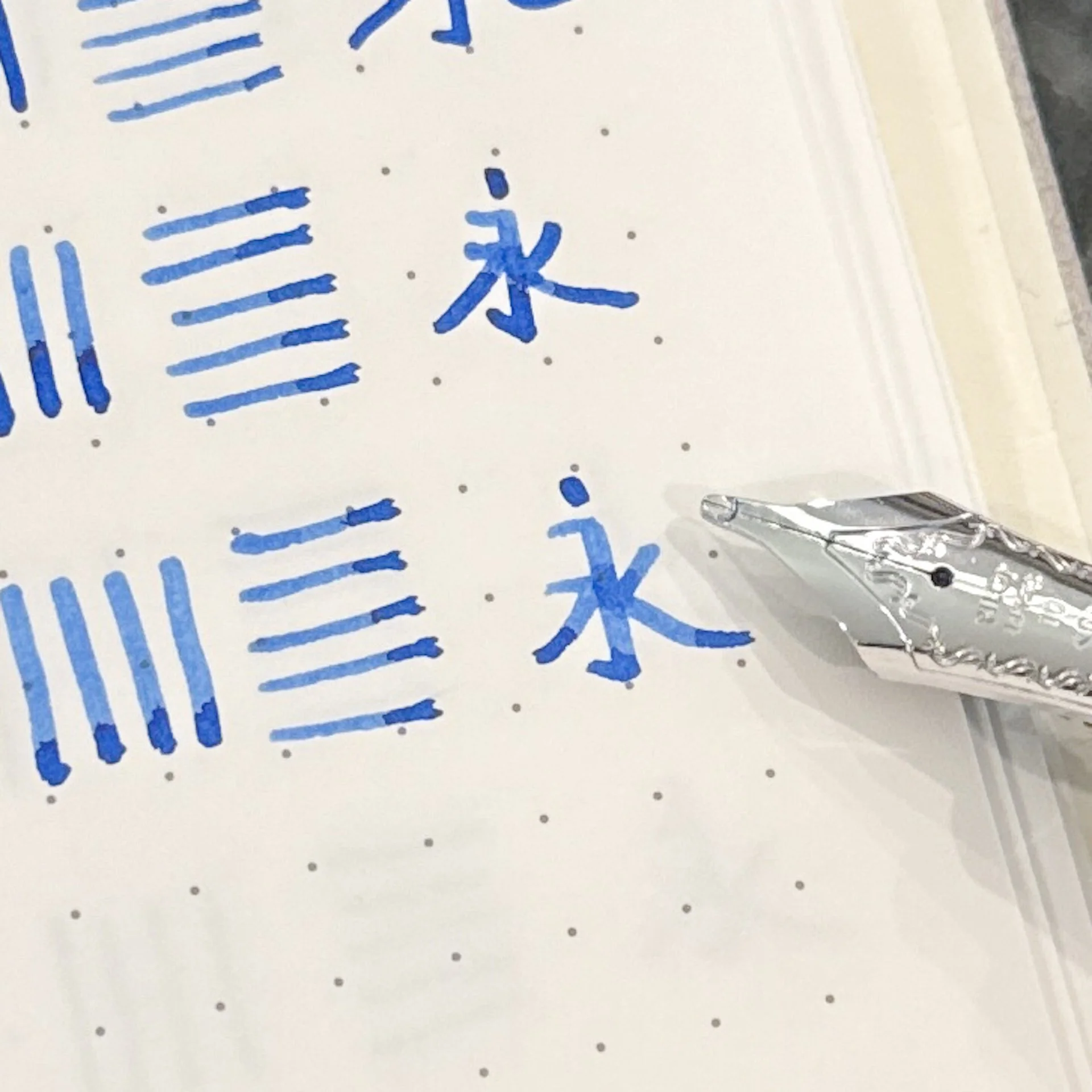
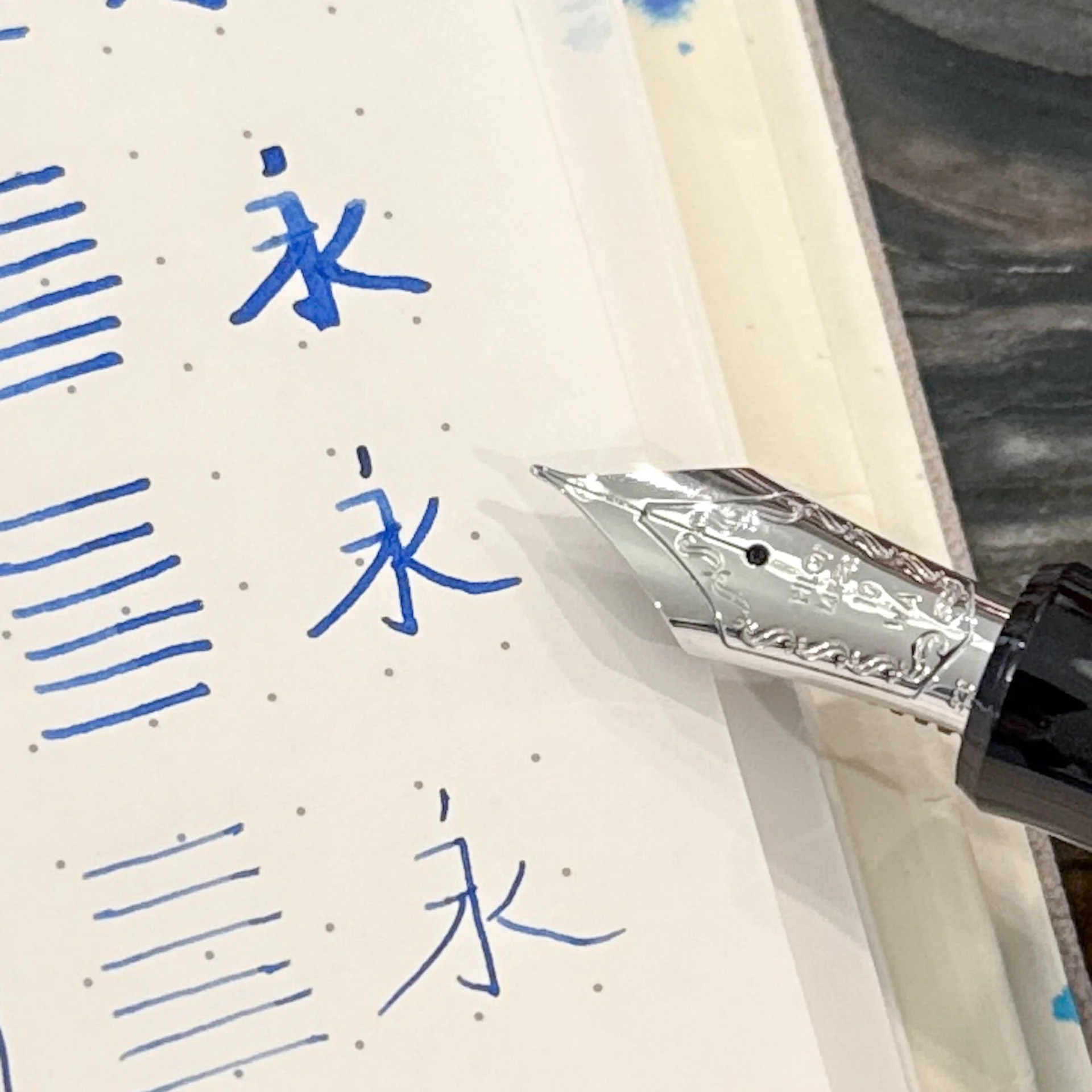
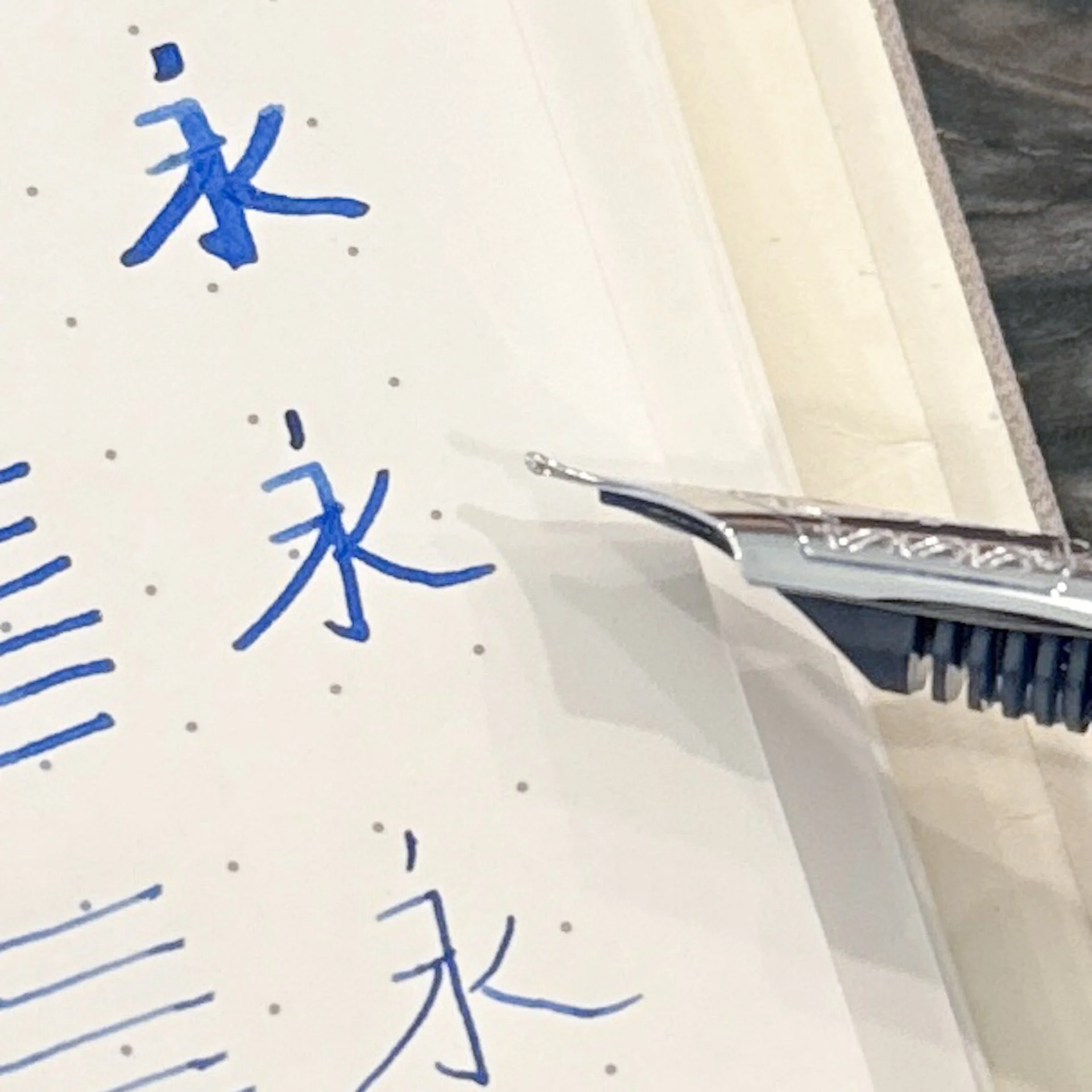
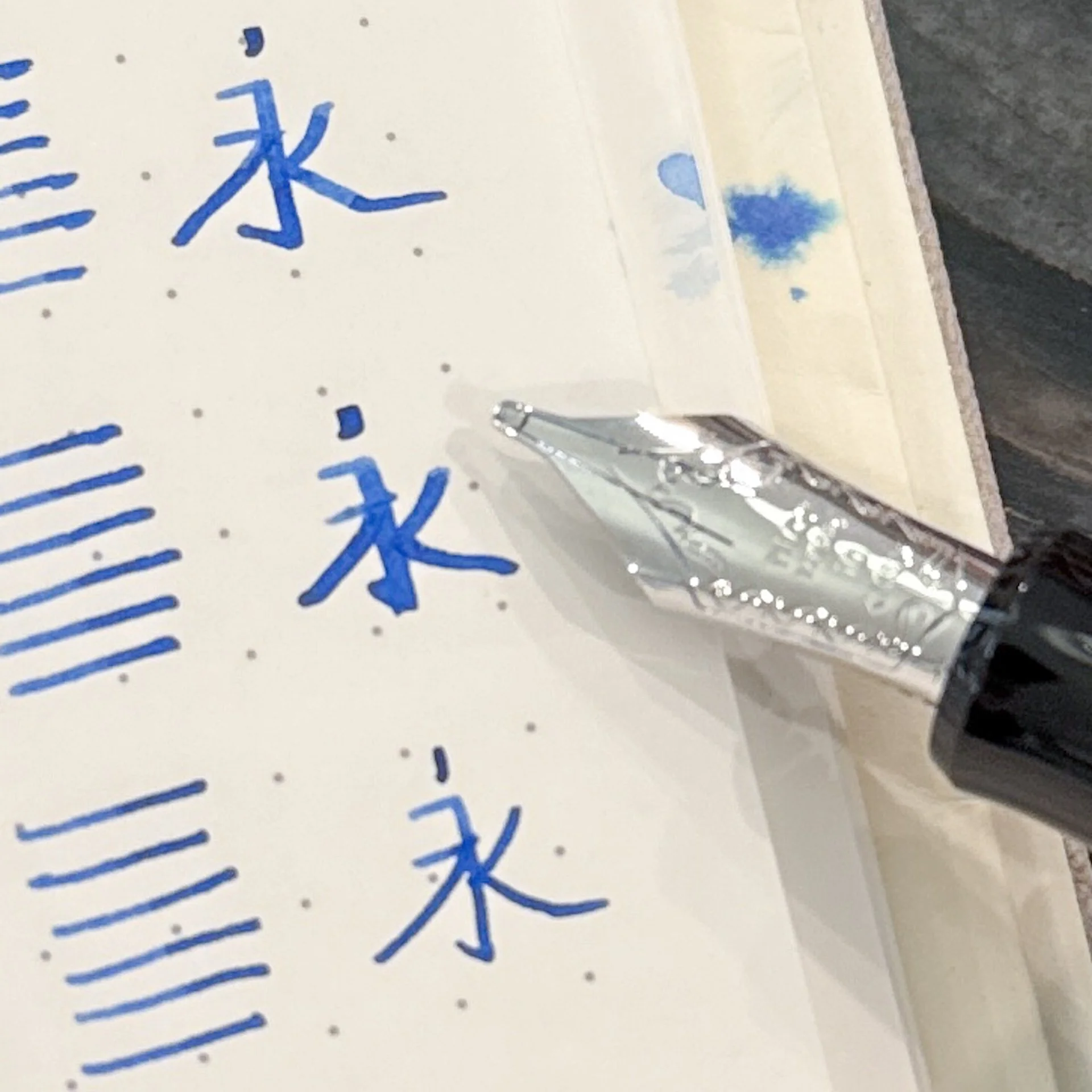
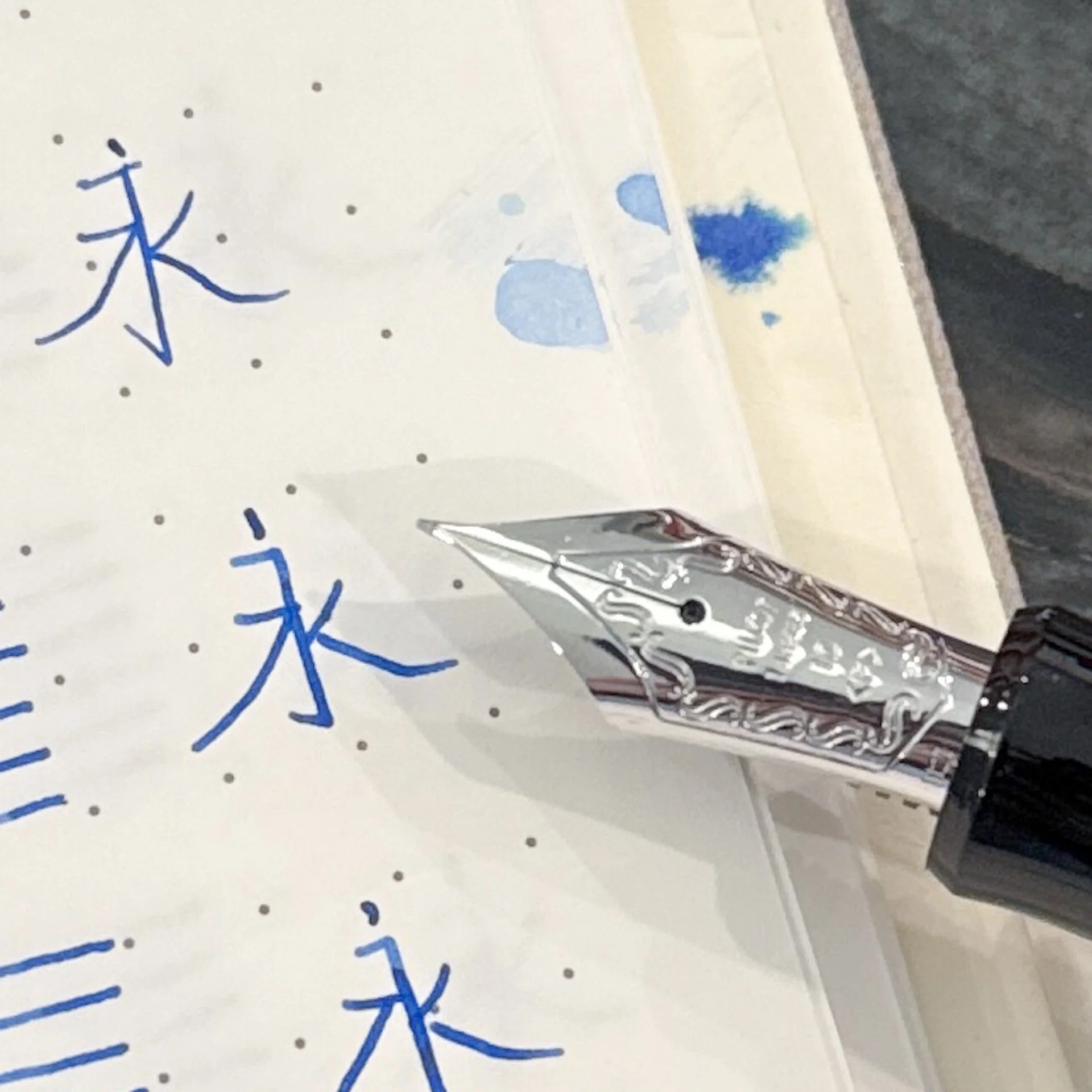
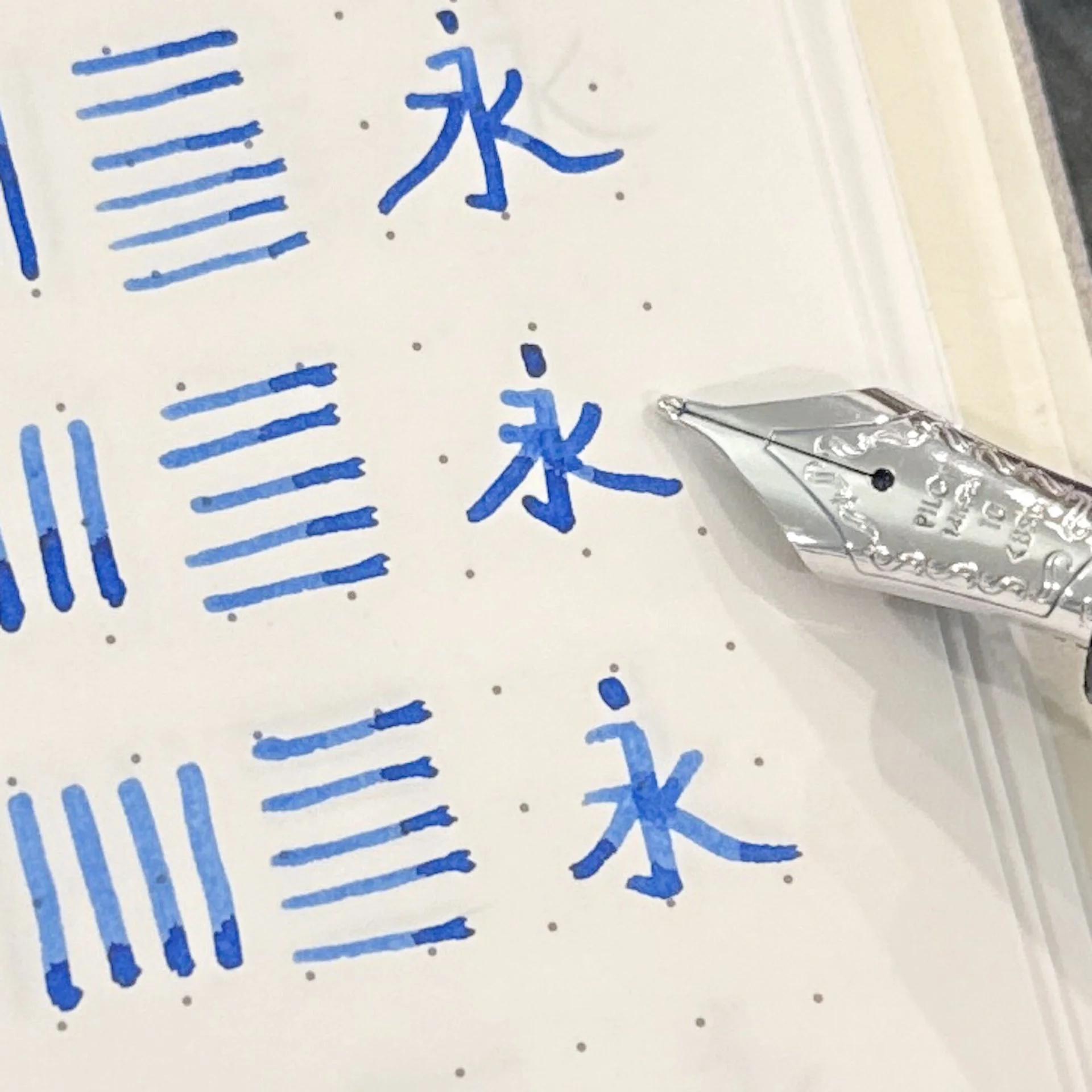
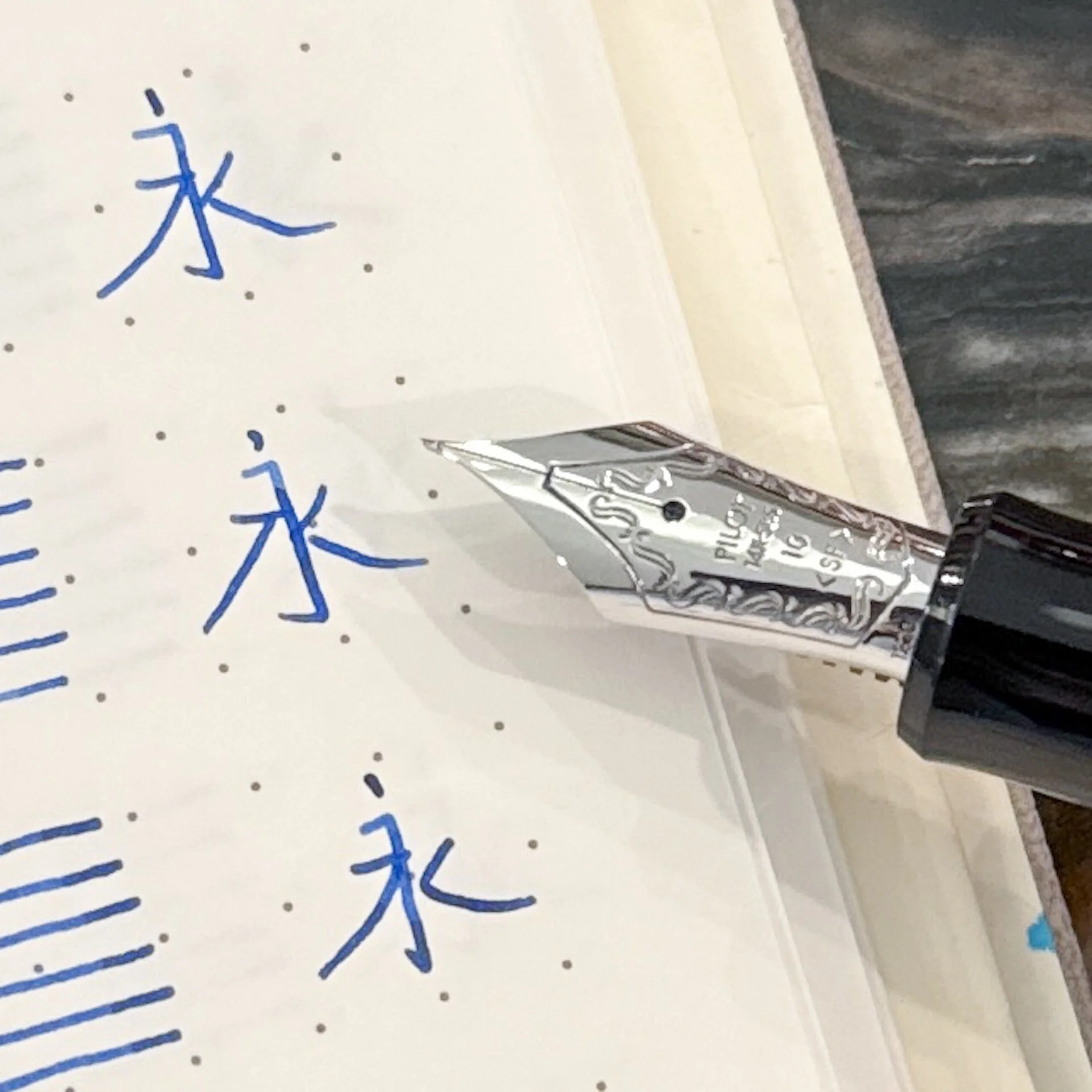
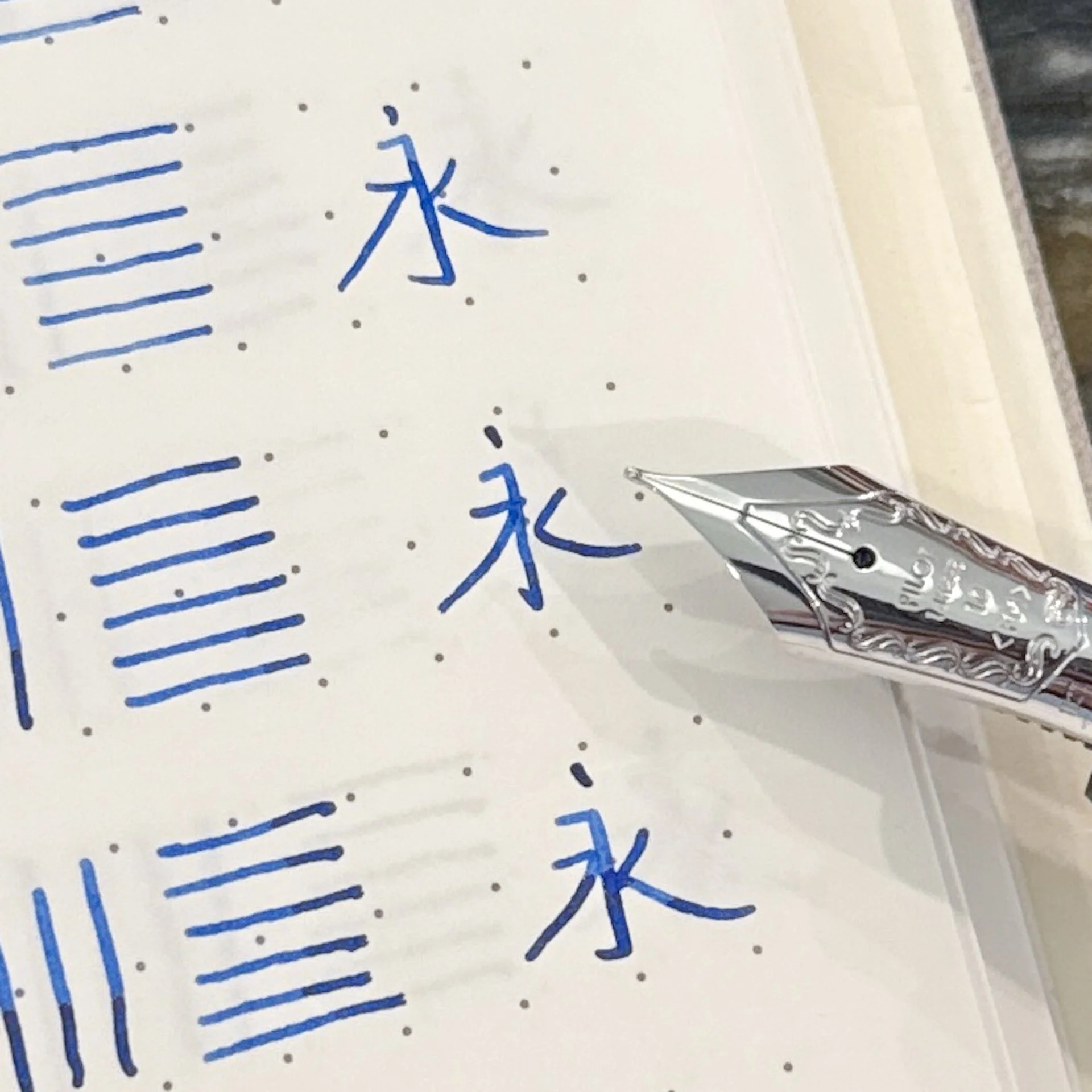
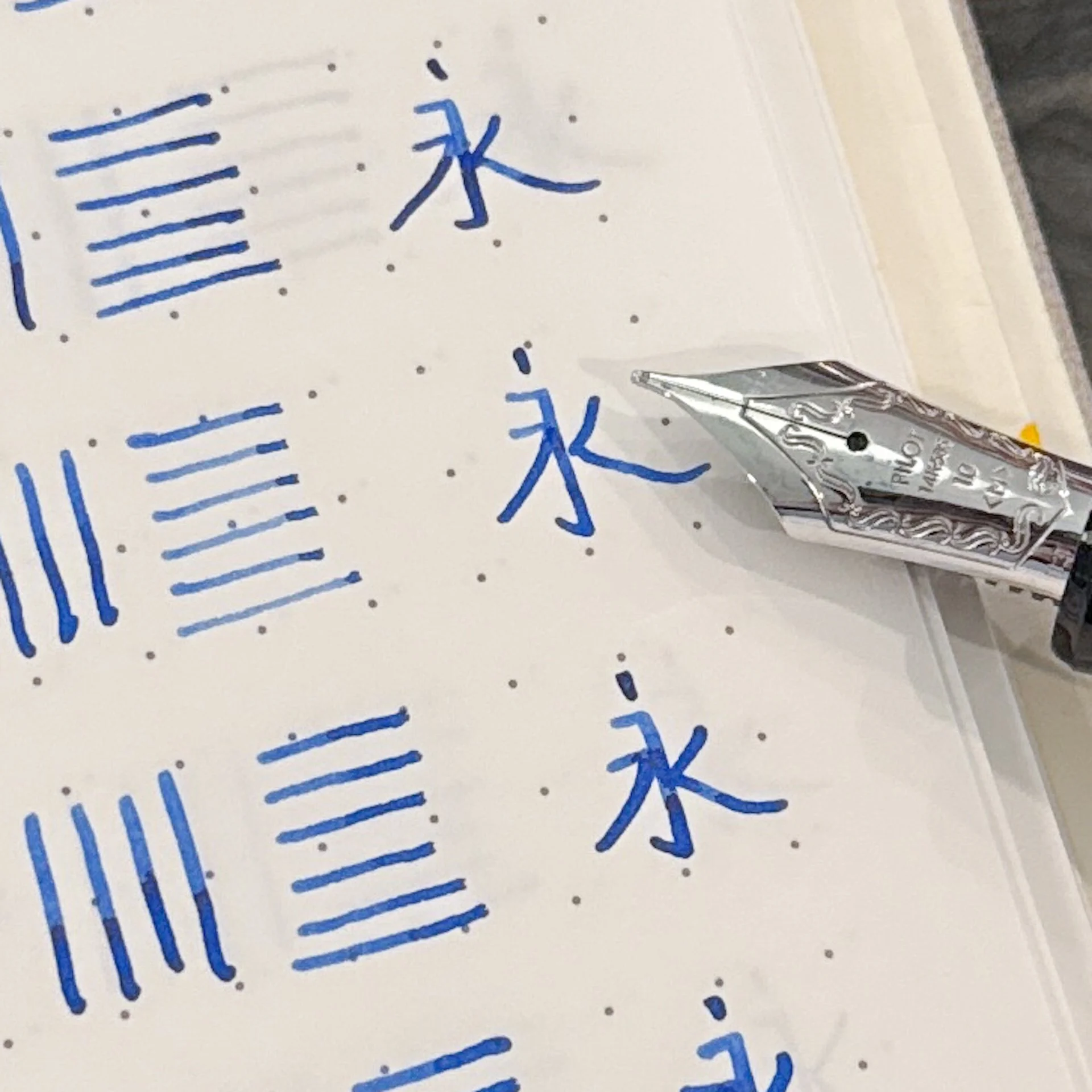
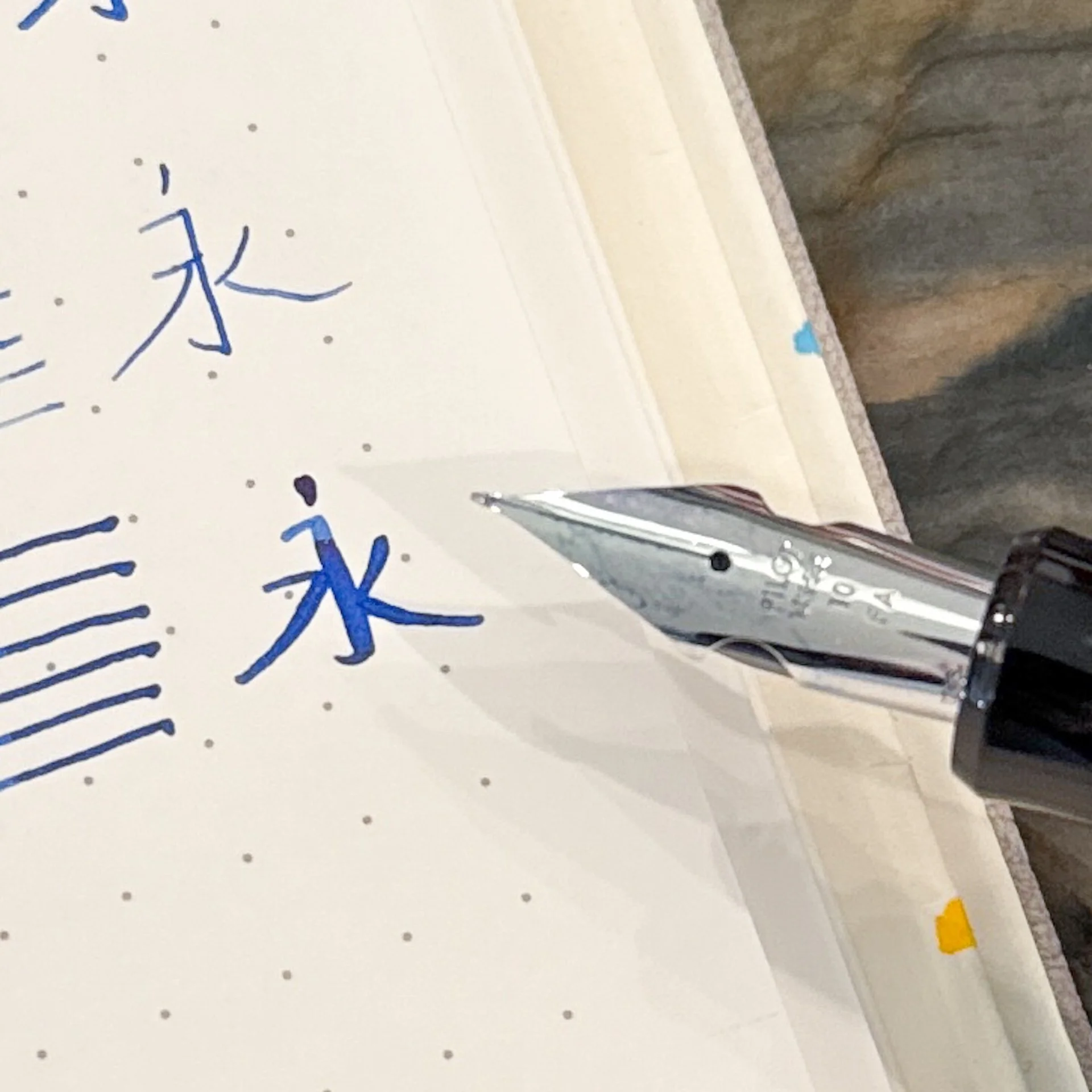
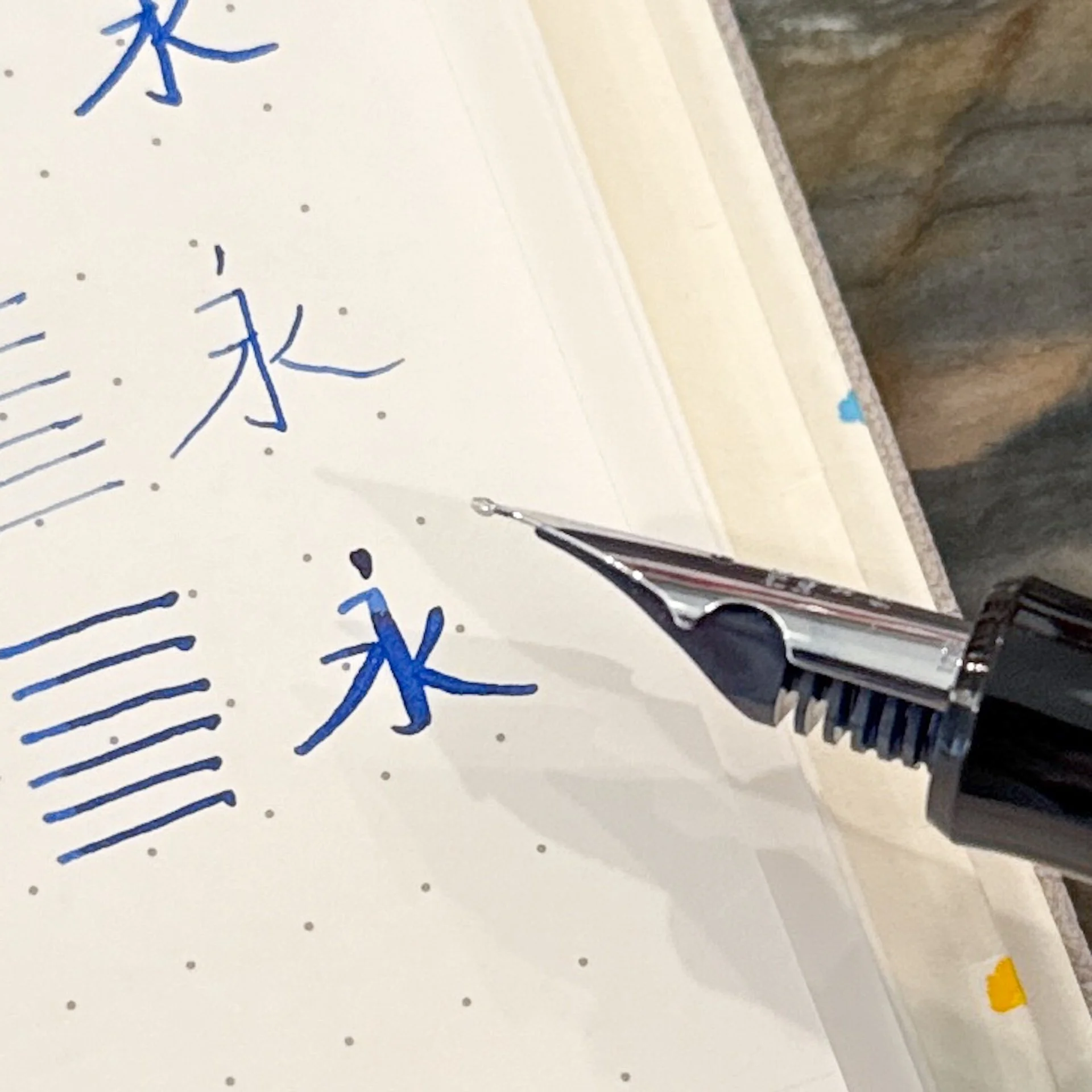
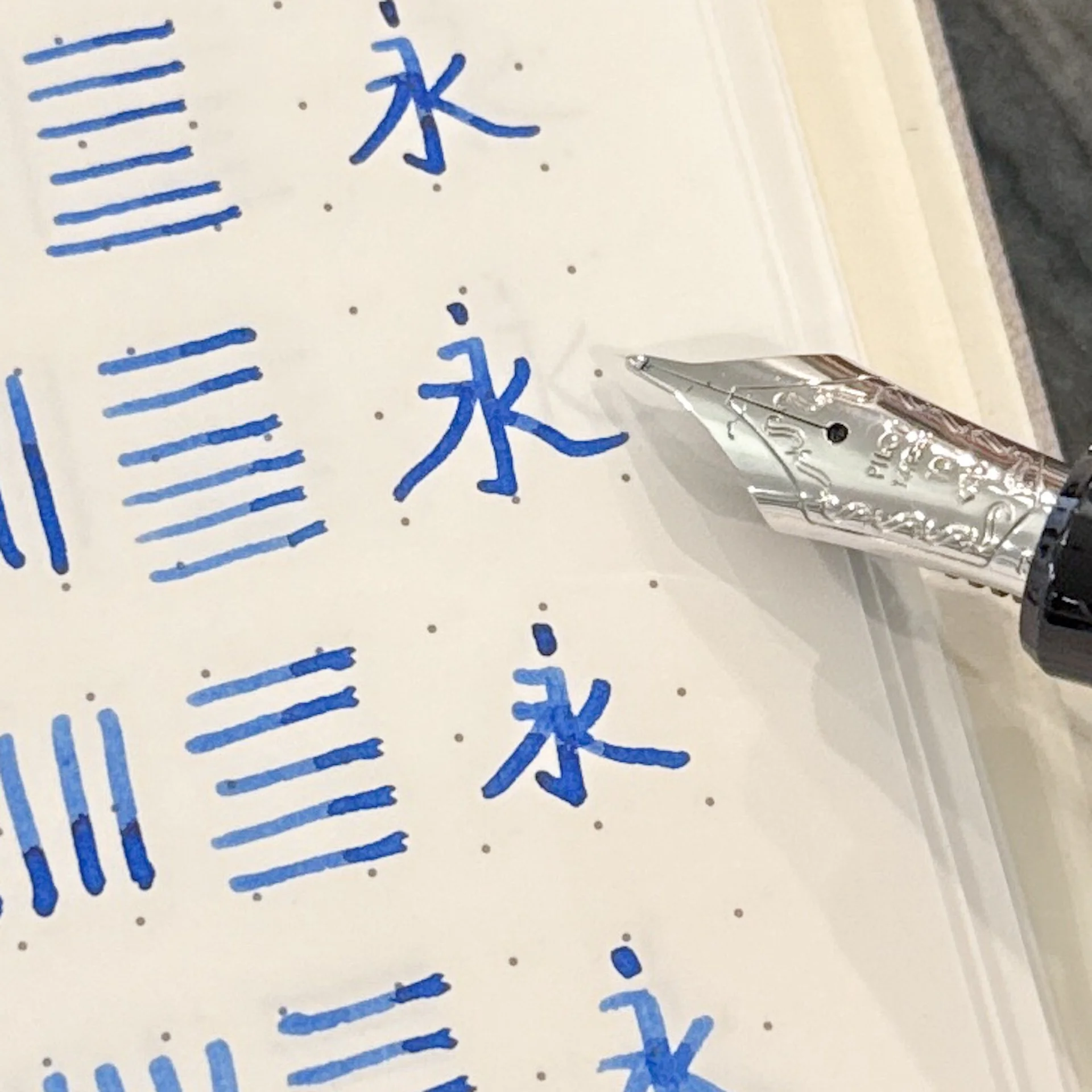
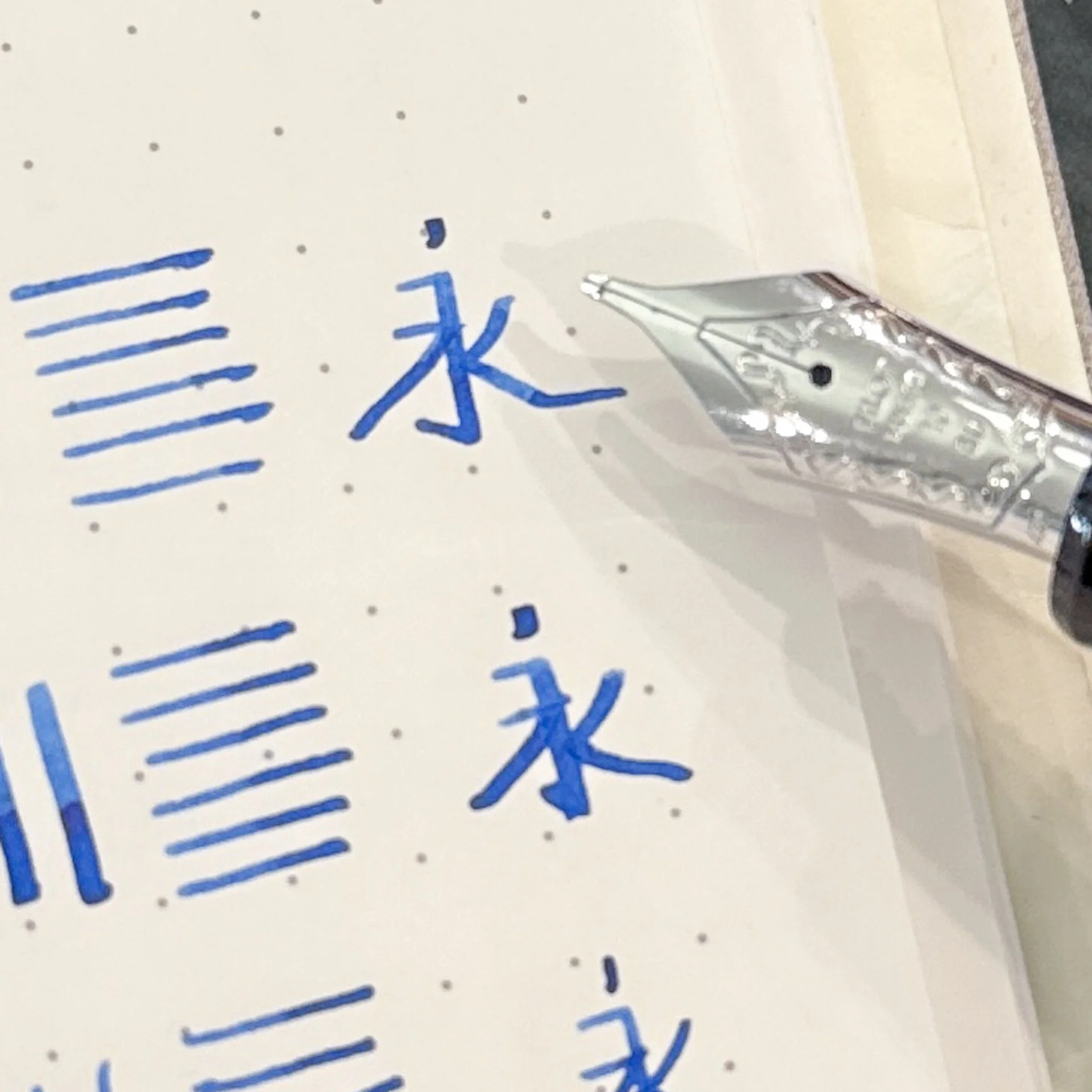
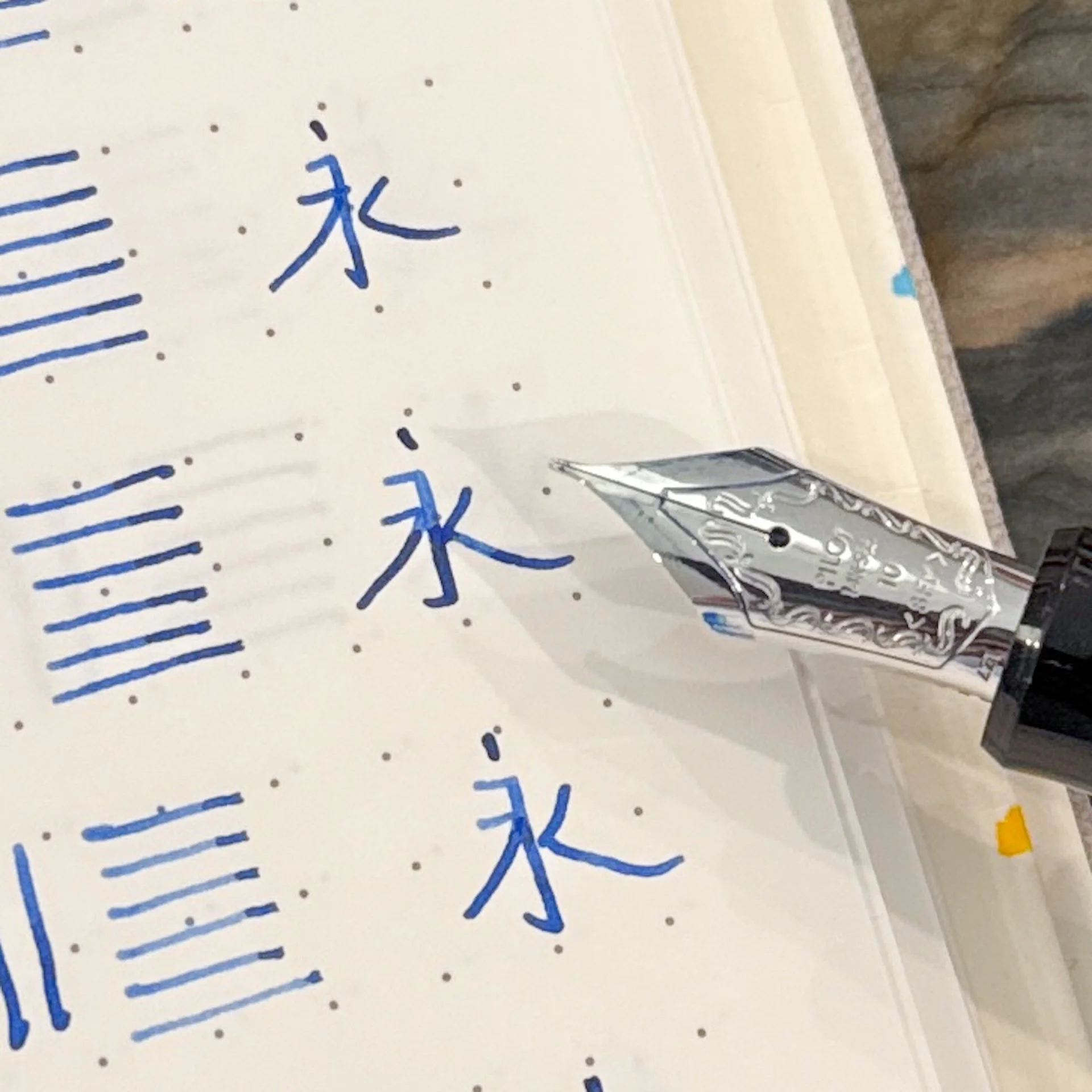
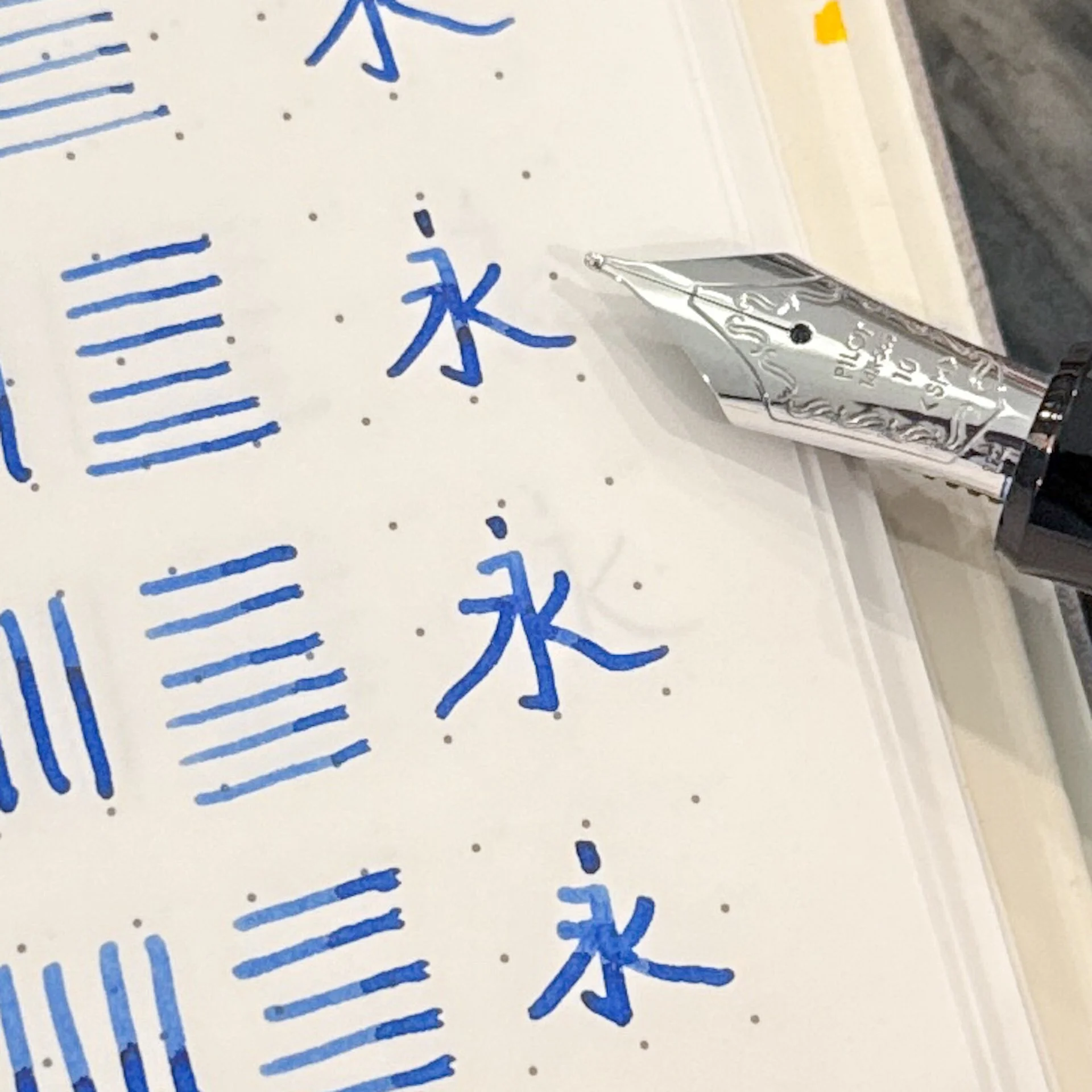
  • My Chinese teachers from high school would be shuddering, but hey, it’s accurate, just not beautiful. The character means “always” or “forever”.
  • Thank you Pilot USA for sending these 74s so I could do a nib showdown!
  • Last but not least, I mostly followed Brad’s formatting but I did not read his ranking (nor mine from the past two rankings) so I wouldn’t be biased.

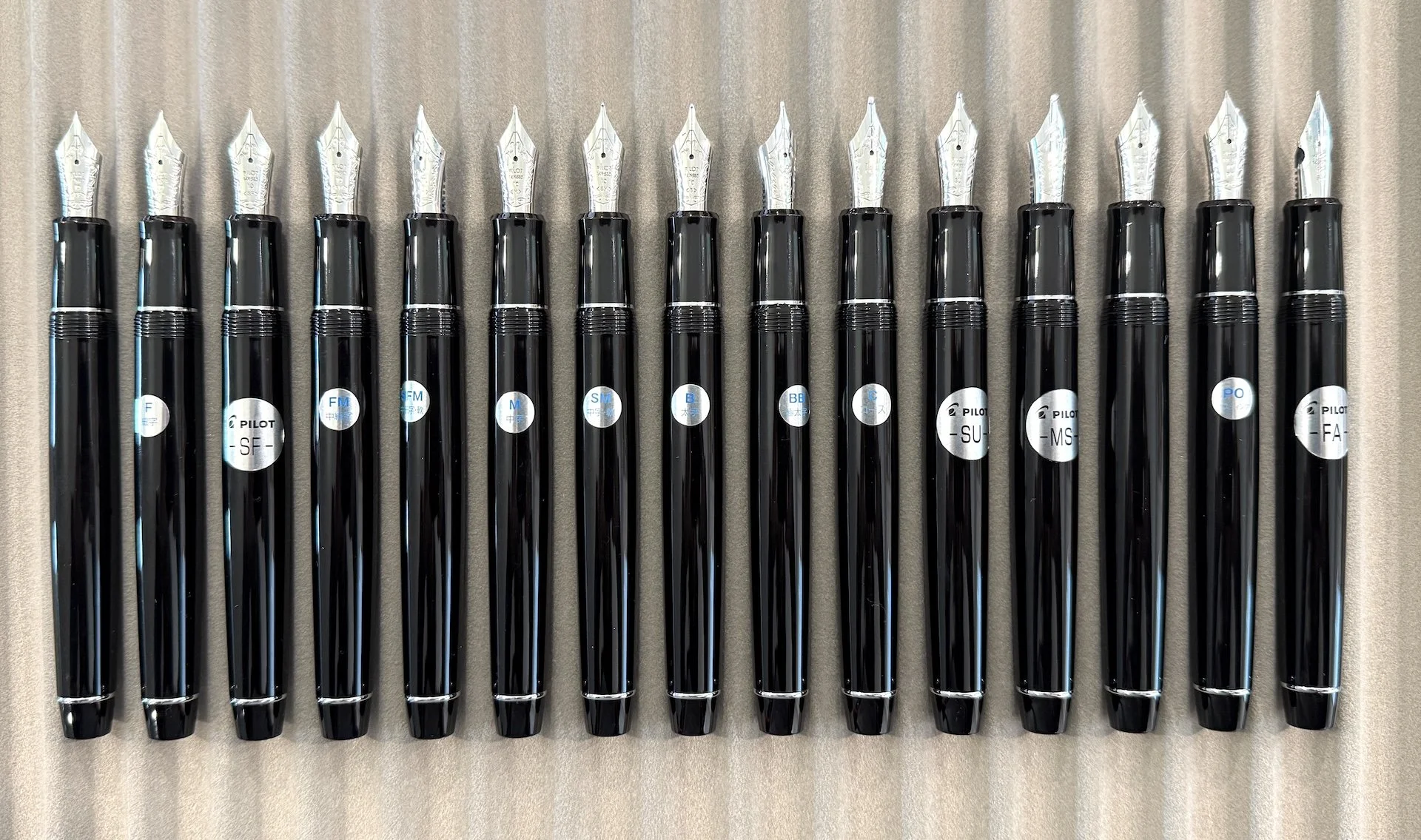
As with the other pens, the biggest difference is the size of the nib (not the tipping, but the actual length and width of the nib and feed). The 743 & 823 are equipped with the size #15 nib, the 912 & 742 takes size #10, and the 74 (and 92 and 91) have size #5 nibs.
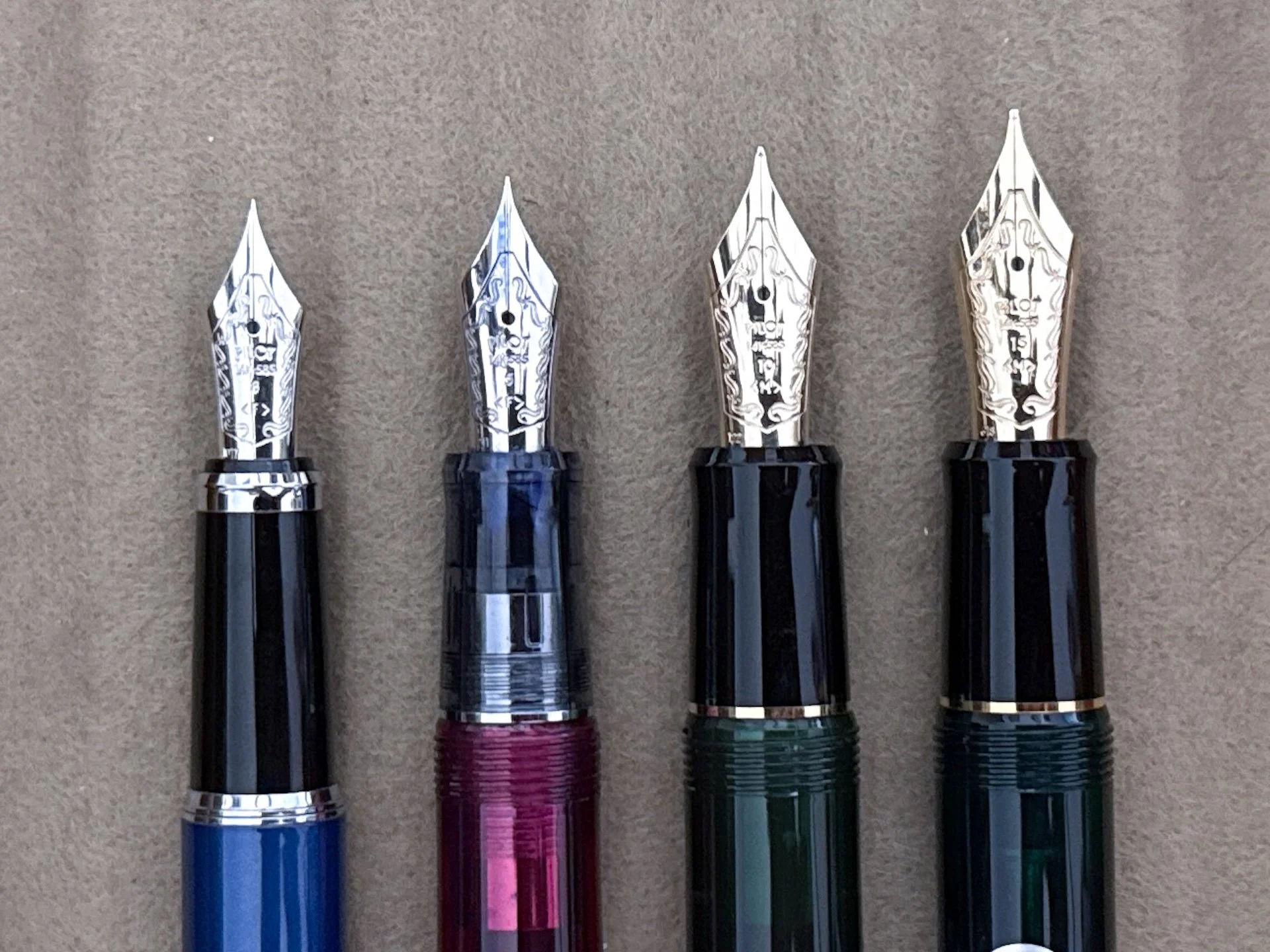
Pilot Nib Sizes

Pilot size #3 (Pilot Stargazer/Stella), #5 (74/91/92), #10 (742/912), #15 (743/823).

The pens came to me directly from the Chicago Pen Show, so they were inked up with various Iroshizuku ink cartridges. I decided to use them all for writing samples since it shows that (1) the same nib sizes can vary slightly from pen to pen and (2) inks matter. The darker Iroshizuku Asa-gao can make writing look broader than a lighter/brighter ink like Ama-iro.
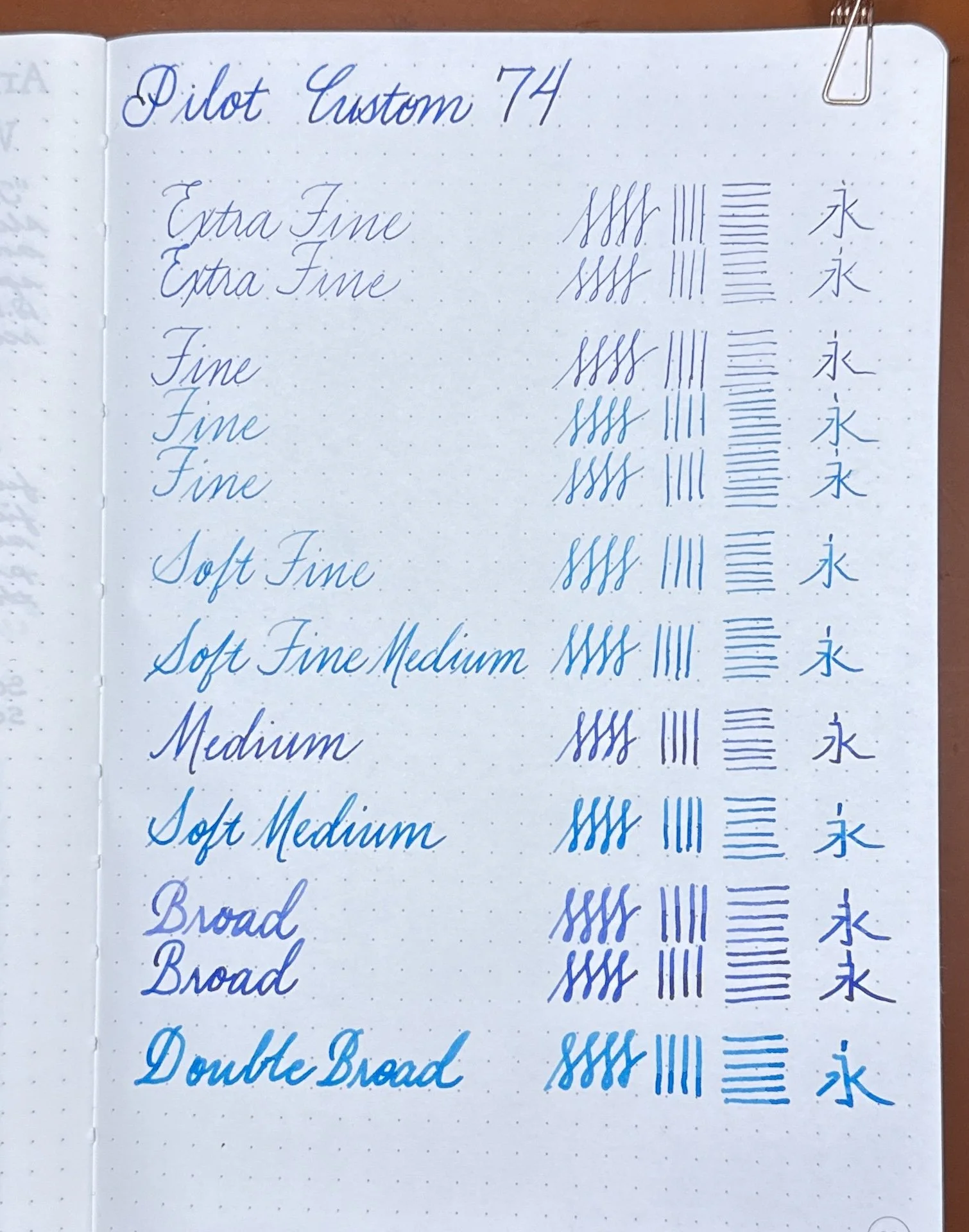
All the pens on Tomoe River 68 gsm.

After writing the above, I cleaned out the non-Asa-gao pens and dipped them with Asa-gao for the remaining writing samples.
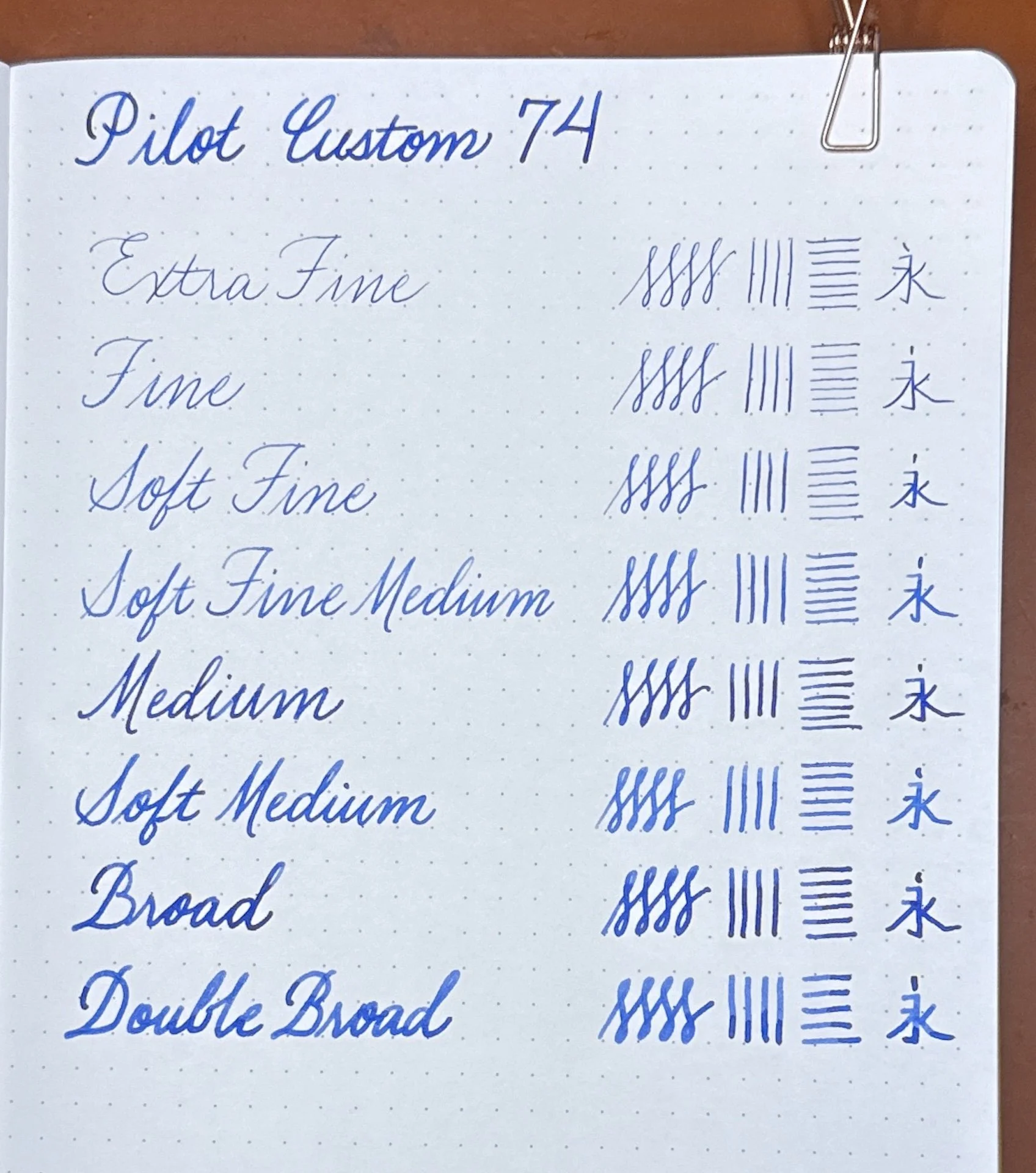
This time, I removed the duplicates and only used Asa-gao so you can better compare the nib sizes.
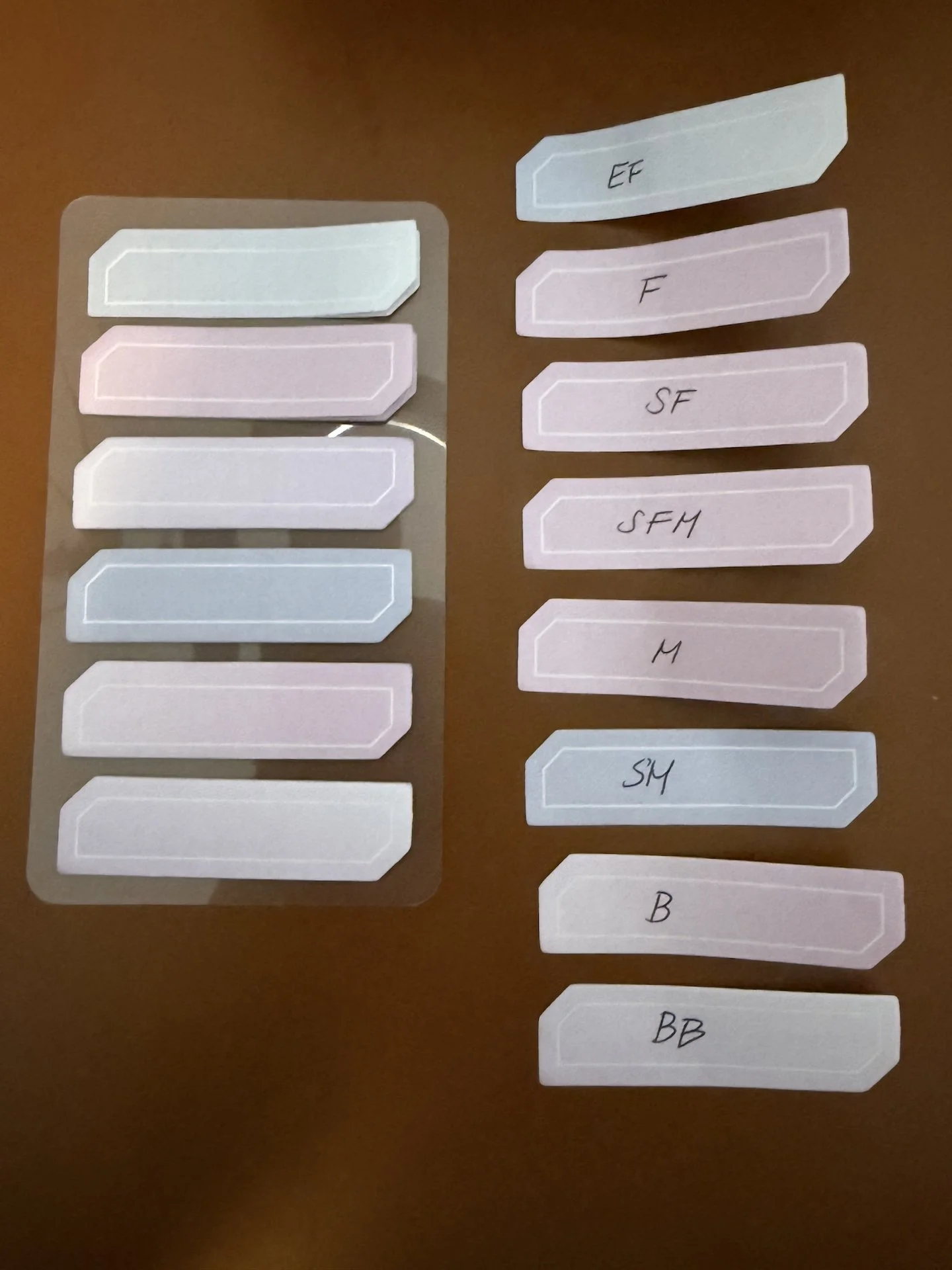
Using some sticky tabs from Daiso, I wrote out the different nib sizes so I could sort them according to my preferences.

8 - Extra Fine

Is anyone surprised by this? This should come as no surprise since I don’t really prefer EF nibs from any brand. But if I had to pick an EF to use, this would definitely be a contender!
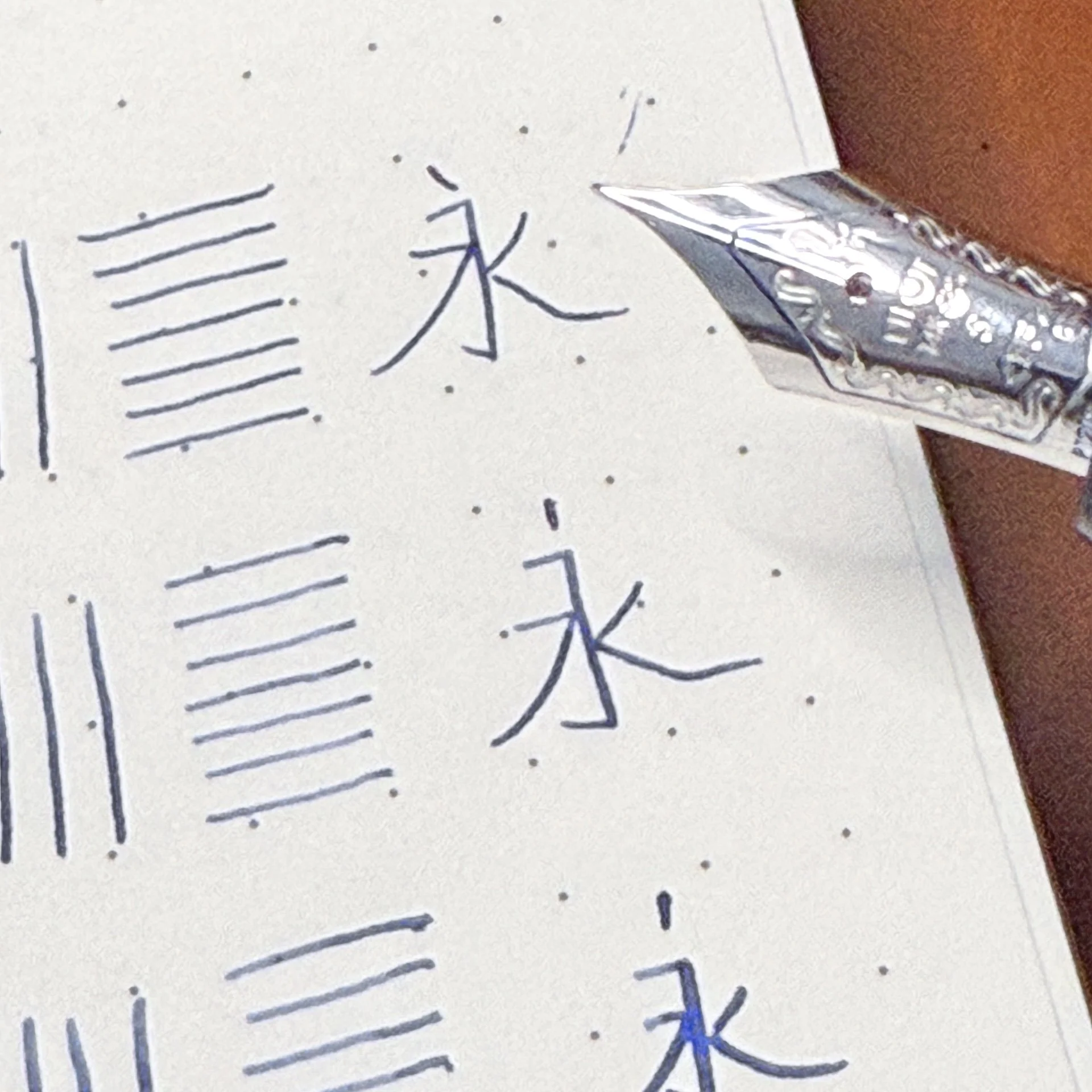
7 - Fine

Pilot’s Fine nibs are fine for me. It writes well and I do enjoy it because it’s still a smooth writing experience, BUT I’d rather lay down some more ink, so sorry, Fine, you’re second to last for me.
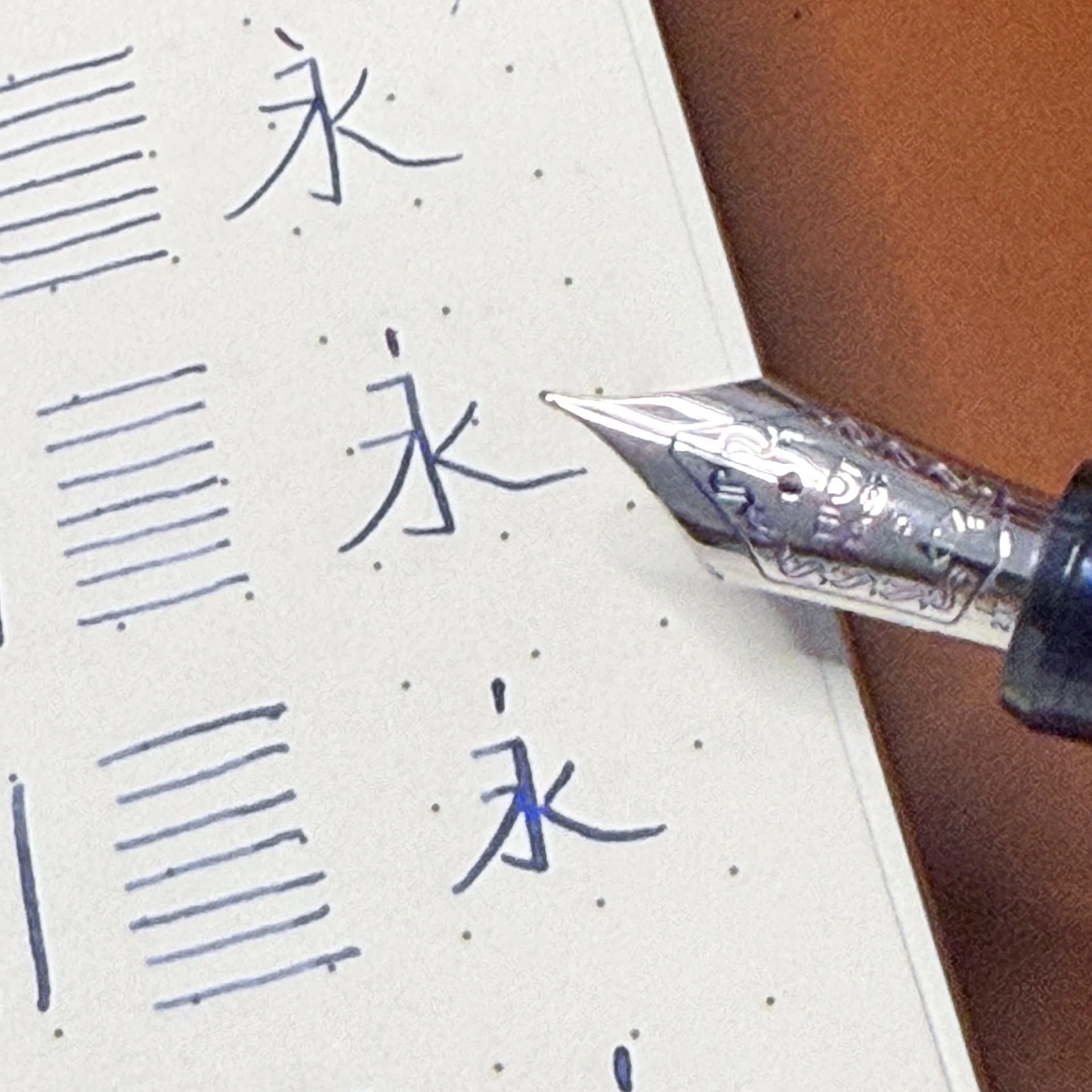
6 - BB / Double Broad

And on the complete opposite of the spectrum, I picked the Double Broad. I know I said I love laying down more ink but it’s too thick for the size of my everyday writing. The letters look more bunched up than I’d like and this is already writing larger than I normally do. That said, if I wanted to get a nib ground to something like an Architect or Naginata Togi/Kodachi, this would be a great starting point. As with other BB’s in the Pilot lineup, this one is just not practical for me, but I still ranked it higher because I could get a fun grind for it. BUT, if I couldn’t get it ground, I’d probably pick the Fine over the BB.
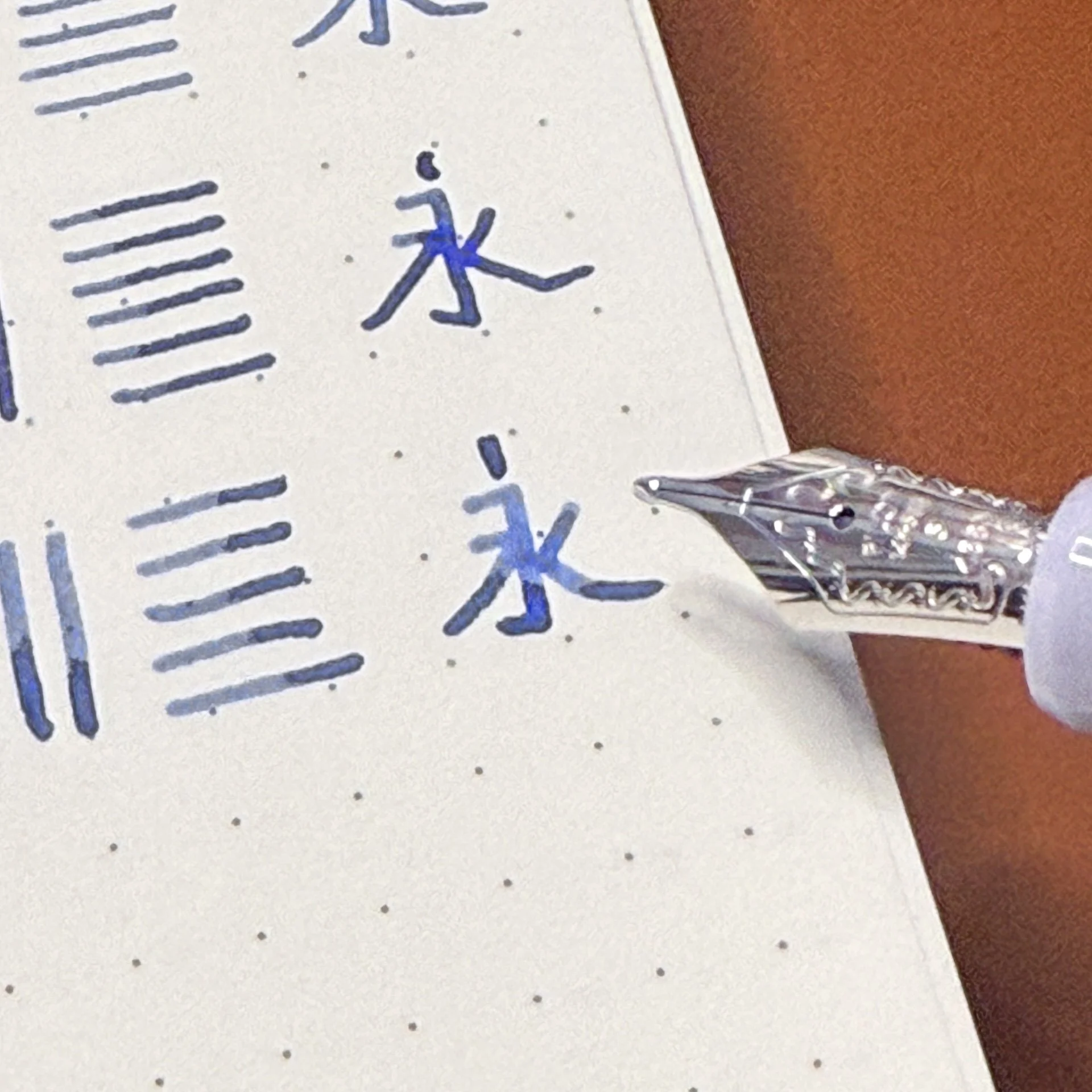
I like big nibs and I cannot lie, but this might be too big. 🙂

5 - Broad

Ok, this one was a tough choice. Like the BB, I wouldn’t normally pick this one for an everyday writer but I would love to get an Architect if I had a B nib. I am shocked that I still don’t have any Broad nibs in either the 10 or 15 size, though I do have it in a VP nib and I love it. This would be a great ink layer-downer nib without having an overly broad line and as such would be a great addition.
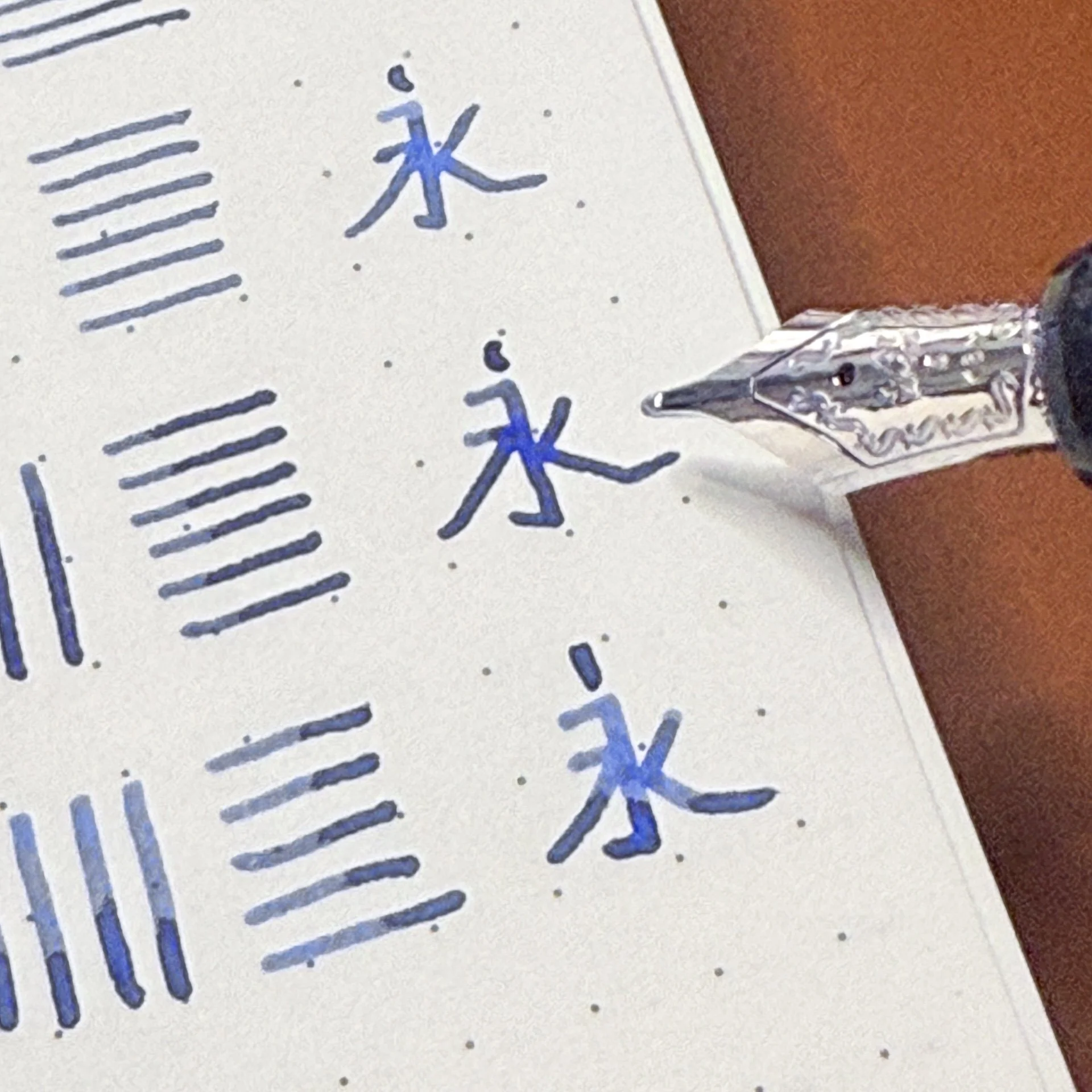
Maybe I don’t like big nibs and I cannot lie? I do like the Broad, it’s still a touch too broad for me.
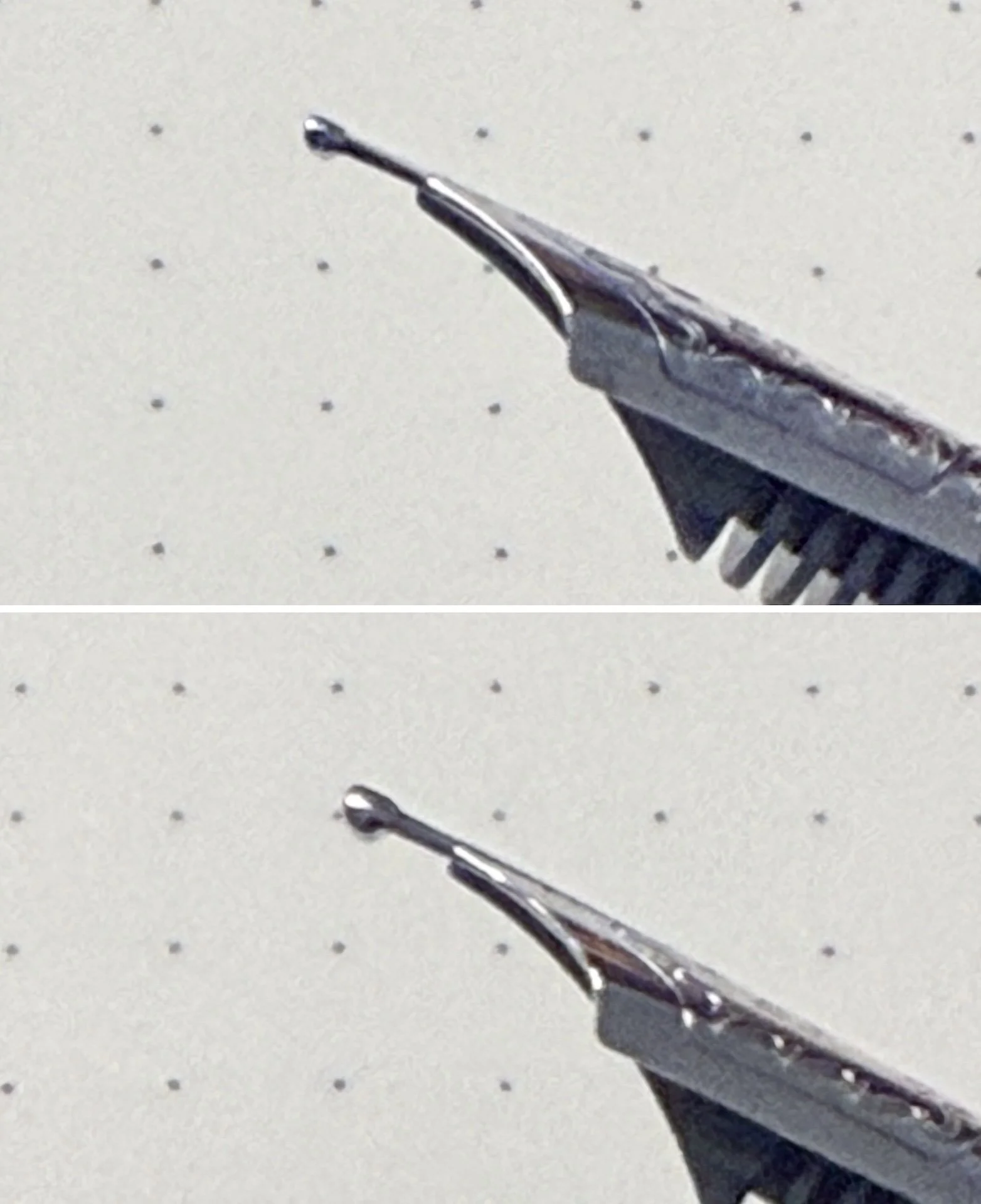
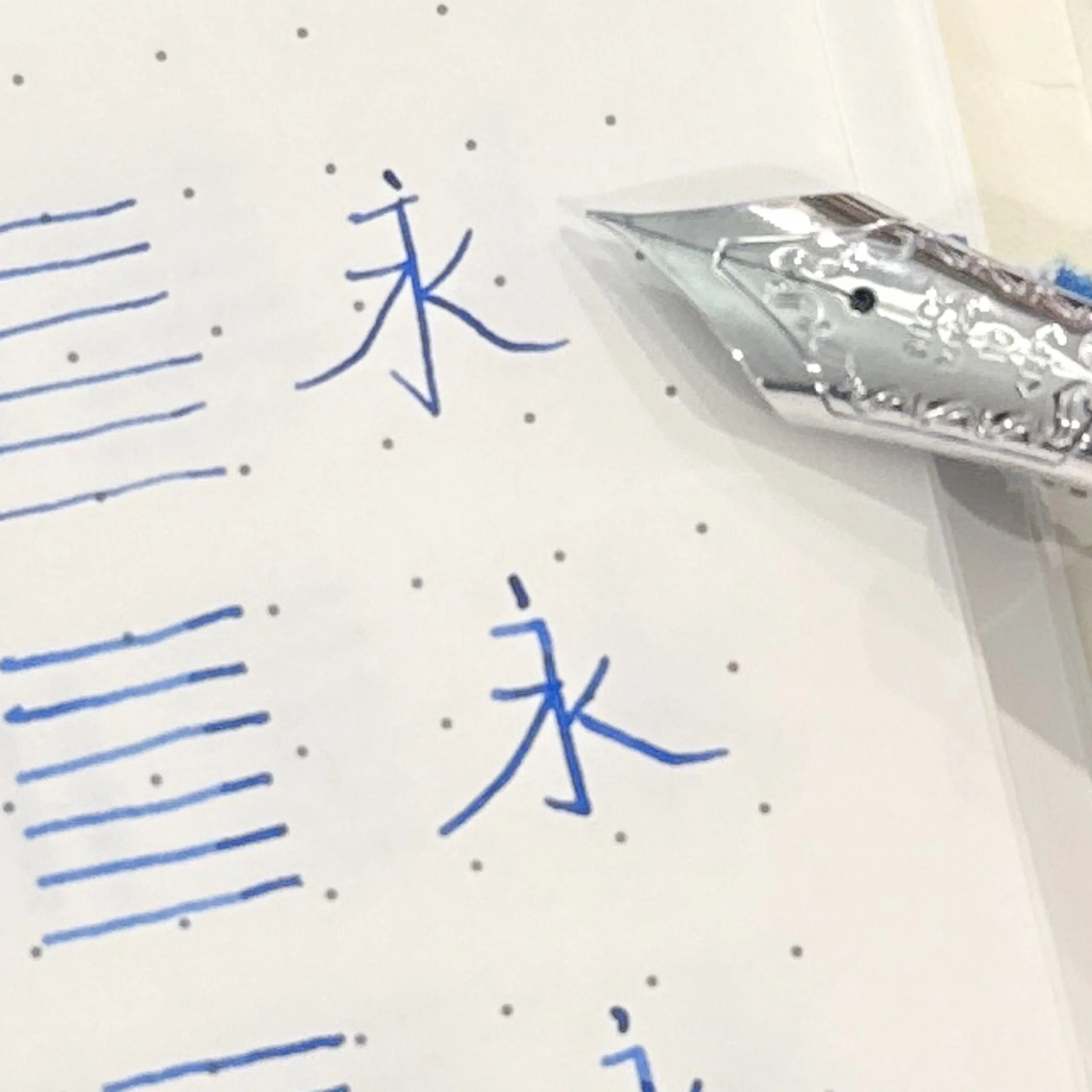
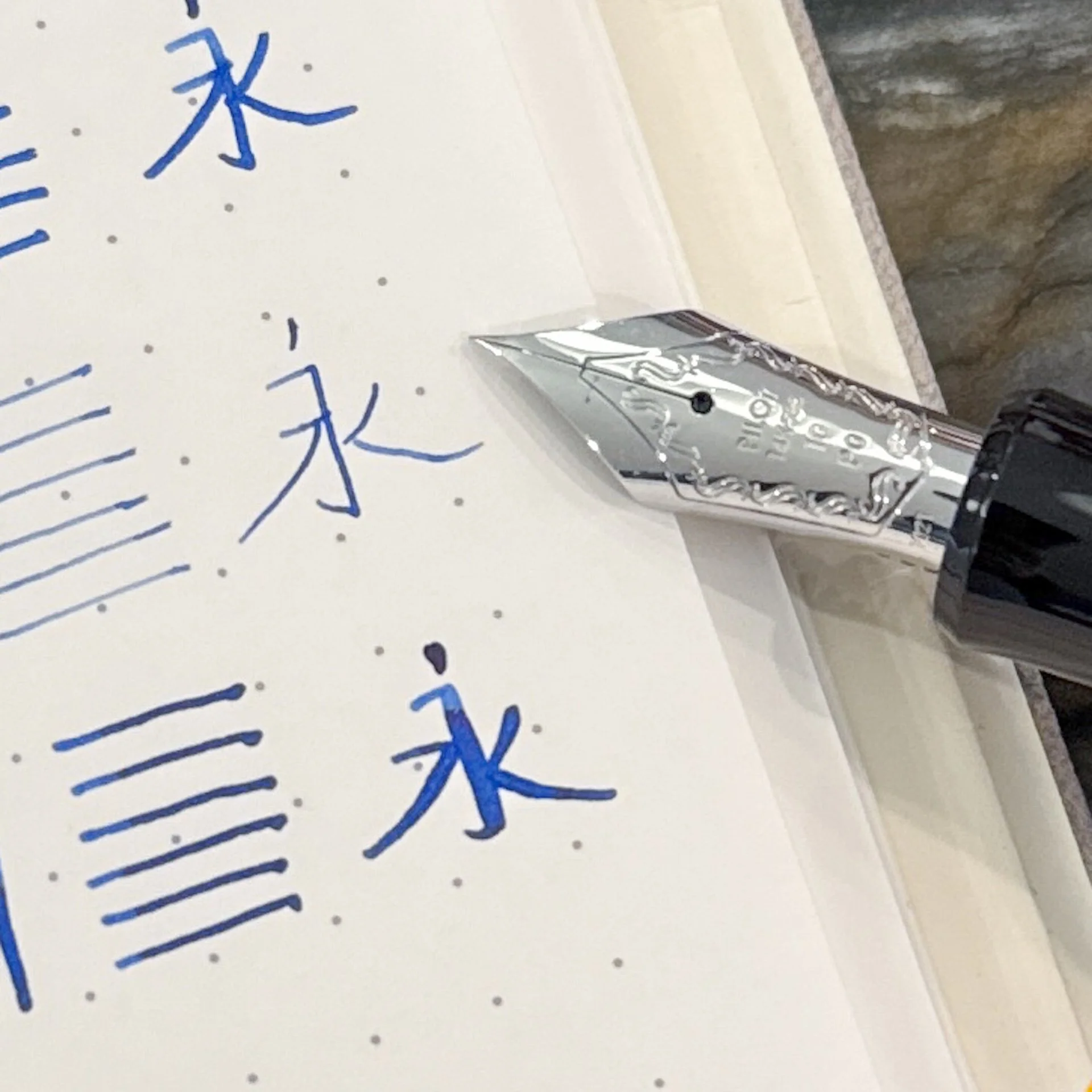
Look at the tipping on the Broad (top) vs the Double Broad (BB) on the bottom. Lots of potential for a nib grind!

Now it really gets tough - now we’re at the top half of the list…

4 - Medium

Once again, Medium, my go-to nib size barely made the top half of this list! It is such a nice and smooth writer that it’s one of my favorites, but I have enough Mediums so it barely made the top half of this list.
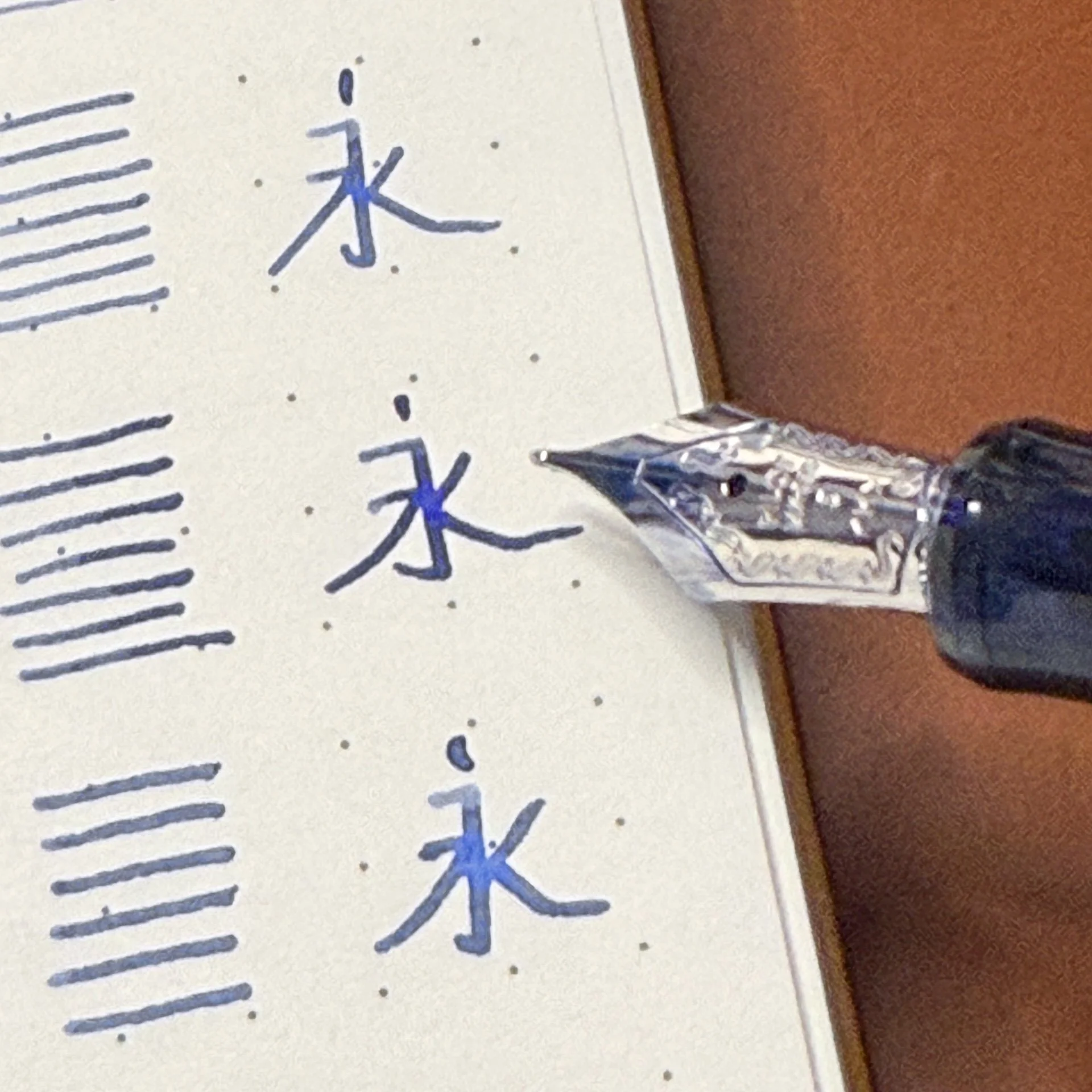
Medium, I still love you, you’re still a fave, but I’d rather get one of the top 3 because I already have lots of M nibs in your size!

3 - Soft Fine

My steep angle makes it a little difficult to really appreciate the slight bounce from the softer nib, which also gives it a slightly wider line and a touch of line variation (no way is this a flex nib). The ever-so-slight increase in line width is what made it top 3 instead of near 7th place. It’s also a nib I don’t have (I’m sensing a theme here).
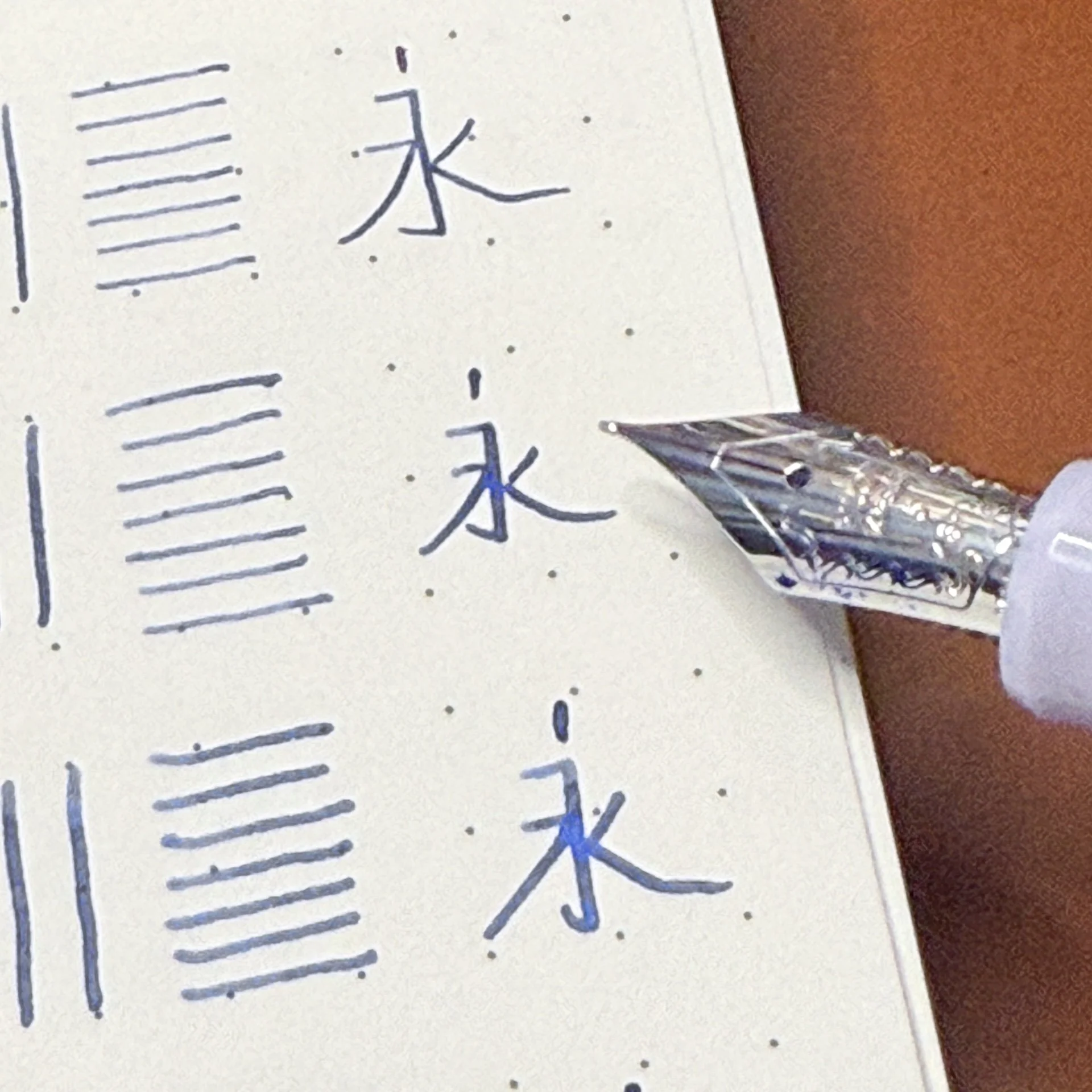
Soft Fine, you’re finally number nine! (it was #10 last year)

2 - Soft Medium

Believe it or not, Soft Medium and Medium could’ve easily swapped places. I think the reason it’s 2nd for me is because I don’t have this nib in this size and I kinda want to, lol. I love the slight bounce that this gives over the Medium, but it also makes the line a touch wider too.
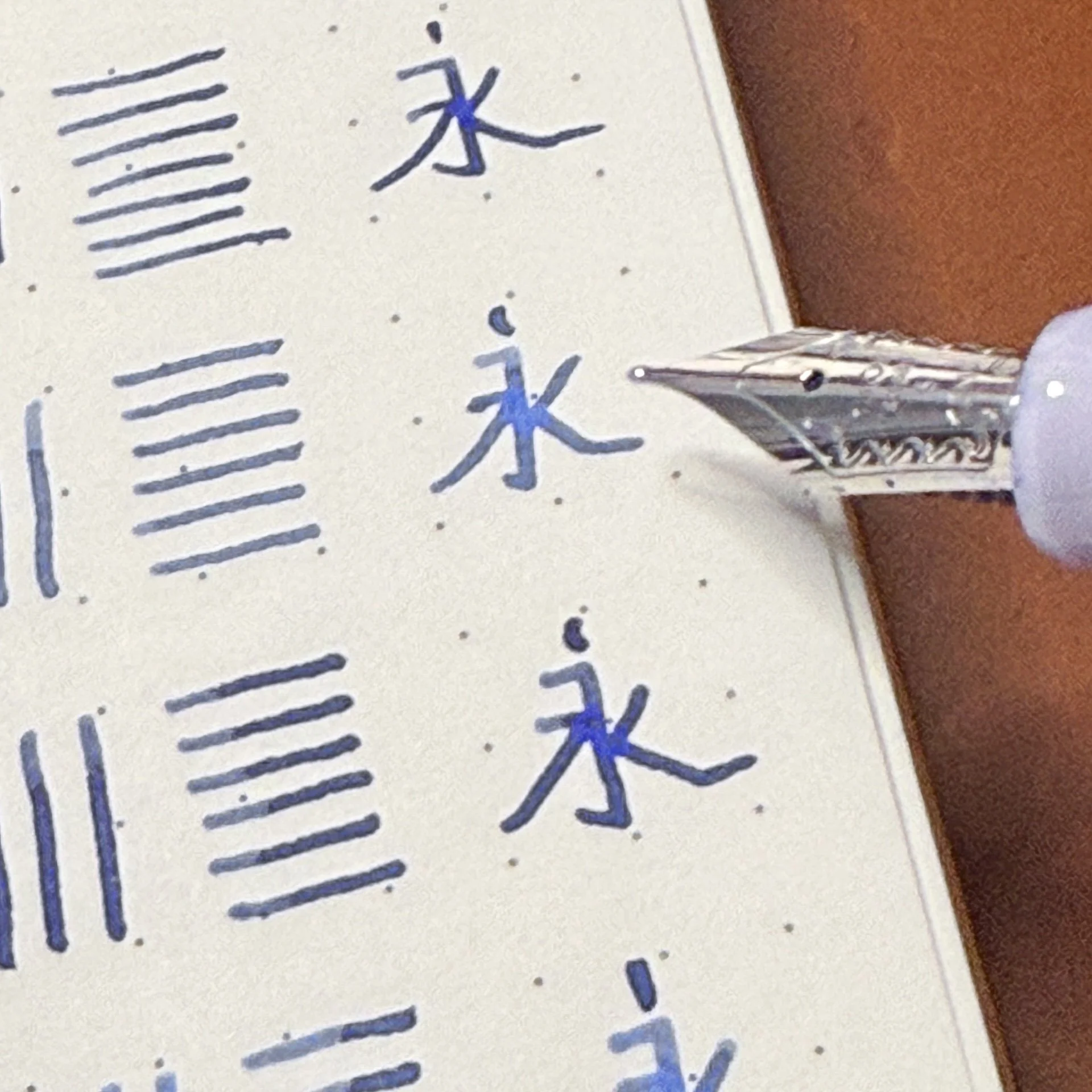
1 - Soft Fine Medium

I ranked the Size 15 SFM as #1, and the Size 10 SFM as #2, so it’s no surprise that this one would be at or near the top. It combines the perfect FM nib size for me with the soft bounce and slightly wider line width without approaching the Medium’s line.
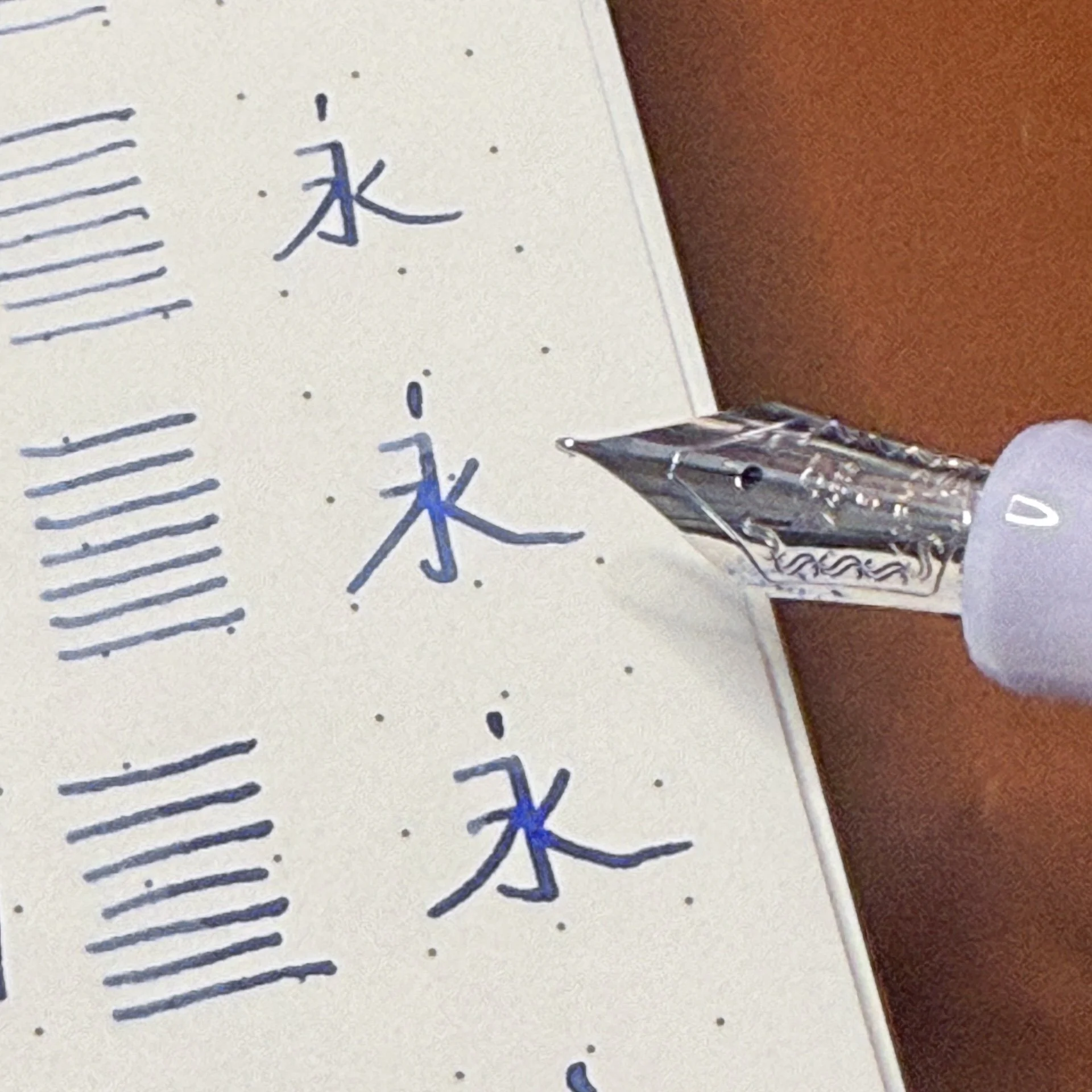
Soft Fine Medium, atop the leaderboards again!

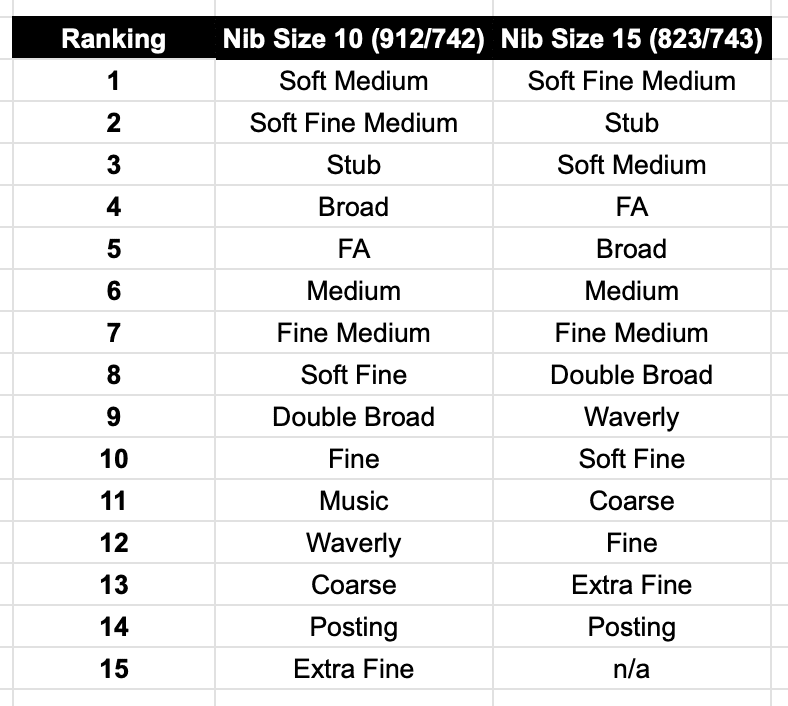
How did the size 5 nibs do compared to the size 15 nibs?

Ranking:
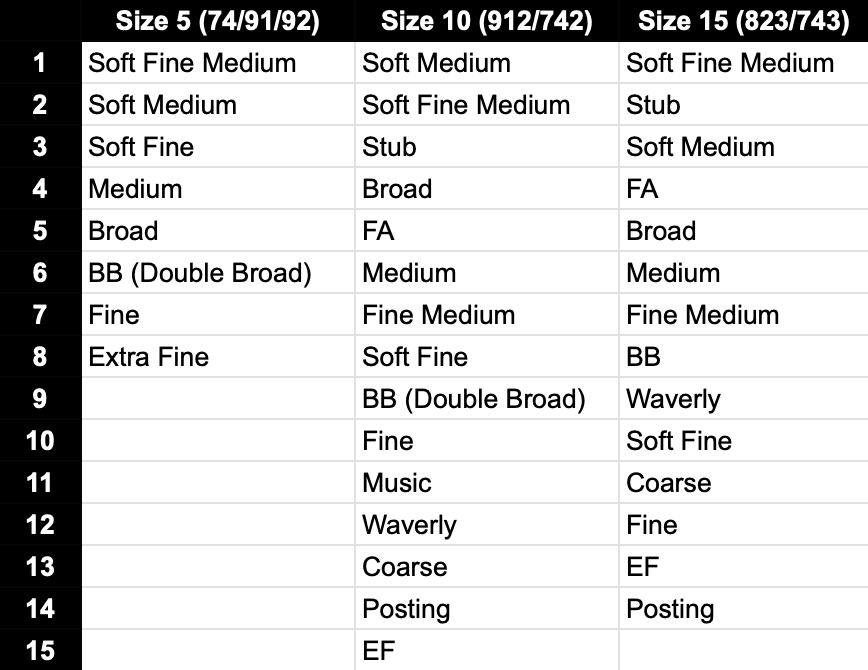
Pilot Nib Rankings

It’s hard to compare across the other two sizes because there are only 8 nib options versus 14-16 with the others. What still holds true is that I don’t love the Extra Fine or Fine nearly as much as the other nibs. It’s not because they’re bad or write poorly, but because I prefer wider nibs. I think the broader nibs felt too blobby to write with, maybe because it’s coming from a physically smaller nib, so I didn’t like them as much as in the larger sizes. My top 3 nib sizes are only available with the Lavender Fog, which isn’t quite my jam, so I’m hoping I’ll see them in other colorways someday! Fingers crossed!

And there you have it, my ranking of the size 10 nibs from the Pilot Custom 74 line! We already know that the Bossman and I don’t agree on most nibs and that’s ok (though why he loves EFs is beyond me, lol)! The beauty of this rabbit hole is that we all like different things and there’s plenty of pens and nibs to enjoy for all of us!
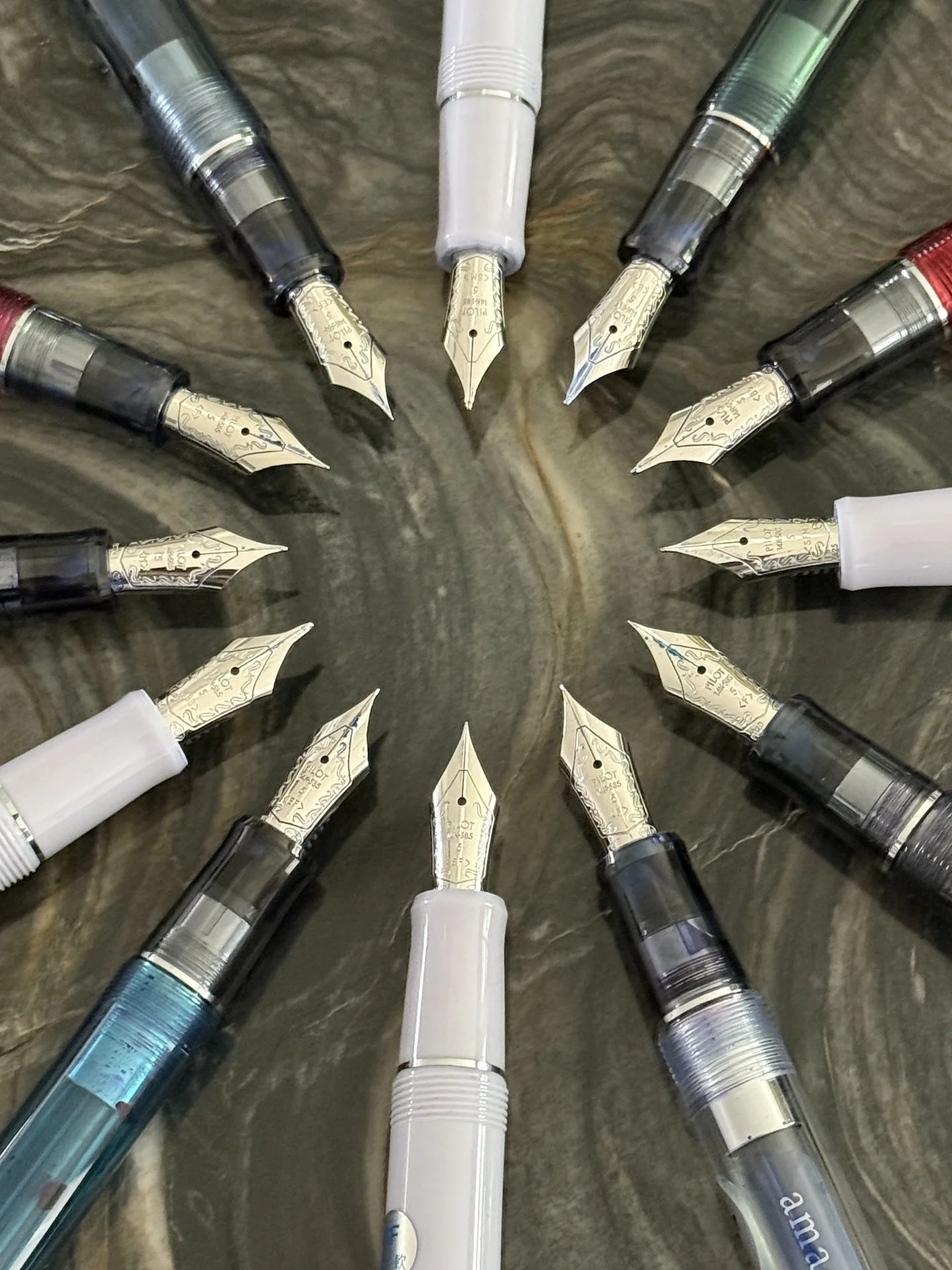
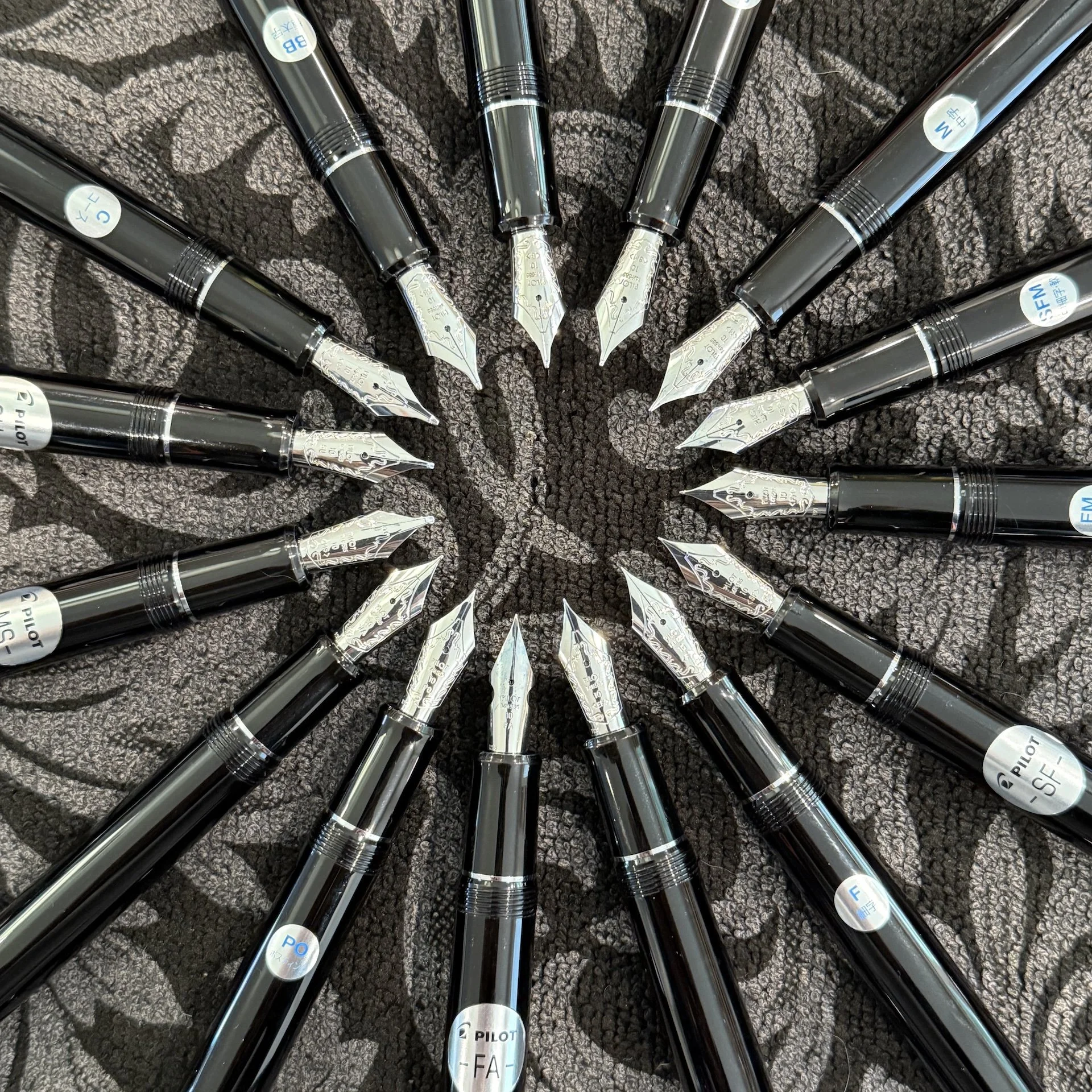
It’s the circle of life, I mean, nibs!

PS: August sees the two of the largest US pen shows (DC and San Francisco), so you should take advantage of the opportunity to try all the nibs for yourself at the Pilot USA tables and let me know which ones are your favorites!
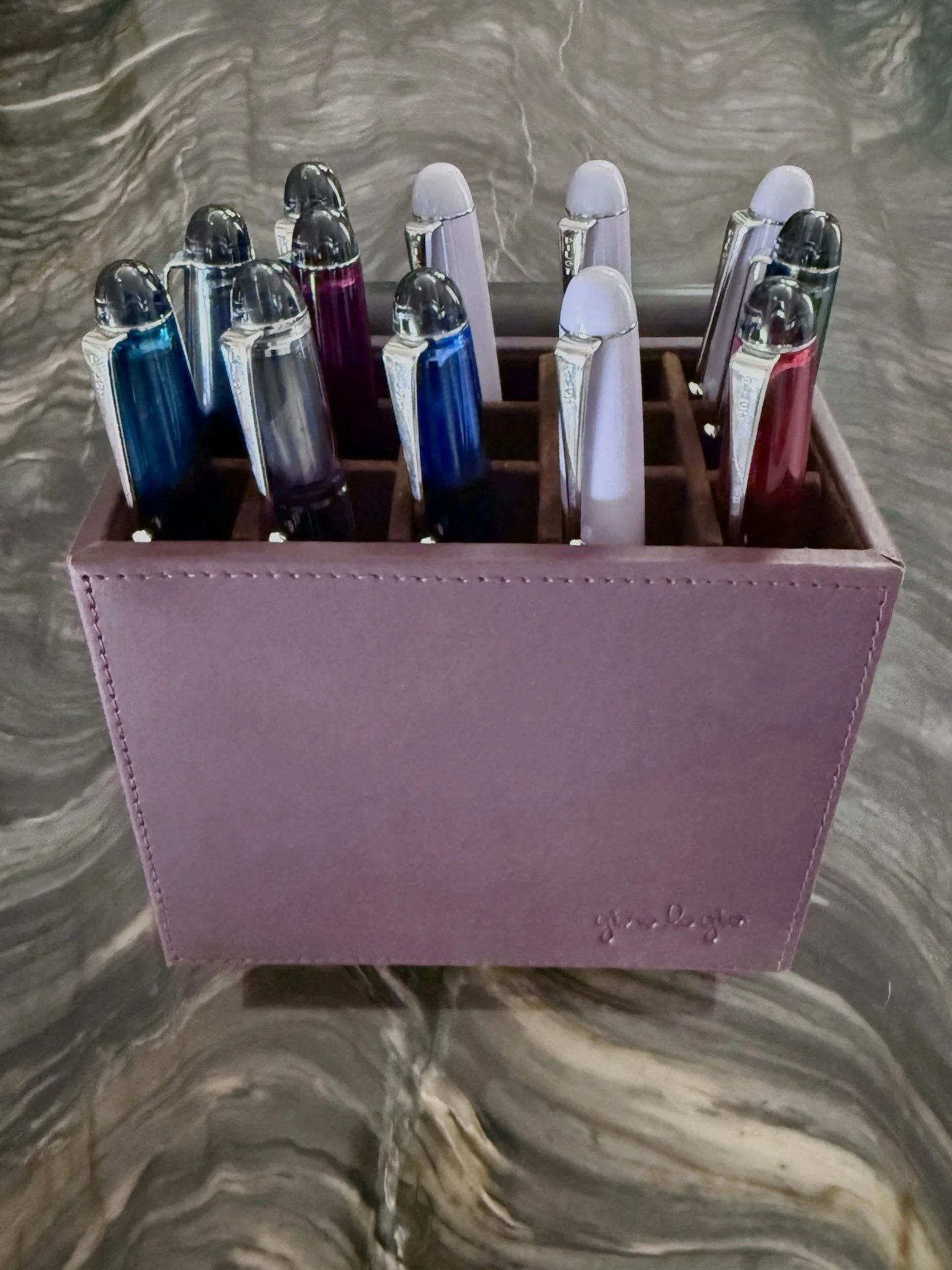
PPS: This is my first time using the Girologio Pen Suite and It was so convenient to keep the pens in order during testing and photography without sliding them in/out of my binder. I plan on using it for multi-pen projects (like Hamilton or currently inked spreads).


Enjoy reading The Pen Addict? Then consider becoming a member to receive additional weekly content, giveaways, and discounts in The Pen Addict shop. Plus, you support me and the site directly, for which I am very grateful.

Membership starts at just $5/month, with a discounted annual option available. To find out more about membership click here and join us!
Posted on June 12, 2026 and filed under Pilot, Nibs, Fountain Pens, Pen Reviews.

Pilot Custom Heritage 912 - Ranking the Nibs

(Kimberly (she/her) took the express train down the fountain pen/stationery rabbit hole and doesn't want to be rescued. She can be found on Instagram @allthehobbies because there really are many, many hobbies!.)

Last year, I was fortunate enough to get to test 14 of Pilot’s #15-sized 14K gold fountain pen nibs on the Pilot Custom 743, so I could see which ones would be my favorites. This year, I not-so-shyly asked Jaclynn Burleigh of Pilot USA if I could test their #10-sized 14k gold nibs in their Pilot Custom Heritage 912 pens and she said yes! The biggest difference between the 743 & 823 and the 912 & 742 is the size of the nib - the former utilizes the size 15 nib and feed while the latter takes size 10.

Side note: August sees the two of the largest US pen shows (DC and San Francisco), so you should take advantage of the opportunity to try all the nibs for yourself at the Pilot USA tables and let me know which ones are your favorites! But if you can’t, read on!

I have several pens with size 10 and 15 nibs, but I don’t have them all (nor do I want to, for now ;-) ) so I was curious to see if my favorites from last year’s 743 nib ranking would translate to the 912 nibs. It’s been a year since I’ve used some of these nibs in the 743 size, so I tried not to bias myself by re-reading last year’s article (I did rearrange them according to new rankings). I had limited time with these pens (as they needed to be sent back to Pilot so they can take them to different shows), which is a good thing because this would end up being a 10 page article, lol. I decided to follow a similar approach as in my last nib ranking, which was based off of the one the Bossman did in his Custom Heritage 912 writeup.

A few things to keep in mind:

  • I am right-handed but have a “stupid steep” writing angle - 75 degrees isn’t uncommon for me, while most people have a 45-50 degree angle.
  • I tend to write primarily in cursive, and occasionally in print (but not like the Bossman’s block print), typewriter font and calligraphy-esque styles like Copperplate and Italic. My go-to nib size from any maker/country/region is Medium. I also prefer broader nibs as well as stubs/italics. I rarely reach for Extra Fine, especially since I own very few of them.
  • Pilot asked that I dip these pens instead of inking them up, which I don’t think is the best way to test the flow in the nibs, but it’s enough for short writing samples. I dipped, then dragged the tip across the ink vial so there wouldn’t be blobs of ink on the page.
  • The first writing sample with all the nibs was done in the Maruman Bodoni A5 Notebook, while the others were written in an Endless Recorder with 68 gsm Tomoe River. I used a sample of Pilot blue ink.
  • My Chinese teachers from high school would be shuddering, but hey, it’s accurate, just not beautiful. The character means “always” or “forever”.
  • Thank you Pilot USA for sending these 912s so I could do a nib showdown!
  • Last but not least, I mostly followed Brad’s formatting but I did not read his ranking (nor mine from the 743 ranking) so I wouldn’t be biased.
Pilot 912 Fountain Pen

My aging eyes were so happy to be on #teamsticker even if the stickers didn’t all align with the front of the nib.

Based on writing samples of all of these nibs, do you think you can tell which ones I will like more than others? (Bodoni notebook)

Writing sample of the “regular” nibs on Tomoe River 68 gsm.

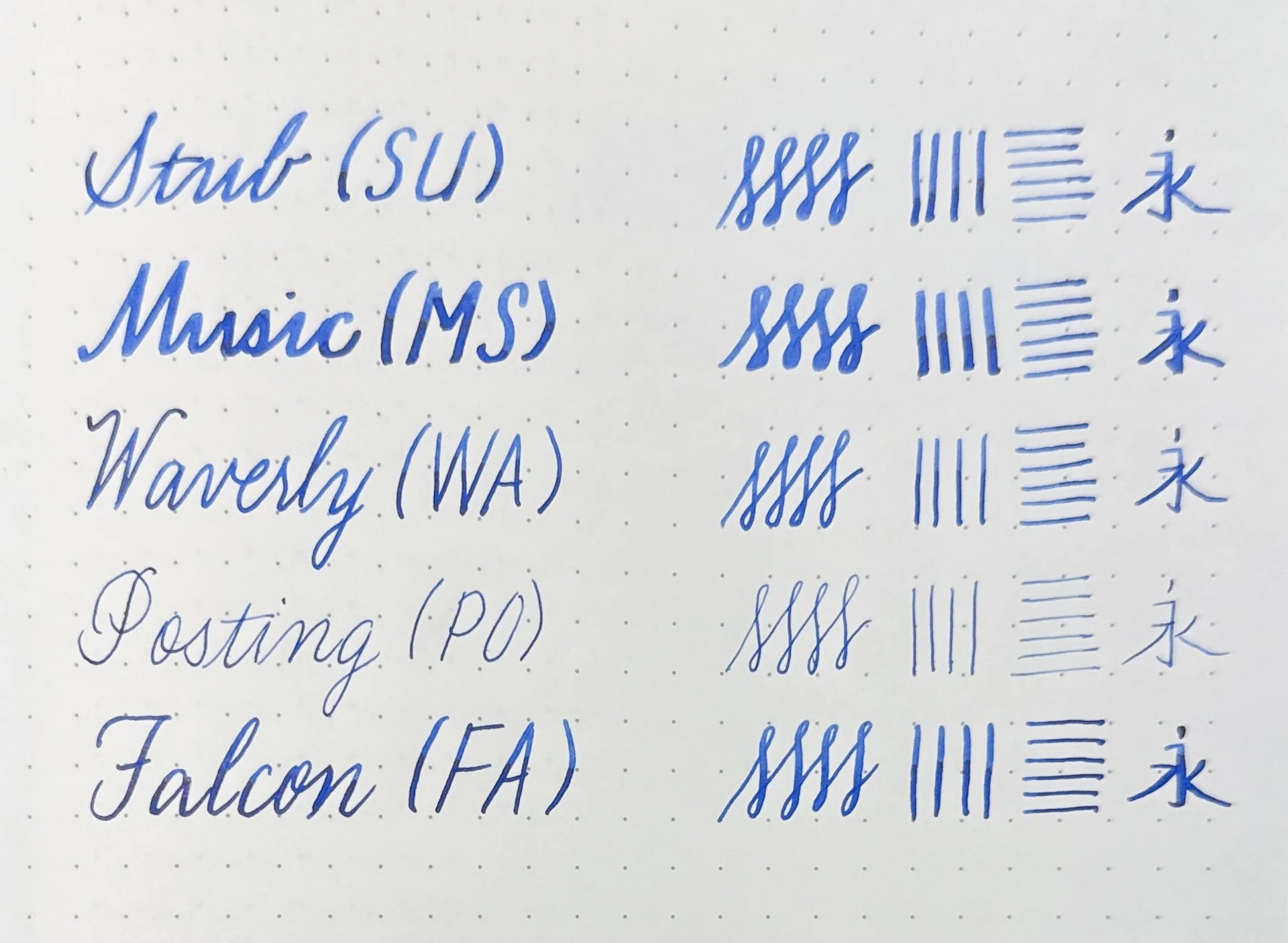
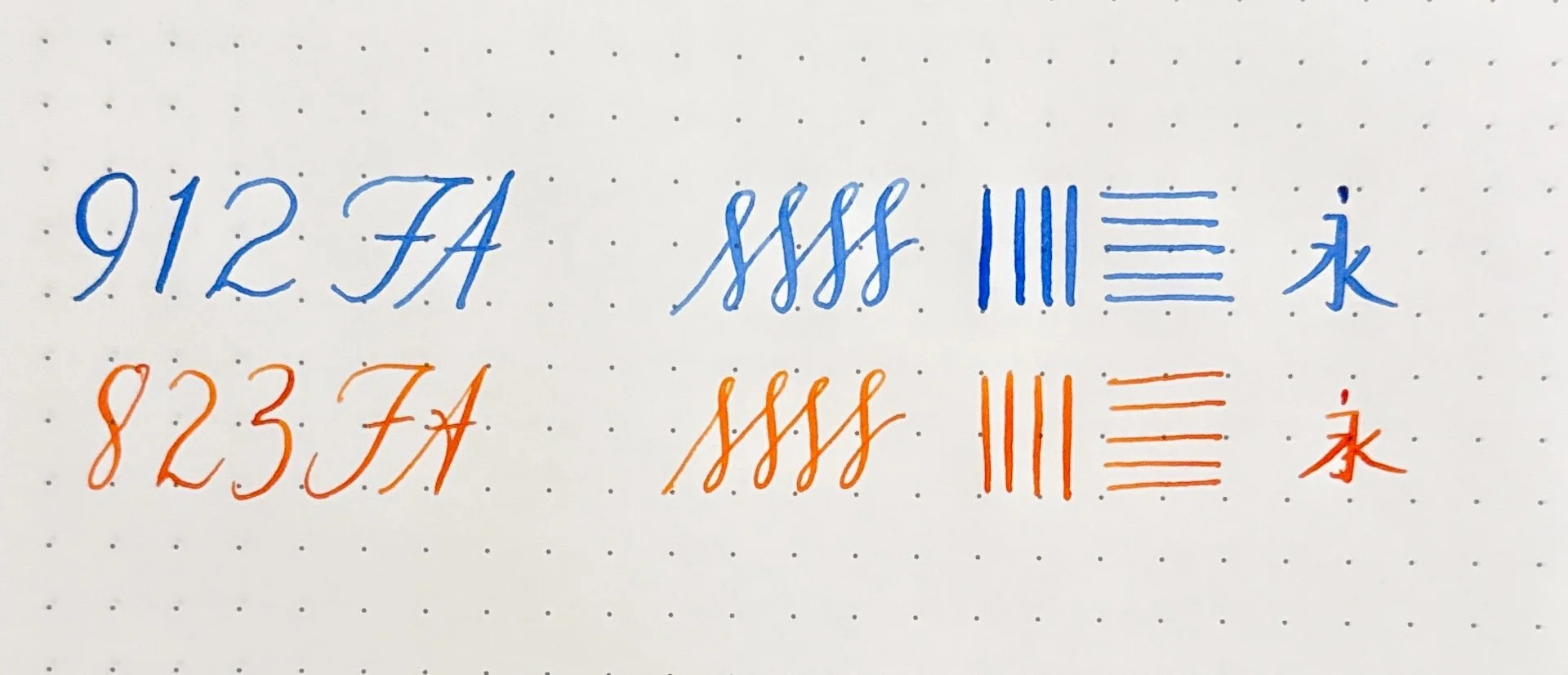
Specialty nibs - Stub, Music, Waverly, Posting, Falcon/FA.

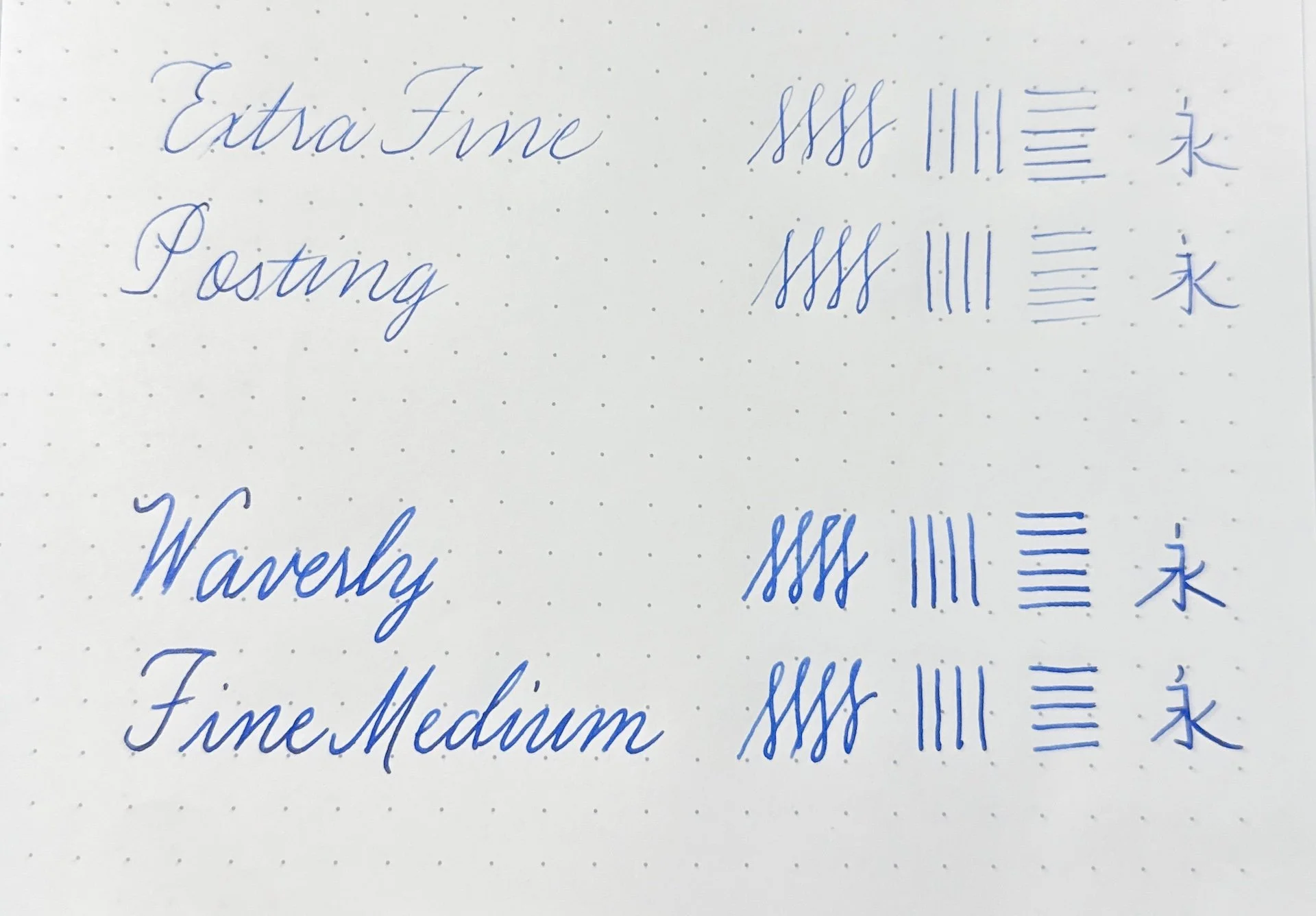
Line width comparison of the Extra Fine & Posting nibs, and the Waverly & Fine Medium.

15 - Extra Fine

Admit it, you knew this was coming. I don’t hate EF nibs, I just really don’t prefer them most of the time from any brand. That said, I was expecting to like this more than the PO nib because I remember disliking the size 15 PO the most. For some reason, that wasn’t the case here. The EF gave me more feedback than I liked, so it was my least favorite of the nibs.

Pilot 912 Extra Fine

14 - Posting

The size 15 Posting nib was my least favorite to use because it felt like I was writing on the top of the nib, with it almost curving backwards on the paper. The original idea behind the nib was to write on postcards, which had limited space and therefore the extra fine line allowed you to fit more words. The angle of the nib also made it very stiff, unlike their regular and soft nibs, so you could also write on multiple sheets, like with carbon paper (does anyone remember what that is?) or forms in duplicate/triplicate. I’m not sure if it’s because the nib is smaller but this wasn’t as uncomfortable to write with, and while it was still uncomfortably fine for me, I liked it more than the EF>

Pilot 912 Posting PO
Pilot 912 Posting PO side

You can see the downturn of the Posting nib, which gives it a firmer writing experience as well as a drier line.

13 - Coarse

You would think that I’d love this mega broad line because I love showing off inks, but like its size 15 sibling, this nib lays down quite the Sharpie line! It gives a smooth writing experience but since I don’t have large handwriting, this isn’t a very practical nib. This would still be a great platform for a nib grind, but I’d probably get a Broad or Double Broad for grinding before I’d get the Coarse.

Pilot Custom 912 Coarse

Of COARSE this is a fun nib if you need a thicc line.

12 - Waverly

Unlike the Posting nib, the Waverly was designed with a slight upturn on the tip of the nib, which makes it much more pleasant for folks who “push” their nibs, like lefties. As a rightie, I didn’t really notice the difference as it still wrote with a smooth, slightly broader than Fine Medium line. I’m sure I’d rank this much higher if I was a leftie, but since I’m not, I’d pick any of the remaining nibs instead of trying to hunt this one down.

Pilot Custom 912 Waverly

The Waverly’s upturn is more noticeable from the side.

11 - Music

The Music nib was not offered in the 743, so I was not able to test this last year. The writing experience is very stub-like, wider down strokes and narrow side strokes. The down strokes are wider than the Stub’s. Similar to the Coarse, its lines are a bit too thick for my writing, so it’s less practical for me, but I do like the line variation, which is why it gets a higher rating that the Coarse.

Pilot Custom 912 Music

10 - Fine

The Fine gives a nice writing experience with a fine line. As I mentioned earlier, I like laying down ink and this Fine just doesn’t give me as much as I’d like.

Pilot Custom 912 Fine

9 - BB / Double Broad

I liked the not-quite-as-insane width of this nib compared to the Coarse but it is still too broad for my everyday use. As with the Coarse nib, this would also be a great canvas for a nib grind. Even though this is impractical for me, I ranked it higher because I’d picked this over a Fine if I had to choose between the two.

Pilot Custom 912 BB

This BB has one too many Bs for me.

8 - Soft Fine

I liked this more than the Fine because the slight bounce from the softer nib gives it an almost imperceptibly wider line and ever so slight line variation (more from the release of pressure than from adding pressure). That said, it’s still a bit too fine for me.

Pilot Custom 912 Soft fine

Soft Fine, you’re finally number nine! (it was #10 last year.)

7 - Fine Medium

The top seven are much harder to choose from, so I used two criteria to help me decide: (1) what would be a better everyday writer for me and (2) what nib would I pick to buy next.

This one was REALLY hard for me to put in this spot, but having owned this nib in both the size 10 and 15 sizes, I have come to accept that while it is a great writer, it is, say it with me, just a bit too fine. It is a very practical size for every day but this inkophile wants to lay down more ink, and go through fills quickly and this FM is too fine to do that.

Pilot Custom 912 Fine Medium

6 - Medium

Yep, my go-to nib size, Medium, barely made the top half of this list! It is such a nice and smooth writer that it’s one of my favorites, but I have enough Mediums so it barely made the top half of this list.

Pilot Custom 912 Medium

Medium is 7th because I’d rather get one of the other remaining nibs first, it’s not cuz I don’t love you.

5 - FA or Falcon nib

Not to be confused with the Falcon pen (aka Elabo), the FA nib has cutouts on the side of the nib that gives it the ability to flex a bit. It is not like vintage flex, more like semi-flex. The size 10 FA is actually softer/flexier than the size 15 FA, and gives a bit more line variation than the 15. I have both and prefer the 10 FA because I do like to really slow down and write in a Copperplate-like style when using it. Even though I already have one, I wouldn’t turn down another FA if it were to cross my path, but having both means it’s lower in the list for me.

Pilot Custom 912 FA

You can see the cutouts from the top of the FA nib.

A better view of the side cutouts.

#10 vs #15 size comparison.

Writing samples of the 912 FA vs the 823 FA, inked up with the Bossman’s Fire on Fire on Fire! You can see that I can get slightly wider down strokes with the 912 FA vs the 823 FA.

4 - Broad

I am shocked that I still don’t have any Broad nibs in either the 10 or 15 size, though I do have it in a VP nib and I love it. This would be a great ink layer-downer nib without having an overly broad line and as such would be a great addition.

Pilot Custom 912 Broad

Broad. It me.

3 - Stub

As someone who occasionally likes to do italic calligraphy, as well as write cursive with stub nibs, I was really curious to see how Pilot’s stub nib would feel. I absolutely loved writing with it! It is a fairly smooth stub, unlike Pilot’s sharper steel nibs like the ==CM== (Calligraphy Medium) which are more like italics. The only reason this is ranked third is because this wouldn’t be as practical for me as an everyday writer, but it’s definitely high on my list of nibs to get next.

Pilot Custom 912 Stub

Stub, where have you been all my life?

2 - Soft Fine Medium

I ranked the Size 15 SFM as #1 and I already knew that I loved the size 10 SFM since I’ve had it for several years now. Going into this test, I wondered how it would rank against the Soft Medium and while I still love this nib a lot, if I had to choose between a SFM and SM, I’d choose the latter. The slight softness of the nib makes the line a bit broader than the regular FM, which means it is the perfect width.

Pilot Custom 912 Soft fine medium

Soft Fine Medium, I still love you, even if you’re #2.

1 - Soft Medium

I don’t have this nib and I want it. I love the slight bounce that this gives over the Medium, but it also makes the line a touch wider too. I could have easily swapped the SFM and SM spots but this one ranked higher because I don’t have one. Yet.

Pilot Custom 912 Soft Medium

Soft Medium, I need this so much.

How did the size 10 nibs do compared to the size 15 nibs?

Ranking:

Pilot Nib Ranking

There was a bit more movement in the bottom half of the rankings versus the top half, but I was surprised that I liked the Waverly and Coarse nibs more last year than I did this year.

And there you have it, my ranking of the size 10 nibs from the Pilot Custom Heritage 912 collection! We already know that the Bossman and I don’t agree on most nibs and this is no exception (how dare he rank my #1 Soft Medium as #13??). That’s the beauty of this rabbit hole - we all like different things and that’s ok!

It’s the circle of life, I mean, nibs!

Oh, one more thing, this article also marks my 4 year anniversary of writing for The Pen Addict! Thank you so much to Brad “The Bossman” Dowdy for taking a chance on me four years ago and you still put up with the longest articles ever (barely over two thousand words in this one!). And an even bigger thank you to all of you for reading, commenting and encouraging me - it really means a lot! Can’t wait to see what the next year brings!


Enjoy reading The Pen Addict? Then consider becoming a member to receive additional weekly content, giveaways, and discounts in The Pen Addict shop. Plus, you support me and the site directly, for which I am very grateful.

Membership starts at just $5/month, with a discounted annual option available. To find out more about membership click here and join us!

Posted on July 31, 2025 and filed under Pilot, Nibs, Fountain Pens, Pen Reviews.

Monoc Monoc Monoc

(Kimberly (she/her) took the express train down the fountain pen/stationery rabbit hole and doesn't want to be rescued. She can be found on Instagram @allthehobbies because there really are many, many hobbies!.)

When Ian Schon first announced his in-house, titanium Monoc nib in late 2022, I rushed to pre-order it, picked it up a few months later at the Philly Pen Show, and ended up going through three converters’ worth of ink to write this Monoc review. Since then, I got a Bock Monoc with a Fine nib last year, and got the Cursive Monoc at the Baltimore Pen Show earlier this year.

Top to bottom: Fine, Medium, Cursive Monoc.

I won’t go into a lot of detail since that’s already been covered in the other article, but I wanted to share some writing samples since they all write differently. There is also a blog post that goes into more detail about the Monoc and has much better nib pictures than I can take.

One of the things that I like about the Monoc is that I can put them in a wide variety of pens that take #6 nib units, including Schon Dsgn Full Size and Pocket 6, Franklin-Christoph, and especially Montegrappa pens.

Left to right: Franklin-Christoph 46 in Italian Ice (Medium), Conid Minimalistica Monarch (Fine Bock), and Montegrappa Mia Everglades (Cursive.)

I will start with the Medium Monoc since that’s the one I’ve had the longest and used the most (in at least 7 different pens, some with multiple inkings). My Medium Monoc is a decently wet writer and produces lines that are a bit closer to a Medium-Broad Jowo, if such a thing existed. Each of these nibs are individually machined and hand-tuned by Ian (he’s the only one who tunes them) so there can be minor variations in wetness and width. I sometimes use drier inks to compensate - this time around I picked Robert Oster Viola, which is a lovely light purple ink but definitely on the dry side, even in this wet nib.

I love that all of the Monoc nibs can also be used to write on the reverse, that is, flipped around/rotated such that the feed is facing up. Some of the Monoc’s lines, as you will see, are more angle dependent. As a reminder, I am a high/steep angle writer (typically ~75 degrees) so my lower angle writing samples are a little messier. Paper and ink will also make a difference so keep that in mind when comparing writing samples.

Writing sample with the Medium Monoc, the reverse will give you a finer line. You can get more of a difference between the regular and reverse with a wetter ink. Writing angle doesn’t affect the line width much on either side.

Here is a writing sample with the Medium Monoc and Medium nibs from other brands: Graf von Faber-Castell Intuition (18kt gold), Lamy Studio (steel), Nahvalur Schuykill, Opus 88 Mini (Jowo 5 Medium), Platinum 3776, Sailor Pro Gear (21kt gold), Radius Settimo (Jowo 6 Medium), Sailor Pro Gear Slim (14kt gold), TWSBI Eco, Taccia Spectrum (Sailor steel), Kaweco Special.

The Bock Monoc has a Fine nib and is inked with a very wet ink, KWZ Monarch, in the Conid Minimalistica, which is also in a fairly wet pen. It has a smooth fine line on the regular, and a broad architect line on the reverse.

Writing sample with the Fine Monoc. Writing angle doesn’t make much of a difference on the regular but definitely does on the reverse.

Here is a writing sample with the Fine Monoc and nibs from other brands: Pilot Vanishing Point, Kaweco Sport, Platinum Plaisir 05, TWSBI Precision. On the reverse: Lamy Studio (steel B), Kaweco Sport (B), Lamy Accent (14kt gold M), Jowo Broad Architect, Lamy BB Architect (ground by Gena Salorino of Custom Nib Studio). The contrast of the Fine Monoc’s reverse down vs cross stroke isn’t as great as with a more traditional architect (the last two.)

Last and definitely not least, the Cursive Monoc isn’t a “regular” Monoc with a Cursive grind added to it. Ian says the Cursive Monoc starts off as its own nib shape (sorry, I can neither explain nor share the technical aspects) and then gets ground and tuned further to a smooth, “cursive italic”. I put that in quotes because Ian says it’s not a traditional cursive italic the way a nib grinder might describe it, but it’s definitely close enough to call it that. This grind makes narrow horizontal strokes and broader vertical strokes, giving noticeable line variation whether you are writing in cursive or print.

It is currently inked with an average wetness ink, Robert Oster x Vanness Pens Hemp, in a Montegrappa Mia. It has a smooth Medium to Medium Broad cursive italic line/variation on the regular, and an even broader line on the reverse than the Fine Monoc’s reverse.

Writing sample with the Cursive Monoc and nibs from other brands: Franklin-Christoph Fine SIG (Stub Italic Gradient), F-C Broad Stub (Masuyama), Jowo 1.1 (14k5 gold), Pelikan Steel Broad CI (Masuyama), F-C Medium SIG, Waterman Carene Stub (or BB, depending on who you ask), TWSBI Eco Broad & Fine “In Between” (Mark Bacas’ grind that’s “in between” a stub and a CI), and for the reverse, Lamy 2000 BB Architect by Gena Salorino, Jowo Broad Architect.

The writing angle doesn’t really impact the writing of any of the Monocs on their regular sides, nor for the Medium Monoc on the reverse. But on both the Fine and Cursive Monocs, the width of the reverse side is more angle dependent, moreso for the Fine than for the Cursive. Of the 3 Monocs, it’s hard to pick a favorite, but if I could only use one, it would be the Fine because I love how differently the regular and reverse sides write.

Here are a few things that Ian wanted folks to know:

  • The Bock-threaded Monocs aren’t listed on the website but they can be requested.
  • Monoc nibs have a 5-10 day fulfillment turnaround because they are made to order. If you need something sooner, please reach out to them in case there are some in stock.
  • If you see one of their nibs at a show or someone’s IG post but you don’t see it online, reach out to them to ask if it can be made. Ian and team will often make special anodized colors that might not be listed on the website.
  • Avoid using shimmer inks because the nib isn’t disassemble-able for thorough cleaning.
  • Schon Dsgn is 3 people and Ian is the only one who does the fine tuning on the Monocs, so be patient, especially around pen show time when some or all of them may be traveling. Definitely send them an email if you have any questions.

The Schon Dsgn Monoc starts at $385 for polished titanium. Anodized options are also available - prices vary depending on complexity of the anodization (nib anodizing is done in-house, while anodization on the aluminum pens are done elsewhere).

As I said in my other article and will say again, yes, it is an expensive purchase, and no, this is not a nib for everyone. I value the innovation that goes behind the research and design of these nibs. I also like the stiff, nail-like writing experience that it provides, and the reversibility of the nibs is twice the fun even though I don’t take advantage of the reverse as much as I should. If you’ve been thinking about getting one and it fits your budget, definitely check them out, especially if you’re reading this during this weekend’s Chicago Pen Show!

Posted on May 2, 2025 and filed under Schon DSGN, Nibs, Fountain Pens, Pen Reviews.